|
|
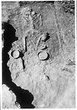
Grave XXVII in notebook = RSY Grave 8.
Possibly a child's grave ... Ca. middle of the 6th. c. B.C. |
| Grave XXVI in notebook = RSY Grave 12 ... Ca. 525-500 B.C. or sightly later |
North and South Rectangular Stereo-cut Rubbish Pits. These two adjacent rock-cut pits, of uncertain original purpose, were filled with deposits of rubbish evidently contemporary and probably dumped simultaneously, ... Second half of 5th c. B.C. |
Well on the north slope of the Areopagus; depth at 9.65m; scanty dumped fillings. From about 3.20m to the bottom, little but tile fragments appeared; in the fillings above, the lower is characterized by ... Ca. 350-290 B.C. |
Dimensions 2.86x1.50x0.70m in depth; stratified fill in rockcut pit (three rockcut steps leading down at one end) which apparently served as a rubbish dump (pottery fragments with carbon and ash). Coins: ... Ca. 410-250 B.C. |
Use filling of first half of 1st c.; dumped filling of late 1st c.(?). This well, near its mouth, cuts off the end of the upper passage of the cistern at 53/Ε. Subdivisions:
.1=Dumped filling
.2=POU ... First half of 1st c. A.D. POU |
Bottle-shaped cistern with dumped fillings on NW slopes of Areopagus; appears not to have been finished in antiquity: the walls and floor show no traces of stucco.
Lower filling, ca. 375-340 B.C.
Upper ... Ca. 375-275 B.C. |
Accumulated fillings in a system of underground drains at west end of section ΔΔ with northward continuation into and across Section Υ.
The filling in the "underground passages" in section ΔΔ appears to ... 3rd c. B.C.
2nd c A.D. |
Tiled well near the SW corner of the market square between the Southwest Fountain House and the Great Drain, three fills noted: lower fill of earth and stones with a few fragments only of coarse pottery ... 4th-2nd c. B.C.
100-70 B.C. |
Dumped filling in a well on the west slope of the Areopagus (apparently separate, no mends between them, but differing little in date) the bottom filling apparently thrown in towards the beginning of the ... Ca. 425-400 B.C. and earlier |
| This filling is the largest deposit of its time found in the Agora. It may be compared with H 6:5 and with N 7:3.
Dug in soft bedrock to a depth of 11.40m; footholds cut on opposite sides of the shaft ... Ca. 490-450 B.C. |
|
|