|
|
The discus and much of the rim have been preserved.
On rim, four panels, each containing two double spirals.
On discus, edged by two grooves, the head of a young man with masses of hair, to left. He is ... 16 May 1933 |
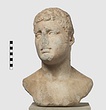
| A large piece missing at the back and left. Nose and mouth battered, ears chipped. Along the break, from the top of the head, is a vertical pinhole with traces of iron stain.
The wear on front and back ... Early Flavian period. |
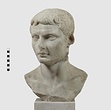
| Missing: upper part of left ear, edges of right ear, tip of nose, left side of neck at join. Mended from two adjoining pieces. The tenon is chipped and broken. The head is preserved from top to tenon, ... 10 B.C.-20 A.D. |
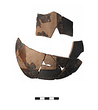
| Eleven pieces comprising two non-joining fragments. To Young's publication of six pieces are now added five more, two of which help to complete to inscription.
Part of the side wall with reserved panel ... 600 B.C ... Letters incised deeply but not too carefully with a blunt point.
Line 1: Ανδρογ[---] ho Δ[..]ιες
Line 2: τοι Δι τ΄άναχτι hισ-
Line 3: έδρασεν
Line 1 contains a proper name, Androg ... , followed by a patronymic or an ethnic. ... The ends of the three horizontals of the initial epsilon are preserved at the right edge.
Young would take the verb to be equivalent to έγραφσεν and translate the whole, "Androg ... , son of D ... ,made (i.e. wrote) ... To the right of the end of line 1 is a lone four-barred sigma, larger and more deeply cut than the letters of the inscription. |
|
|