|
|
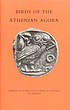
| Lamberton, R. D. Rotroff, S. I ... The American School of Classical Studies at Athens ... As well as the Little Owl, or glaux, so often seen accompanying the goddess Athena, many other birds played an important role in Greek art and symbolism. This booklet describes the ways in which the Greeks ... 1985 ... As well as the Little Owl, or glaux, so often seen accompanying the goddess Athena, many other birds played an important role in Greek art and symbolism. ... Some of the birds most often depicted are imaginary—from the griffin to the “phallos bird,” whose head and neck consisted of an erect penis. |
Broneer, O ... American School of Classical Studies at Athens ... The calyx-krater of Exekias, first published in 1937,1 was discovered at the bottom of a well in the American School excavations on the North slope of the Acropolis in Athens. The circumstances of discovery ... 1956 ... The calyx-krater of Exekias, first published in 1937,1 was discovered at the bottom of a well in the American School excavations on the North slope of the Acropolis in Athens. ... The white color is well preserved, in contrast to the white on the fragments found in the well, which had largely disappeared from being immersed in the water (cf. breastplate of Diomedes on the left flank, Pl. 50 a). ... His head-band, beard, tail, and phallos are painted purple. |
|
|