|
|
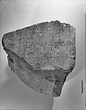
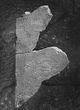
| Inscribed fragment.
Right edge preserved.
Eight lines of the inscription preserved in two columns. Found in tower of Winds. Brought in by J. Threpsiades and B.D. Merrit. Leica, 82-627 ... Mid. 5th. century B.C ... Eight lines of the inscription preserved in two columns ... Found in tower of Winds. Brought in by J. |
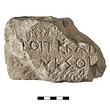
Inscribed fragment.
Broken all around. Original thickness probably preserved.
Fourteen lines of the inscription preserved.
White marble. Found in tower of Winds. Brought in by J. Threpsiades and B.D. Merrit ... 135/4 B.C ... Fourteen lines of the inscription preserved.
... Found in tower of Winds. Brought in by J. |
Inscribed fragment.
Part of moulding at top preserved and probably original thickness. Otherwise broken.
Fifteen lines of the inscription preserved.
Pentelic marble. Found in tower of Winds. Brought in ... 307/6 B.C ... Inscribed fragment.
Part of moulding at top preserved and probably original thickness. ... Fifteen lines of the inscription preserved.
... Found in tower of Winds. Brought in by J. |
Inscribed fragment.
Inscribed face only preserved.
Three lines of the inscription preserved.
Pentelic marble.
Transferred to the Epigraphical Museum on 10th. October 1966. Brought in May 1961. Found in ... Early 5th. century B.C ... Three lines of the inscription preserved.
... Found in tower of Winds. Brought in by J. |
| Inscribed fragment.
Broken on all sides except the bottom.
Possibly part of the top surface preserved, with a pivot hole of later use.
Two lines of the inscription preserved.
Pentelic marble. Found in ... Early 5th. century B.C ... Possibly part of the top surface preserved, with a pivot hole of later use.
Two lines of the inscription preserved.
... Found in tower of Winds. Brought in by J. |
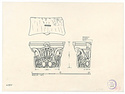
| Complete except for chips. Large Corinthian pilaster capital, somewhat crude workmanship and deeply undercut.
Front: two eggs on either side of a dart, surrounded by a palmette, flanked on either side ... 2 April 1973 ... Front: two eggs on either side of a dart, surrounded by a palmette, flanked on either side by an acanthus leaf from which spring two curling stalks. ... A third capital, of the same series, though much worn, lies in the Roman Agora, just to the N.E. of the Tower of the Winds. |
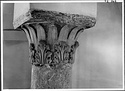
| Complete.
So-called Tower of the Winds type, with lotus leaves springing from behind a single row of acanthus.
Originally covered in plaster and painted. "In the final period of the church all the capitals ... So-called Tower of the Winds type, with lotus leaves springing from behind a single row of acanthus.
... "In the final period of the church all the capitals were painted in bright colors trimmed with gilt." ... Used as SW capital of the church of the Holy Apostles and re-used at the same position in the restoration of the church in 1954. |
| Fragment Θ 26 a), from right side of inscribed block; fine picked on one side, rough picked on the back.
Fragment Κ 115 b), back and left side preserved. Fifteen lines of the inscription preserved.
Fragment ... 127/6 B.C ... Nine lines of the inscription preserved, and part of a wreath enclosing three letters.
... Some of the main fragments were used in the filling of the south tower of the gate in the late Roman Fortification (Q 13); other main fragments came from modern house walls in this neighborhood, no doubt extracted from the Fortification; and a few were found in modern constructions 100m. and more to the north and west of the tower. One fragment (EM 564) is reported to have come from a considerable distance to the east, east of the Tower of the Winds.
|
|
|