|
|
Evangelidis, Vasilis ... American School of Classical Studies at Athens ... Hesperia 88.2 2 283-318 ... 2019 ... Macella and Makelloi in Roman Greece: The Archaeological and Textual Evidence |
Gardner, Chealsea A. M ... American School of Classical Studies at Athens ... Hesperia 90.2 2 339-358 ... 2021 ... The "Oracle of the Dead" at Ancient Tainaron: Reconsidering the Literary and Archaeological Evidence |
| Gleanings from the West Side of the Agora
Spring of 1935, Section ΟΕ ... Homer A. Thompson ... An account, based on archaeological evidence so far discovered, on some of the buildings in the west side of the Agora: Stoa of Zeus Eleutherios and vicinity, Sanctuary of Apollo Patroos, Sanctuary of ... 27 Jan 1934-30 May 1935 ... An account, based on archaeological evidence so far discovered, on some of the buildings in the west side of the Agora: Stoa of Zeus Eleutherios and vicinity, Sanctuary of Apollo Patroos, Sanctuary of the Mother of the Gods, and the Great Drain. |
| 1. The Tholos. A Brief Sketch of the History of the Building as Revealed by the Excavations of 1934
2. The Bouleuterion ... Eugene Vanderpool ... A report mainly about the results of the excavations of the Tholos and the Bouleuterion, but a notebook index attached refer to all features excavated during 1934. A list of coins associated with the construction ... 15 Jan-19 May 1934 ... A report mainly about the results of the excavations of the Tholos and the Bouleuterion, but a notebook index attached refer to all features excavated during 1934. ... The first archaeological evidence of the existence of the building came to light during the campaign of 1933 when the porch of the Tholos was partially cleared. ... Other archaeological evidence suggests that it was probably built in the second half of the 4th century B.C., replacing an earlier building which served as both Metroon and Bouleuterion. |
| Athenian Portraits of the Third Century and After. The Archaeological Evidence. C.A.H., XII, pp. 544-570. C.A.H., XII, pp. 544, note 2. C.A.H., XII, pp. 561 ff. C.A.H., XII, p. 562. C.A.H., XII, p. 545 ... Agora 1 90 ... Athenian Portraits of the Third Century and After ... The Archaeological Evidence |
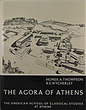
| Thompson, H. A. Wycherley, R. E ... American School of Classical Studies at Athens ... The subtitle, The History, Shape and Uses of an Ancient City Center, suggests the general character of this volume, which provides an overview of the area that served as the civic center of Athens from ... 1972 ... The subtitle, The History, Shape and Uses of an Ancient City Center, suggests the general character of this volume, which provides an overview of the area that served as the civic center of Athens from about 600 B.C. to A.D. 267. ... Each monument is discussed in the light of both the literary and the archaeological evidence for its identification and its restoration. ... A chapter “After the Heruli” follows the fortunes of the area from A.D. 267 till the 19th century; the last century is treated in the detailed report of “The Excavations” up to 1971. |
| Preface. List of Plates. Abbreviations and Bibliography. Introduction. Catalogue. Observations on Athenian Portrait Style in the Roman Period. The Romanization of Greek Portraits. The Late Republican Period ... Agora 1 vii ... The Augustan Period ... Athenian Portraits in the Style of the Roman Empire ... The Archaeological Evidence |
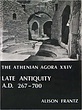
| Frantz, M. A ... American School of Classical Studies at Athens ... This book collects for the first time the archaeological and historical evidence for the area of the Athenian Agora in late antiquity, a period which spans the last flourishing of the great philosophical ... 1988 ... This book collects for the first time the archaeological and historical evidence for the area of the Athenian Agora in late antiquity, a period which spans the last flourishing of the great philosophical schools, the defeat of classical paganism by Christianity, and the collapse of the late Roman Empire. Although the primary focus of this volume is the material uncovered by the Agora excavations, the study also takes into account past and current discoveries elsewhere in the city. The author draws on archaeological, epigraphical, and literary evidence to present a comprehensive account of the history and topography of the city in the years before A.D. 700. |
|
|
.png.icon.jpg)
.png.icon.jpg)