|
|
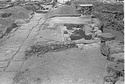
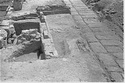
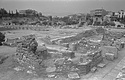
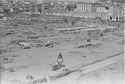
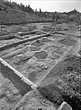
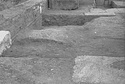
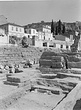
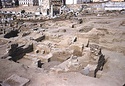
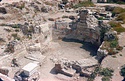
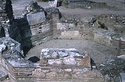
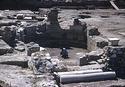
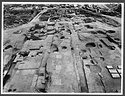
| View from the east, showing foundations of Late Roman Gymnasium ... AMS Horizontal (normal) ... View from the east, showing foundations of Late Roman Gymnasium. |
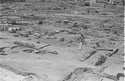
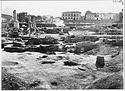
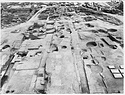
| View from the west, showing foundations of Late Roman Gymnasium ... AMS Horizontal (normal) ... View from the west, showing foundations of Late Roman Gymnasium. |
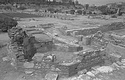
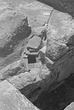
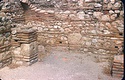
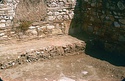
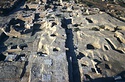
| Extreme southeast corner of Late Roman Gymnasium. View from the southeast ... AMS Horizontal (normal) ... Extreme southeast corner of Late Roman Gymnasium. View from the southeast. |
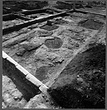
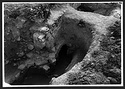
| Extreme southeast corner of Late Roman Gymnasium. View from the southeast ... AMS Horizontal (normal) ... Extreme southeast corner of Late Roman Gymnasium. View from the southeast. |
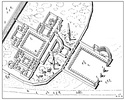
| Perspective drawing of the Roman Gymnasium Complex, with the walls cut away ... J. Travlos ... PD 2275 Horizontal (normal) ... March 31, 1974 ... Perspective drawing of the Roman Gymnasium Complex, with the walls cut away. |
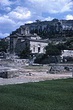
| Lawn in the Late Roman Gymnasium, against the Church of the Holy Apostles ... 1967 ... Lawn in the Late Roman Gymnasium, against the Church of the Holy Apostles. |
| Marble blocks reused in Room D of the Late Roman Gymnasium. View from the west ... AMS Horizontal (normal) ... Marble blocks reused in Room D of the Late Roman Gymnasium. View from the west. |
| Marble blocks reused in Room D of the Late Roman Gymnasium. View from the east ... AMS Horizontal (normal) ... Marble blocks reused in Room D of the Late Roman Gymnasium. View from the east. |
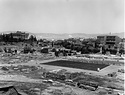
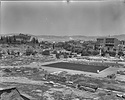
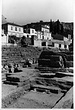
| Late walls west of late Roman Gymnasium. General view from southwest. See sketch plan in back pocket ... AMS Horizontal (normal) ... Late walls west of late Roman Gymnasium. General view from southwest. |
| Late walls west of late Roman Gymnasium. General view from southeast. See sketch plan in back pocket ... AMS Horizontal (normal) ... Late walls west of late Roman Gymnasium. General view from southeast. |
| Eponymoi. Drain Cuts B-C. Late Roman Gymnasium Drain from west showing point at which it enters Great Drain ... AMS 1685 Horizontal (normal) ... 26 Jun 1967 ... Drain Cuts B-C. Late Roman Gymnasium Drain from west showing point at which it enters Great Drain. |
| Traces of the Temple as seen in the restored court of the Late Roman "Gymnasium Complex". For the appellation "Gymnasium" see also Hesperia 35 (1966), pp. 40-48 and p. 39, fig. 2 ... Cf. nb. p. 1303 for mention of East Temple. southwest Horizontal (normal) ... 5 Oct 1966 ... Traces of the Temple as seen in the restored court of the Late Roman "Gymnasium Complex". For the appellation "Gymnasium" see also Hesperia 35 (1966), pp. 40-48 and p. 39, fig. 2. |
| Traces of the Temple as seen in the restored court of the Late Roman "Gymnasium Complex". For the appellation "Gymnasium" see also Hesperia 35 (1966), pp. 40-48 and p. 39, fig. 2 ... Cf. nb. p. 1303 for mention of East Temple. southwest Horizontal (normal) ... 5 Oct 1966 ... Traces of the Temple as seen in the restored court of the Late Roman "Gymnasium Complex". For the appellation "Gymnasium" see also Hesperia 35 (1966), pp. 40-48 and p. 39, fig. 2. |
| Northernmost room of the East Building. Top loose fill removed. View from the south. A = East Building median wall. B = Late Roman gymnasium wall ... AMS Horizontal (normal) ... B = Late Roman gymnasium wall. |
| Lawn in the middle peristyle of Late Roman Complex also called "Gymnasium". For the appellation "Gymnasium", see also Hesperia 35 (1966), pp. 40-48 and p. 39, fig. 2 ... northwest 1302 ... July 1967 ... Lawn in the middle peristyle of Late Roman Complex also called "Gymnasium". For the appellation "Gymnasium", see also Hesperia 35 (1966), pp. 40-48 and p. 39, fig. 2. |
| Lawn in the middle peristyle of Late Roman Complex also called "Gymnasium". For the appellation "Gymnasium", see also Hesperia 35 (1966), pp. 40-48 and p. 39, fig. 2 ... AMS northwest 1302 Horizontal (normal) ... July 1967 ... Lawn in the middle peristyle of Late Roman Complex also called "Gymnasium". For the appellation "Gymnasium", see also Hesperia 35 (1966), pp. 40-48 and p. 39, fig. 2. |
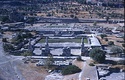
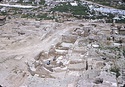
| The Late Roman Complex also called the "Gymnasium Complex". For the appellation "Gymnasium", see Hesperia 35 (1966), pp. 40-48 and p. 39, fig. 2 ... south ... 1969 ... Site | By Area | Central | Late Roman Complex | General Views ... Special Collections | Homer Thompson | Odeion | Gymnasium Complex |
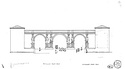
| Restored drawing of the Giants Facade of the Gymnasium, c. 400 A.D ... J. Travlos ... PD 1630 Horizontal (normal) ... 1967 |
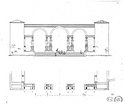
| Restored drawing of the Giants Facade of the Gymnasium, c. 400 A.D ... J. Travlos ... PD 1631 Horizontal (normal) ... 1967 |
| Floor of Building D with basin ... At first, H.A.T. thought that the Sq. Peristyle might be a Gymnasium or a market building. Here is why there is mention of Gymnasium. Cf. Hesperia XIX, 1950, pp. 322ff. Horizontal (normal) ... August 1949 |
| Floor of Building D with basin ... At first, H.A.T. thought that the Sq. Peristyle might be a Gymnasium or a market building. Here is why there is mention of Gymnasium. Cf. Hesperia XIX, 1950, pp. 322ff. Horizontal (normal) ... August 1949 |
| Archaic built drain. Section within entrance porch to Roman gymnasium. View looking north, showing fallen stones in drain channel. At right, the east wall of the drain with trampled surface at level of ... AMS Horizontal (normal) ... Section within entrance porch to Roman gymnasium. View looking north, showing fallen stones in drain channel. |
| Southeast part of the Late Roman Complex ... Cf. LVIII-21 northwest ... 1953 ... Site | By Area | Central | Late Roman Complex | Octagonal Room ... Special Collections | Homer Thompson | Odeion | Gymnasium Complex |
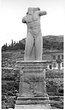
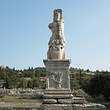
| Giant in easternmost position in "Gymnasium" series. The Late Roman Complex was identified as a Gymnasium because of its scheme and of an inscription found by Pittakis in 1848 alongside the colossal figures ... south Horizontal (normal) ... ca. 1946 ... Giant in easternmost position in "Gymnasium" series. The Late Roman Complex was identified as a Gymnasium because of its scheme and of an inscription found by Pittakis in 1848 alongside the colossal figures. |
| Octagonal Room at the southeast corner of the complex ... =LIV-73 northeast ... 26 Jun 1952 ... Site | By Area | Central | Late Roman Complex | Octagonal Room ... Special Collections | Homer Thompson | Odeion | Gymnasium Complex |
| The Octagonal Room ... Cf. LVIII-20 southeast ... 1958 ... Site | By Area | Central | Late Roman Complex | Octagonal Room ... Special Collections | Homer Thompson | Odeion | Gymnasium Complex |
| Vaulted compartment of the Basement Suite at the east end, detail of the masonry. Room B ... Cf. 84-326 east ... 1958 ... Site | By Area | Central | Late Roman Complex | Basement Suite ... Special Collections | Homer Thompson | Odeion | Gymnasium Complex |
| Raised floor near the southeast corner of Room A ... Cf. 84-328 ... 1958 ... Site | By Area | Central | Late Roman Complex | Basement Suite ... Special Collections | Homer Thompson | Odeion | Gymnasium Complex |
| The Octagonal Room ... west ... 1964 ... Site | By Area | Central | Late Roman Complex | Octagonal Room ... Special Collections | Homer Thompson | Odeion | Gymnasium Complex |
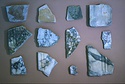
| Marble revetment found in the Basement Suite but undoubtedly fallen from the upper floor. A 3528, fragments a to l ... Cf. 84-281 ... 1966 ... Site | By Area | Central | Late Roman Complex | Detailed Views ... Special Collections | Homer Thompson | Odeion | Gymnasium Complex |
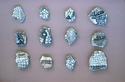
| Fragments of wall mosaic found in the Basement Suite but undoubtedly fallen from the upper floor ... 84-280 ... 1966 ... Site | By Area | Central | Late Roman Complex | Detailed Views ... Special Collections | Homer Thompson | Odeion | Gymnasium Complex |
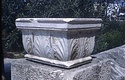
| Carved anta capital ... Horizontal (normal) ... 1968 ... Site | By Area | Central | Late Roman Complex | Detailed Views ... Special Collections | Homer Thompson | Odeion | Gymnasium Complex |
| Octagonal Room at the southeast corner of the Late Roman Complex ... southwest ... 1953 ... Site | By Area | Central | Late Roman Complex | Octagonal Room ... Special Collections | Homer Thompson | Odeion | Gymnasium Complex |
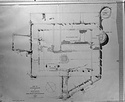
| Plan of gymnasium at Assos showing condition at close of excavations 1883 ... AMS Horizontal (normal) |
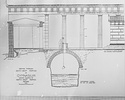
| Section through southwest portico of gymnasium showing elevation of northwest portico. Restored ... AMS Horizontal (normal) |
| West of Odeion. Cuttings in bedrock immediately west of Gymnasium Apse. From west. Strosis C outlined ... AMS east 1921 Horizontal (normal) ... 5 May 1952 |
| View showing the east wall of the East Building. At upper left, the southeast corner of the "Gymnasium Complex" with the Octagonal Room. For the appellation "Gymnasium", see also Hesperia 35 (1966), pp ... north Horizontal (normal) ... 26 Jun 1952 |
| View showing the east wall of the East Building. At upper left, the southeast corner of the "Gymnasium Complex" with the Octagonal Room. For the appellation "Gymnasium", see also Hesperia 35 (1966), pp ... AMS north Horizontal (normal) ... 26 Jun 1952 |
| View showing the east wall of the East Building. At upper left, the southeast corner of the "Gymnasium Complex" with the Octagonal Room. For the appellation "Gymnasium", see also Hesperia 35 (1966), pp ... Cf. LVI-76 north ... 1952 |
| Later course of the Great Drain overlaid by the south wall of the south-central court of the "Gymnasium Complex". For the appellation "Gymnasium", see also Hesperia 35 (1966), pp. 40-48 and p. 39, fig ... southwest 1262 Horizontal (normal) ... 12 May 1953 |
| Later course of the Great Drain overlaid by the south wall of the south-central court of the "Gymnasium Complex". For the appellation "Gymnasium", see also Hesperia 35 (1966), pp. 40-48 and p. 39, fig ... AMS southwest 1262 Horizontal (normal) ... 12 May 1953 |
| Giant in easternmost position of the "Gymnasium" series. The Late Roman Complex was identified as a Gymasium because of its scheme and of an inscription found by Pittakis in 1848 alongside the colossal ... southwest ... 1949 ... Giant in easternmost position of the "Gymnasium" series. The Late Roman Complex was identified as a Gymasium because of its scheme and of an inscription found by Pittakis in 1848 alongside the colossal figures. |
| Giant in easternmost position of the "Gymnasium" series. The Late Roman Complex was identified as a Gymasium because of its scheme and of an inscription found by Pittakis in 1848 alongside the colossal ... AMS southwest Horizontal (normal) ... 1949 ... Giant in easternmost position of the "Gymnasium" series. The Late Roman Complex was identified as a Gymasium because of its scheme and of an inscription found by Pittakis in 1848 alongside the colossal figures. |
| Giant in easternmost position in the "Gymnasium" series. The Late Roman Complex was identified as a Gymasium because of its scheme and of an inscription found by Pittakis in 1848 alongside the colossal ... This is OD 181. The neg. was destroyed and replaced by one that is not 88-461 as mentioned on print.(SD) south ... Giant in easternmost position in the "Gymnasium" series. The Late Roman Complex was identified as a Gymasium because of its scheme and of an inscription found by Pittakis in 1848 alongside the colossal figures. |
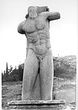
| Giant in easternmost position of the "Gymnasium" series. Front view. The Late Roman Complex was identified as a Gymasium because of its scheme and of an inscription found by Pittakis in 1848 alongside ... south ... 1949 ... Giant in easternmost position of the "Gymnasium" series. Front view. The Late Roman Complex was identified as a Gymasium because of its scheme and of an inscription found by Pittakis in 1848 alongside the colossal figures. |
| Giant in easternmost position of the "Gymnasium" series. Front view. The Late Roman Complex was identified as a Gymasium because of its scheme and of an inscription found by Pittakis in 1848 alongside ... AMS south Horizontal (normal) ... 1949 ... Giant in easternmost position of the "Gymnasium" series. Front view. The Late Roman Complex was identified as a Gymasium because of its scheme and of an inscription found by Pittakis in 1848 alongside the colossal figures. |
| Giant in easternmost position of the "Gymnasium" series, front view. The Late Roman Complex was identified as a Gymasium because of its scheme and of an inscription found by Pittakis in 1848 alongside ... south ... 1949 ... Giant in easternmost position of the "Gymnasium" series, front view. The Late Roman Complex was identified as a Gymasium because of its scheme and of an inscription found by Pittakis in 1848 alongside the colossal figures. |
| Giant in easternmost position of the "Gymnasium" series. Proper right side. The Late Roman Complex was identified as a Gymasium because of its scheme and of an inscription found by Pittakis in 1848 alongside ... west ... July 1939 ... Giant in easternmost position of the "Gymnasium" series. Proper right side. The Late Roman Complex was identified as a Gymasium because of its scheme and of an inscription found by Pittakis in 1848 alongside the colossal figures. |
| Giant in easternmost position of the "Gymnasium" series. Proper right side. The Late Roman Complex was identified as a Gymasium because of its scheme and of an inscription found by Pittakis in 1848 alongside ... AMS west ... July 1939 ... Giant in easternmost position of the "Gymnasium" series. Proper right side. The Late Roman Complex was identified as a Gymasium because of its scheme and of an inscription found by Pittakis in 1848 alongside the colossal figures. |
| Westernmost Triton in the "Gymnasium" series (right), printed in reverse to show the inspiration from the Parthenon West Pediment. Compare with Carrey 's drawing of central group in the Parthenon West ... ca. 1948 |
| Westernmost Triton in the "Gymnasium" series (right), printed in reverse to show the inspiration from the Parthenon West Pediment. Compare with Carrey 's drawing of central group in the Parthenon West ... AMS Horizontal (normal) ... ca. 1948 |
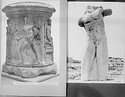
| On the left, representation of Hephaistos on the Madrid puteal (Einzelaufnahme 1729) and at right the easternmost Giant in the "Gymnasium" series. The Late Roman Complex was identified as a Gymasium because ... ca. 1948 ... On the left, representation of Hephaistos on the Madrid puteal (Einzelaufnahme 1729) and at right the easternmost Giant in the "Gymnasium" series. The Late Roman Complex was identified as a Gymasium because of its scheme and of an inscription found by Pittakis in 1848 alongside the colossal figures. |
| On the left, representation of Hephaistos on the Madrid puteal (Einzelaufnahme 1729) and at right the easternmost Giant in the "Gymnasium" series. The Late Roman Complex was identified as a Gymasium because ... AMS Horizontal (normal) ... ca. 1948 ... On the left, representation of Hephaistos on the Madrid puteal (Einzelaufnahme 1729) and at right the easternmost Giant in the "Gymnasium" series. The Late Roman Complex was identified as a Gymasium because of its scheme and of an inscription found by Pittakis in 1848 alongside the colossal figures. |
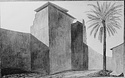
| Stoa of Attalos: north end as seen from northeast.
From an unpublished water color in the Gennadius Library. Painted by an unknown artist, probably in 1785. Legend on back "No.32. Ruin at Athens supposed ... AMS Horizontal (normal) |
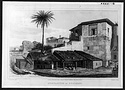
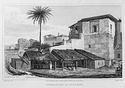
| Middle Tower in the Stoa of Attalos, Piers 10-11. From a drawing made at the beginning of the 19th century for Edward Dodwell and published in his "Classical and Topographical Tour through Greece", 1819, ... The middle tower was demolished in 1900 by the Greek Archaeological Society. (Hesperia XXVIII, 1959, p. 88) (SD) Horizontal (normal) ... ca. 1834 |
| Middle Tower in the Stoa of Attalos, Piers 10-11. From a drawing made at the beginning of the 19th century for Edward Dodwell and published in his "Classical and Topographical Tour through Greece", 1819, ... The middle tower was demolished in 1900 by the Greek Archaeological Society. (Hesperia XXVIII, 1959, p. 88) (SD) Horizontal (normal) ... ca. 1834 |
| A Triton from the second facade of the Roman Odeion, ca. A.D. 150-175, illustrates the continuity of scultpural practice in the Agora. The torso of the Triton was strongly influenced by one of the fugures ... Craig Mauzy ... Horizontal (normal) ... 6 Aug 2005 ... A Triton from the second facade of the Roman Odeion, ca. A.D. 150-175, illustrates the continuity of scultpural practice in the Agora. ... The Triton was later reused in the 5th-century A.D. structure that occupied the site of the Odeion, probably a gymnasium. |
|
|