|
|
| Preliminary Report on the 2004 Excavation Season ... John McK. Camp II ... All the work during the season 2004 was concentrated on the northwest corner of the Agora north of the Panathenaic Way.
In BZ North, the last remains of Byzantine fills and walls were removed and Hellenistic, ... 7 Jun-16 Jul 2004 ... In BZ North, the last remains of Byzantine fills and walls were removed and Hellenistic, early Roman and late Roman fills were explored. A gap in the archaeological record between the late Hellenistic/early Roman to late Roman periods was discovered. ... In the building, further cleaning took place, revealing more of an early Roman structure. Along the west side of the street a terracotta pipeline for fresh water was traced for much of the length of the excavated area.
|
| Report on Excavations in the Athenian Agora 1990 ... T. Leslie Shear, Jr ... This is a report on the archaeological field work conducted in the Athenian Agora during the period from December 1989 to December 1990. The actual excavation period was preceded by preparatory operations ... 4 Jun-3 Aug 1990 ... In section ΒΖ, Byzantine and and Roman fills were excavated. ... In Section ΒΗ mostly modern fills were excavated. |
| Preliminary Report on the 2007 Excavation Season ... John McK. Camp II ... Excavation continued this year in the sections ΒΖ, ΒΗ and Γ.
In Section ΒΖ South, two areas were investigated: the north-south road and the areas west of the road. In the road, hard-packed gravel surfaces ... 13 Jun-3 Aug 2007 ... Excavation in other fills went down to late 8th and early 7th centuries B.C. ... In Section BH, the last of the 10th/11th century walls and other Byzantine installations were cleared and excavation continued into late Roman fills. More of the back wall of the presumed Stoa Poikile was found. |
| Sections Ε, Ν, Η 1952 ... Homer A. Thompson ... Mycenaean graves were excavated in section Ε.
Section Ν was disturbed by late pits, bothroi and walls. Excavation was carried out through Roman levels. The area seemed to have been leveled out and raised ... 4 Mar-31 May 1952 ... Excavation was carried out through Roman levels. The area seemed to have been leveled out and raised as part of a landscaping project turning the area into a level square. ... Earlier fills were found only in wells and pits cut down into bedrock. ... Work in section Η was confined to cleaning in and around the large late Roman building covering most of the section. |
| Preliminary Report on the 2000 Excavation Season ... John McK. Camp II ... Excavations were carried out in three sections, two to the northwest, (ΒΖ and ΒΕ) and one to the southeast of the Agora square (ΕΛ).
In Section ΒΖ the investigation of the remains of the 11th century settlement ... 6 Jun-28 Jul 2000 ... A large amount of late Roman coins were recovered. ... The bedrock lies high in this area and the fills were shallow. |
| Preliminary Report on the 2001 Excavation Season ... John McK. Camp II ... Excavations were carried out at the northwest of the Agora in sections ΒΖ and ΒΕ, and in the area of the Eleusinion in section ΕΛ.
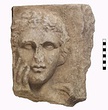
In Section ΒΖ, the investigation of the settlement of the 11th century ... 11 Jun-3 Aug 2001 ... The lowest floor levels of the buildings were excavated down into layers of the 7th to 9th centuries, exposing the Byzantine walls to their full depth and the upper parts of the late Roman walls beneath. ... Fragments of herms and terracotta figurines came to light in disturbed fills.
In section ΒΕ, the work in the Classical shop building continued. ... In section ΕΛ, the area just south of and uphill from the Eleusinion was excavated, along the east face of the late Roman fortification wall. |
| Preliminary Report on the 2008 Excavation Season ... John McK. Camp II ... Excavations took place in three sections, two north of Hadrian Street (ΒΗ and ΒΘ) and one in the old area south of the Tholos (Γ).
In Section ΒΗ, layers in, over and behind the building identified as the ... 10 Jun-1 Aug 2008 ... A rubble wall may represent a late blocking of the interior colonnade, relatively common in the late Roman period.
In Section ΒΘ, a new section was opened up after the demolition of two houses. Mostly late fills were dug but the top of Byzantine walls came to sight in some places, as was large worked blocks that may have come from one or several Classical buildings.
|
|
|