|
|
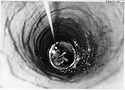
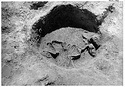
Stone-lined Well at R/16-13/18,19.
Stop at -7.00m due to danger of collapse and time ... 450-425 B.C ... Stone-Lined Well at R/16-13/18,19 |
Tile-lined Well in NE room (R/18,19-13/20).
Homogenous dump ... 350-325 B.C ... R/18,19-13/20 |
Northern Manhole to Water Channel [R 9-10], East of Shop 14 ... 2nd c. B.C ... P-R 6-12 ... R 9-10 |
Cistern at 51/ΙΑ (merged with R 17:2) Asterisk: R 17:1* ... R 17:1 ... R 17:1 |
(cancelled) Asterisk: R 8:1* ... Asterisk: R 8:1* |
Cancelled. Asterisk: R 10:2* ... R 10:2 ... R 10:2 |
Well in street leading to Roman Agora. Not excavated below 2.10m.
This has the same date as the latest pieces in R 13:1 (JWH). Coins:
6 August 1946 #1-#3 Estimated Grid ... Ca. 40-50 A.D ... R 13:2 ... R 13:2 |
Double Well by Entrance to Square Building (Well B)
Wall A (R 9:2) was Late Geometric or transitional well, into one-half of which a bothros had been sunk in Turkish times (16th c. A.D.)-R 9:3.
This bothros ... ca. 17th century A.D ... R/18,19-9/16,17 |
Well in Stoa Shop 6 (5th century).
No evidence for period of use. Considerable dumped filling of fragmentary black and plain vases; no figured fragments are preserved, but the small amount of impressed ... 450-425 B.C ... R/3,4-11/10,11 |
Bottle-shaped cistern at R/1-13/14,15, probably associated with the building which lies under the Northwest Stoa. Single dumped fill. Coins
11 June 1975 #822
11 July 1975 #864 July 1997 samples taken by ... 300-265 B.C ... Bottle-shaped cistern at R/1-13/14,15, probably associated with the building which lies under the Northwest Stoa. |
Valerian Wall, undisturbed contents: Lower stretch.
Not on concordance, not on cardex neither. No info. Asterisk: R 15-16* ... Asterisk: R 15-16* |
Well cut through cistern at 51/ΙΑ (merged with R 17:1); well and cistern filled at one time ... 5th c. A.D ... Well cut through cistern at 51/ΙΑ (merged with R 17:1); well and cistern filled at one time. |
Debris, Room I of Street Stoa (R/16,20-13/10,15).
The lack of any rooftiles and similar architectural debris suggests that perhaps it was brought in from an adjacent area and dumped in the room. This is ... 6-8 May 1975 ... R/16,20-13/10,15 |
Courtyard Well (R/15-13/20).
The well went out of use as a result of the Herulian sack of 267 A.D. in the upper part of the well the well-head itself was found, one of the finest in the Agora collection ... 27 June-15 July 1975 ... R/15-13/20 |
Byzantine Well in Stoa Shop 15 Estimated Grid ... Byzantine ... R/5,6-9/12,13 |
Well behind Stoa Shop 18 (Well G: EB). Provides useful antecedents for many later shapes both black and plain.
Diameter at bottom 0.88m. Eight pairs of footholds preserved. The influx of water during excavation ... 650-625 B.C ... R 8:2 ... R 8:2 |
Geometric Well East of Stoa Room 10 Pottery mended May 1950, in two tins. Nothing discarded. Slight disturbance throughout became of proximity of Roman well (p. 1252). Estimated Grid ... 725-700 B.C ... R/7,8-10/9,10 |
Well East of Stoa Room 6 (well with Siana Cup); scanty dumped filling.
No water. Well never used. Estimated Grid ... 600-550 B.C ... R 11:2 ... R 11:2 |
Geometric Well East of Stoa Room 4. Diameter 1.10m; narrows at bottom. Rough-cut, with irregular footholds north-south and east-west sides. Little water; no use fill Estimated Grid ... 725-700 B.C ... R 12:2 ... R 12:2 |
Thra (ΘΡΑ) Well (East of Stoa Room 2). Heavy dumped filling, including figured, black and plain wares, and also a quantity of animal bones, mostly skulls of oxen. On many of these the horns had been sawn ... Ca. 520-480 B.C ... R 12:1 ... R 12:1 |
Well in Stoa Shop 2. Diameter at top 1.20m. P 2527, P 25280 and P 25281 found at the bottom indicated a short period of use. The dumped filling above consisted in large part of clay of different colors, ... Ca. 525-500 B.C ... R/3,4-12/6,7 |
| Well in Stoa Shop 3. Diameter at top 1.20m. The mouth o the well was overlaid by a large conglomerate block placed by the Stoa builders to seal it. Masses of pottery including many water-jars filled the ... Ca 520-480 B.C ... R/2,3-12/14,15 |
Double Well by E. Entrance to Square Building (Well A) (formely a O 8:1) Coin
21 April 1951 #1 (disintegrated) Carefull there is two O 8:1, the actual one is a filling around rubble wall at 35/ KE.
Estimated ... 750 to early 7th century B.C ... R 9:2 ... R 9:2 |
Well East of Stoa Room 11; no appreciable change in pottery top to bottom; dumped fill of Augustan times. Coins:
4 May 1950 #1-#3
15 May 1950 #1 Estimated Grid ... Late 1st c. B.C.-early 1st c. A.D ... R/7,8-10/9,10 |
"Symbolon Pit" (Rectangular Pit in bedrock E of Stoa, Room 5). Preserved depth 0.45m, original depth estimated at ca. 1.65m., the upper part having been cut away by successive building operations in the ... Third quarter of 5th c. B.C ... R 11:1 ... R 11:1 |
Mycenaean Tomb under Valerian wall (Burial 12).
It was impossible to fix the limits of the tomb in any direction, since at the north and south it was cut by the wall, an operations could not be extended ... Myc. III B ... R 7:1 ... R 7:1 |
Mycenaean Tomb to E of Stoa Shop 19 (ΣΑ 2).
Found while digging just east of Stoa Shop XIX, when came upon some bones, Mycenaean sherds and a pot. As the excavation was enlarged the legs of two skeletons ... Myc. III A:2 (2nd half of 14th c.) ... R 7:2 ... R 7:2 |
Early Roman fills E of Stoa (Room 17, Rooms 13-16) xx ... Early Roman ... R 8-9 ... R 8-9 |
Well East of Stoa Shop 14. Coins:
31 October 1949 #1-#2 ... 1st c. A.D ... R 9:1 ... R 9:1 |
| Dog's Grave, the bones carefully disposed. It contained a small amount of contemporary pottery in the fill, of which some deposited nearby, may have been intended as offerings ... Third quarter of 4th c. B.C ... R 10:3 ... R 10:3 |
Mycenaean Grave, disturbed, in scarp E of Stoa, a little to the south of the group of tombs clustered around Pier 12. No remains (perhaps a child's grave whose bones had completely disintegrated).
Small ... Myc. IIIA:2-B ... R 10:4 ... R 10:4 |
Fifth century Pit E of Stoa Room 11 with coarse pottery and a few black-glazed, some with stamping and red-figured pieces ... Ca. 450-425 B.C ... R 10:6 ... R 10:6 |
Pocket of late Geometric pottery in bedrock behind Stoa Shop V; apparently a household deposit ... 750-700 B.C ... R 11:4 ... R 11:4 |
| Shallow pit below layer I in Stoa Shop VI (Pyre)
Diameter 0.90; D. 0.15m Under shop VI of the Stoa of Attalos Pottery, ash, burning and packing of small stones in pit in stratum. The pyre was covered by ... Ca. 350 or 325 B.C. ? ... R 11:5 ... R 11:5 |
Pre-Stoa Pit beneath floor of Shop I ... 2nd c. B.C ... R 12:5 ... R 12:5 |
No period of use. Below the upper (Early Roman) dump extending down to ca. 6.10m. was a dumped fill of broken pottery in great quantity, including a high proportion of red-figured fragments. Masses of ... Ca. 430-400 B.C.
Late 1st c. B.C.-mid 1st c. A.D ... R 13:1 ... R 13:1 |
Early 1st c. A.D ... R 13:1.1 ... R 13:1.1 |
Last quarter 5th c. B.C ... R 13:1.2 ... R 13:1.2 |
Well at 3/Ζ (see cistern 21/ΙΗ, upper fill) ... 600-550 B.C.- with some later disturbance ... R 13:3 ... R 13:3 |
Well at 21/Ε (beneath Library of Pantainos).
The clearing of the well was abandoned because of a cave-in of the rock walls. Heavy dumped filling, the proportion of fine black table ware high ... Ca. 440-425 B.C ... R 13:4 ... R 13:4 |
Well at 20/ΙΔ.
No POU fill. Bottom packed with sherds, including roof-tile fragments. Above this, were six meters with a "fair quantity" of sherds; then the top meter and a half contained a great quantity ... Ca. 420-390 B.C ... R 13:5 ... R 13:5 |
Pit at 9/Ε Coins:
7 March 1933 #15-#23 ... Classical to Turkish ... R 13:6 ... R 13:6 |
| Disturbed pyre in NE stoa area.
In western room of westernmost shop building. A patch of ash i or at the level of layer 2 (lot Ι 189d), partially destroyed by modern wall. Pottery from layer 2 dates ... 400-350? ... R 13:7 ... R 13:7 |
Filling in the footing trench of the late Roman Fortification.
Includes Layer 1 and Layer 2 of Library Colonnade opposite Room 2. "Note: both these layers are fill thrown into V.W. footing trench." (nb.p ... End 3rd. c. A.D ... R 14:1 ... R 14:1 |
Sculptor's Workshop at 37-40/Β-ΣΤ Coins
20 April 1933 #1-#20
21 April 1933 #37-#41
24 April 1933 #97-#100
1 May 1933 #5-#8
4 May 1933 #2
12 May 1933 #8-#9
15 May 1933 #8
S 343, S 407-S 413, S 390: Fragments ... Ca. 267 A.D ... R 14:2 ... R 14:2 |
East Building, pit in footing trench. Coins:
20 April 1959 #5-#6 ... 2nd c. A.D ... R 16:1 ... R 16:1 |
Pocket N of drain C A. Walker coin deposit ... R 16:2 ... R 16:2 |
Well at 56/ΚΣΤ. Diameter 1.05m. Found in 18 April 1938.
Dug in 3 May 1938 ... 600-575 B.C ... R 17:3 ... R 17:3 |
Tile-curbed well; it drew water from Poros Aqueduct. Coins
8 June 1938 #1
14 June 1938 #2 (where is this coin? 30 July 1976 p. 1137). First mentioned as Well at 46/ΙΗ ... 8-14 June 1938 ... R 17:4 ... R 17:4 |
Well A
Mostly uniform dumped fill. use level probably late. The well head (A 2753) had evidently been broken up and thrown in as soon as the well went out of use. Dumped filling, second quarter of 7th ... 7th century B.C ... R 17:5 ... R 17:5 |
Flask-shaped cistern (1959) (Cistern under Room 4 in NE corner of Section). Upper filling soft silt with a little pottery. Lower filling hard silt, almost no pottery.
1.35m in diameter at the floor with ... End of the 4th c. B.C ... R 17:6 ... R 17:6 |
| Small pit (in Layer I) = Grave ("Pyre") Identified as pyre by SIR.
Pottery and burning ("pit filled with black") in pit slightly west of Panathenaic Road, dug into layer I (lot AA 180, much earlier 6th ... 275-250 B.C ... R 18:1 ... R 18:1 |
Cistern at 43/ΙΣΤ, outside the southeast corner of the market square, slightly west of the Panathenaic way. A small neat plaster-lined cistern filled with material evidently all dumped at the same time ... Ca. 375-350 B.C ... R 18:2 ... R 18:2 |
Well at 9/ΙΣΤ-ΙΖ has been cleaned and stripped of its tiles and original filling and bedrock thrown back into shaft.
Joins between sherds from all levels.
No coins or lamps. Containers examined 5 March ... 1st c. B.C ... R 19:1 ... R 19:1 |
Drain at 7/ΙΘ-ΚΑ ... Early Roman ... R 19:2 ... R 19:2 |
| John Travlos ... (Grave XXXII: EG) Urn cremation (trench-and-hole). Published as cremation burial of a warrior.
The tomb was probably originally oriented north-south, with the urn-hole at the south end. The north side ... Transitional Early Geometric II-Middle Geometric I ... R 20:1 ... R 20:1 |
Excavation terminated at 7.39m. due to danger of collapse. All the objects are from section Ω ... Ca. 50-1 B.C ... R 20:2 ... R 20:2 |
Pit under fallen stone at 13/ΜΔ Recorded in Ω Books (no page) ... R 20:3 ... R 20:3 |
"Deep Pit" at 8/ΜΗ ... 6th-4th centuries B.C ... R 20:4 ... R 20:4 |
Well at 18/ΜΑ. Not dug to bottom. Coin
9 May 1957 #5 Recorded in Ω Books, pp. 1874ff ... 30 April-14 May 1957 ... R 20:5 ... R 20:5 |
Well at 34/ΚΔ.
a) Depth 13.60m. Little pottery (14 tins) and some of that made useless by loss of tickets during war.
b) Top to 13.00m (upper and transitional fills) 4th century. LRP ware and a 4th century ... Late 2nd to middle of 3rd cent; 4th century ... R 21:1 ... R 21:1 |
Cistern on the lower Acropolis slopes, west of Panathenaic Way; dumped filling of 1st century B.C.
Bottom diameter 3.90m. Cistern with connecting draw-shaft and a dead end tunnel dates from Late Hellenistic ... 1st century B.C ... R 21:2 ... R 21:2 |
Well at 30/ΛΒ; the shaft possibly never used as a well; dumped filling with a small amount of fragmentary pottery ... Ca 500 B.C ... R 21:3 ... R 21:3 |
Middle Helladic Gully ... Middle Helladic ... R 21:4 ... R 21:4 |
Well N: Middle Helladic, southwest of Klepsydra.
Diameter, ca. 0.70m. Water level ca. -6.00m ... Middle Helladic ... R 28:1 ... R 28:1 |
Well X: Late Neolithic. Southwest of Klepsydra.
Diameter, top ca. 0.90m (max), bottom less than 0.70m. No water ... 13-15 June 1937 ... R 28:2 ... R 28:2 |
Stoa Construction Fills (n.b. for all Stoa and pre-Stoa fills later than construction filling of Square Peristyle see P-R 6-12)
Over 100 stamped amphora handles in fill. No long-petal bowls, but one fragment ... Before ca. 150 B.C ... Stoa Construction Fills (n.b. for all Stoa and pre-Stoa fills later than construction filling of Square Peristyle see P-R 6-12)
Over 100 stamped amphora handles in fill. |
Square Peristyle (Square Building) Constructions fill + other (square peristyle area); fragmentary and with some earlier material but in the main, where undisturbed, a homogenous deposit. Coins:
26 May ... Βefore 300 B.C ... O-R 7-10 ... O-R 7-10 |
Stoa of Attalos (Shop VI), between poros orthostates of front wall. No deposit list ... Q-R 10:1 ... Q-R 10:1 |
Late Roman fills on line of Dromos xx ... Late Roman ... Q-R 14-15 ... Q-R 14-15 |
First trial east Stoa colonnade, N. of S. wall III, layer 12.
Note quantities of cattle bones, the knuckles sawn off and many worked bits. Evidently a bone implement factory near by. [nbp. 2139] Coins: ... Late 3rd c.-earliest 4th c. A.D ... Q-R 14:1 ... Q-R 14:1 |
| Grave (?). Identified as pyre by SIR.
Pyre pots dispersed in fill over a pebble floor, with pottery ranging from the 5th c. B.C. to 3rd c. A.D. (lot ΑΑ 168), and lying directly below modern fill. No burning ... 400-350 B.C ... R 18-19:1 ... R 18-19:1 |
Floor of Mudbrick Building.
The material from this deposit comprises what was found on the floor of the Brick Building, as opposed to the fallen brick fill Coins:
24 February 1936 #1-#3 SS 11078-SS 11079 ... To ca. 165 B.C ... Q-R 10-11:2 ... Q-R 10-11:2 |
Herulian debris over the Library of Pantainos.
(Within this area the "Sculptor's Workshop", Iota, "Stoa" Room 1 has a group number of its own for the destruction fill R 14:2)
(Note also that the "Bone ... (Within this area the "Sculptor's Workshop", Iota, "Stoa" Room 1 has a group number of its own for the destruction fill R 14:2)
(Note also that the "Bone Factory" in the Library, Q-R 14:1 is a later, post-Herulian deposit)
(But in general the good Herulian fills included under Q-R 13-14:1)
MC reports that in any of these rooms where she has listed "Herulian debris" the filling is all one thing. |
Construction fill below floor of Brick Building.
Areas involved:
a) Western portion of Room A: packing below floor.
b) Room B: packing below floor of northern,larger room.
c) Fill over water channel in ... First quarter 2nd century, before its end ... Coins:
14 July 1950 #1 (disintegrated)
18 July 1950 #1-#3 (disintegrated)
SS 11078-SS 11079 Uncertain from Q-R 10-11:2 or Q-R 10-11:1 |
Destruction Layer, Brick Building.
It represents material from the layer of fallen brick covering the floor and wall socles of the Brick Building and therefore marking the destruction of the structure ... To ca. 165 ... Q-R 10-11:3 ... Q-R 10-11:3 |
House R, fill under drain tiles and fillings associated with house K in industrial area, including what was C 19:15, plus C 19:16 and
C 19:17.
a) House built as dwelling in second half of 5th.c.
b) Used ... Ca. 5th and 4th c. B.C ... House R Fillings |
Well in house R of industrial area west of the Areopagus. This well, originally tiled, was abandoned and filled at the time of the conversion of the house into a stone-cutters' workshop.
Tiled well but ... Ca. 425-400 B.C ... Well in House R of Industrial Area West of Areopagus |
(now R 9:3) Asterisk: O 8:2* ... (now R 9:3) |
R. Ross Holloway ... Protogeometric Grave in Koletti Garden. Male inhumation.
Tomb first encountered and partially damaged by workmen who were digging a cess pit for the restored Koletti House on Polygnotos street. The tomb ... "Submycenaean"/Early Protogeometric ... R. Ross Holloway |
Pit in House R, West Room. Grouped with and published with C 19:5. Asterisk: C 19:17* ... Pit in House R, West Room. Grouped with and published with C 19:5. |
Pocket in wall of Turkish bothros. The uninventoried material includes along with earlier pieces, the fragment of a bolsal very close to those from the well R 13:4 ... 450-425 B.C ... The uninventoried material includes along with earlier pieces, the fragment of a bolsal very close to those from the well R 13:4 |
A total of 79 ostraka was recovered from Room 5 of the Classical Building.
More of this deposit was excavated in the 2021 season on the opposite side of the scarp of Wall R, up against the face of Wall ... 500-475 B.C ... More of this deposit was excavated in the 2021 season on the opposite side of the scarp of Wall R, up against the face of Wall 4. ... The collapse of Walls G’ and R allowed us to excavate more of this deposit in the 2022 season. |
Filling of S outer foundation of Square Building.
310-275 B.C., with substantial amount of residual early material. Coins:
25 August 1953 #1-#3 ... 325-300 B.C. (?) ... P-R 6-12 |
Deposit alongside Greek House I, perhaps giving the construction date of the second phase. Deposit list title it as : outside of east wall of Roman House H ... Last quarter of the 4th c. B.C ... R 20 |
| Circular pit and irregular cutting north of it. Diam. of pit ca. 0.80m; Dimension of irregular cutting ca. 1.00x1.20m. The pit was dug into bedrock and filled with red earth which was packed with undisturbed ... Second half of 7th c. B.C ... This was probably the same establishment to which the well R 17:5 belonged. |
Investigations in the area around the Tholos, especially to the east and south of the building, between it and the Great Drain, and not otherwise specified as deposits.
This "deposit" has no form. It ... various levels and dates ... Labeled trenches B, J, K, R are in section Β. |
| Extract from notebook ΠΘ XIX, pp. 3644-3646. Well at 105/ΝΗ (report on sorting of pottery, July 19, 1951 - H.S. Robinson).
"Not a useful well" HSR.
Well dug to 1.50m., vi/9/36; dug from 1.50m. to bottom ... Early Roman; use fillings of 2nd. c. B.C. and 1st. and 4th. c. A.D.; dumped filling of late 4th. c. (HSR)
Fill I: 2nd. c. B.C.
Fill II-V: to second half of 4th. c. A.D.
Fill VI: mixed to Byzantine ... produced 2 type XXII lamps (L 2992-3) which R. Howland dated late 3rd to early 2nd cent. |
|
|