|
|
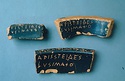
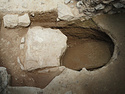
Ostrakon Pit (Horos Terrace Trench). Oval pit cut into bedrock. Packed filling of stones, coarse sherds and roof tiles; among these a few fragments of finer vases and 22 ostraka, probably from the ostracaphoria ... Ca. 490-480 B.C. and later ... Ostrakon Pit (Horos Terrace Trench). |
Same filling as Theseion Street Deposit D 7:2 but separate list.
Perhaps also P 7904. Area disturbed by Turkish (50-56/ΜΓ-ΜΣΤ).
This is 3-4 m. west of Hephaisteion, and the hole was probably filled at ... Ca. 500-470 B.C ... Ostrakon Pit |
| Pit (6x10) in the valley between the Areopagus and the Hill of the Nymphs. Large cutting in bedrock with 540 ostraka, mainly of the late eighties of the 5th. c. B. C. Much pottery, principally of the early ... Ca. 500-450 B.C ... Ostrakon Area |
Ostrakon deposit, sand fill in a shallow channel in bedrock at the bottom of the Great Drain in the valley between the Areopagus and the Hill of Nymphs.
This group of ostraka may well come from a single ... Ca. 490-480 B.C ... Ostrakon deposit, sand fill in a shallow channel in bedrock at the bottom of the Great Drain in the valley between the Areopagus and the Hill of Nymphs.
|
| Marcie Handler ... This deposit is a Mycenaean cist grave with two cover slabs, a type of burial described by Immerwahr in Agora XIII (pp. 103-104). Cist graves appear side by side with chamber tombs in the Mycenaean cemeteries ... LHIIB-LHIIIA:1 ... B.C. and an Ostrakon of Xanthippos (ΒΖ 1983), providing a terminus post quem of 484 B.C for the fill that collapsed on top of the slab. |
|
|