|
|
| Section Χ 1937 ... Margaret Crosby ... The area signified as Section Χ lays outside the Agora proper and no signs of any public buildings were found. The area seems to have been used for private houses from the end of the 6th c. B.C. Apart ... 25 Jan-18 May 1937 ... Close by the graves was a garbage pit from about 480 B.C., one well from ca. 420 B.C, and another well from ca. 375 B.C.
... A house of the Roman period was revealed in the central region of the section. A late Roman well was partly excavated.
|
| Section X
Miscellaneous Notes Compiled in Summer of 1946 ... Margaret Crosby ... This report is a summary of the excavations taken place in 1937 as well as in 1946.
Some pottery indicate habitation in the area from the Geometric period. Two shallow graves of the 6th and 5th centuries ... 27 May-21 Jun 1946 ... The lower part of another 5th century B.C. well was also found.
No traces of walls and floors from the 4th-5th centuries B.C. were found, but cisterns, wells, and drain trenches give clear indication of continuous habitation.
A Roman period water channel and a drain were uncovered, and a well, "The Amphora Well", was dug. ... A late Roman well was partly excavated. |
| Section Φ Season of 1937 ... Eugene Vanderpool ... In antiquity the area included in Section Φ lay outside the Agora proper and were apparently occupied only by houses and small buildings. The earliest period of which any considerable remains were found ... 25 Jan-17 Jun 1937 ... The earliest period of which any considerable remains were found was the Geometric: three Protogeometic graves and one well, as well as one Geometric grave and one disturbed well, were discovered and excavated.
... Two Roman wells were excavated, as well as a late Roman tomb. A late Roman building covered almost the whole section and was probably part of the great complex of late Roman buildings that covered most of the center of the Agora. |
| Section Ζ 1951 ... Homer A. Thompson ... The remaining pieces of the so-called Byzantine wall were removed, as well as a late Roman wall. Excavations in front of the Civic Offices revealed a hard road surface from the 3rd century A.D. More than ... 21 May-13 Jun 1951 ... The remaining pieces of the so-called Byzantine wall were removed, as well as a late Roman wall. ... Two monument bases, cut off by a Turkish well, were discovered.
|
| Sections Ε, Ν, Η 1952 ... Homer A. Thompson ... Mycenaean graves were excavated in section Ε.
Section Ν was disturbed by late pits, bothroi and walls. Excavation was carried out through Roman levels. The area seemed to have been leveled out and raised ... 4 Mar-31 May 1952 ... Section Ν was disturbed by late pits, bothroi and walls. ... Work in section Η was confined to cleaning in and around the large late Roman building covering most of the section. A Mycenaen well was found as well as a fine Archaic altar and peribolos. |
| Preliminary Report on the 2001 Excavation Season ... John McK. Camp II ... Excavations were carried out at the northwest of the Agora in sections ΒΖ and ΒΕ, and in the area of the Eleusinion in section ΕΛ.
In Section ΒΖ, the investigation of the settlement of the 11th century ... 11 Jun-3 Aug 2001 ... The lowest floor levels of the buildings were excavated down into layers of the 7th to 9th centuries, exposing the Byzantine walls to their full depth and the upper parts of the late Roman walls beneath. A well was partially excavated, a stone-lined cesspit was uncovered and a large plaster-lined pit was discovered. ... In section ΕΛ, the area just south of and uphill from the Eleusinion was excavated, along the east face of the late Roman fortification wall. |
| Athenian Agora
Excavation Summary for 2021 ... John McK. Camp II ... Excavations continued in sections ΒΖ and ΒΘ in and under the Classical Commercial Building, the Painted Stoa, and the orthostate enclosure suggested to be the Leokoreion.
In section ΒΖ the goal was to ... 14 Jun-6 Aug 2021 ... In Section ΒΘ West, two trenches were opened to examine part of the floor of the Stoa Poikile beneath the late Byzantine houses. In the western trench, fragments of a Roman inscription were found. In the area further east, rubble walls of the late Roman period and other disturbances have destroyed most of the original stoa floor.
|
| Preliminary Report on the 2002 Excavation Season ... John McK. Camp II ... Excavations continued in the northwest corner of the Agora (sections ΒΕ and ΒΖ) and in the Eleusinion area (ΕΛ), and a trial trench was opened up in the Panathenaic Way (Σ).
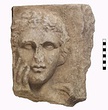
In section ΒΖ, the exploration ... 10 Jun-2 Aug 2002 ... In section ΒΖ, the exploration of the Byzantine settlement and the late Roman remains underneath them continued. ... At the end of the season, a Roman statue head appeared.
... In the Eleusinion area there are no surviving architectural remains. A well from the late 6th to early 5th century B.C. was excavated, and while scraping bedrock, a marble portrait head was discovered. |
| Preliminary Report on the 2008 Excavation Season ... John McK. Camp II ... Excavations took place in three sections, two north of Hadrian Street (ΒΗ and ΒΘ) and one in the old area south of the Tholos (Γ).
In Section ΒΗ, layers in, over and behind the building identified as the ... 10 Jun-1 Aug 2008 ... A rubble wall may represent a late blocking of the interior colonnade, relatively common in the late Roman period.
... A tile-lined well was found and its location should indicate that the area was an open courtyard surrounded by buildings. The well went probably out of use in the 4th century B.C. |
| Preliminary Report on the 2000 Excavation Season ... John McK. Camp II ... Excavations were carried out in three sections, two to the northwest, (ΒΖ and ΒΕ) and one to the southeast of the Agora square (ΕΛ).
In Section ΒΖ the investigation of the remains of the 11th century settlement ... 6 Jun-28 Jul 2000 ... Several pithoi were more fully exposed and one tile-lined well was uncovered and partially excavated. A large amount of late Roman coins were recovered. ... The last of the fill containing ostraka was cleared adding another dozen or so to the total number of ostraka found, and the excavation of the 5th century B.C. well was completed.
|
| Preliminary Report on the 2003 Excavation Season ... John McK. Camp II ... Excavations in 2003 were carried out largely in the northwest corner of the Agora known as Section BZ. The area was divided into two parts: the north-south road and areas to the west, and east of the road ... 13 Jun-25 Jul 2003 ... After several years of exploring the Byzantine houses of the 10th century A.D. which overlay the area, the foundations were stripped away and substantial progress into the underlying Roman remains were made. ... The main topographical feature was the north-south street which divided the area in two parts with late Roman walls on both sides of the street. ... East of the road, further evidence of occupation in the area were discovered, as well as of activity by coroplasts.
|
| Section Υ: 1958 Excavation Report ... Dorothy Burr Thompson ... Two areas at the north foot of the Areopagus were uncovered. The first area did not yield much of interest due to modern disturbances. Excavations of a well, three pits and a water channel produced however ... 3 Mar-3 May 1958 ... Excavations of a well, three pits and a water channel produced however ancients material.
... Little evidence remain from late Hellenistic to late Roman period but habitation continued in the area until Byzantine times. |
| Section ΛΛ 193
Excavation Summary ... Dorothy Burr Thompson ... Excavations in Section ΛΛ revealed that the original contour of Kolonos Agoraios had been much sharper than in modern times. No traces of early graves were found in the area; first sign of habitation is ... 1 Feb-23 Jun 1937 ... The area was probably covered with houses of which five establishments were well preserved, several others less preserved.
... In the early Roman period a filling of large sherds covered most of the area, probably due to the general building activity of that period. ... In the late 4th century A.D. the area suffered much damage.
|
| Section Ω 1938 ... M. Crosby ... Section Ω lies in the east end of the north slope of the Areopagus, well to the southeast of the market square proper. Excavation showed, as expected, that the area was a residential district throughout ... 16 Jan-17 Jun 1938 ... Section Ω lies in the east end of the north slope of the Areopagus, well to the southeast of the market square proper. ... Part of the area was covered by a mass of destruction debris from the 7th or 8th century A.D., and it was probably not built up in Byzantine times; the Turkish and modern houses rested directly on the late Roman fill at the north and southeast, on Classical and Hellenistic in the center, and on bedrock in the southwest. |
| Preliminary Report on the 2011 Excavation Season ... John McK. Camp II ... Excavations were carried out in three sections, two of them overlying the Painted Stoa (ΒΗ and ΒΘ) and one in the Panathenaic Way (ΒΓ).
In Section ΒΓ, excavations were concentrated on the Panathenaic Way ... 13 Jun-5 Aug 2011 ... In Section ΒΗ, overlying the east part of the Painted Stoa, a well was dug and over 100 pots were recovered. It seems that the well was part of the latest face of the use of the Stoa in the late Roman period when inner walls were built to create rooms probably used as shops.
|
| Preliminary Report on the 2007 Excavation Season ... John McK. Camp II ... Excavation continued this year in the sections ΒΖ, ΒΗ and Γ.
In Section ΒΖ South, two areas were investigated: the north-south road and the areas west of the road. In the road, hard-packed gravel surfaces ... 13 Jun-3 Aug 2007 ... To the west, Hellenistic and Classical levels were excavated, and a pyre buried under a floor was exposed, dating to the late 4th or early 3rd century B.C.
... Excavation in other fills went down to late 8th and early 7th centuries B.C. ... In Section BH, the last of the 10th/11th century walls and other Byzantine installations were cleared and excavation continued into late Roman fills. More of the back wall of the presumed Stoa Poikile was found. |
| ΚΚ Excavation Report 1936 ... Dorothy Burr Thompson ... Section ΚΚ, the area inside the modern fence around the so-called Theseion, was cleared to bedrock in order to determine the entire history of that portion of Kolonos Agoraios. Excavation revealed that ... 10 Feb-13 Mar 1936 ... The filling of a pit provided extremely fine fragments from red figure and black figure vases, as well as ostraka.
The foundations of the temple were entirely exposed. ... B.C., while the work on the terrace continued well down into the 5th century B.C.
... Two early Roman villas show that the region soon became a popular residential district. |
|
|