|
|
| The Odeion ... Homer A. Thompson ... The exploration of the Odeon was resumed and the remainder of the late accumulation around the foundations of both the Odeion and the overlying late Roman building were removed, and the pre-Odeion ground ... 1 Jun 1938-23 Jun 1939 ... The exploration of the Odeon was resumed and the remainder of the late accumulation around the foundations of both the Odeion and the overlying late Roman building were removed, and the pre-Odeion ground levels throughout the area were exposed. |
| Section Ψ Season of 1938 ... Eugene Vanderpool ... Finds from Section Ψ span from Turkish down to the Neolithic and Geometric times. Several wells and cisterns from various periods were found and explored. The most extensive remains in the section belong ... 24 Jan-18 Jun 1938 ... The most extensive remains in the section belong to a building of the late Roman period. |
| Section Φ Season of 1937 ... Eugene Vanderpool ... In antiquity the area included in Section Φ lay outside the Agora proper and were apparently occupied only by houses and small buildings. The earliest period of which any considerable remains were found ... 25 Jan-17 Jun 1937 ... It was destroyed in the late 3rd century A.D. Two Roman wells were excavated, as well as a late Roman tomb. A late Roman building covered almost the whole section and was probably part of the great complex of late Roman buildings that covered most of the center of the Agora. |
| Sections Ε, Ν, Η 1952 ... Homer A. Thompson ... Mycenaean graves were excavated in section Ε.
Section Ν was disturbed by late pits, bothroi and walls. Excavation was carried out through Roman levels. The area seemed to have been leveled out and raised ... 4 Mar-31 May 1952 ... Section Ν was disturbed by late pits, bothroi and walls. Excavation was carried out through Roman levels. The area seemed to have been leveled out and raised as part of a landscaping project turning the area into a level square. ... Work in section Η was confined to cleaning in and around the large late Roman building covering most of the section. |
| Preliminary Report on the 2004 Excavation Season ... John McK. Camp II ... All the work during the season 2004 was concentrated on the northwest corner of the Agora north of the Panathenaic Way.
In BZ North, the last remains of Byzantine fills and walls were removed and Hellenistic, ... 7 Jun-16 Jul 2004 ... In BZ North, the last remains of Byzantine fills and walls were removed and Hellenistic, early Roman and late Roman fills were explored. A gap in the archaeological record between the late Hellenistic/early Roman to late Roman periods was discovered. ... In the building, further cleaning took place, revealing more of an early Roman structure. |
| Excavation Summary Section ΒΔ: 1972 ... Stephen G. Miller ... With the exception of the removal of certain modern intrusions, the recovery of a few layers of a late Roman road, and the discovery of the westward continuation of the southern foundation of Roman Building ... 22 Mar-20 Jun 1972 ... With the exception of the removal of certain modern intrusions, the recovery of a few layers of a late Roman road, and the discovery of the westward continuation of the southern foundation of Roman Building β, the work in Section ΒΔ during the 1972 season was concentrated on the exploration of the lower levels in the western area of the section. Significant new information was revealed regarding the topographical outlines of this area in Prehistoric, late Geometric, Archaic and Classical times. |
| Section Κ 1953 ... Eugene Vanderpool ... Excavations was carried out in the building fill in the area south of the Middle Stoa, and in the area between the South Stoa and the Fountain House. Work was also done to the porch of the Fountain House ... 23 Feb-30 Jul 1953 ... Excavations was carried out in the building fill in the area south of the Middle Stoa, and in the area between the South Stoa and the Fountain House. Work was also done to the porch of the Fountain House. A Late Roman cistern was cleared and three wells were dug. |
| The Odeum ... Homer A. Thompson ... A rectangular building with poros foundations was excavated in the central part of the eastern area of the excavation. The southwest corner, lying in Section Μ, was excavated in 1934 and the rest of the ... 2 Apr-27 Jun 1935 ... A rectangular building with poros foundations was excavated in the central part of the eastern area of the excavation. ... The building consists of a rectangular auditorium or theater surrounded by a corridor. ... A late Roman complex, of which the Giants were the northern limit, was built over the earlier poros building. |
| Sections Φ, Χ, Ψ, April-June 1957 ... A. L. Boegehold ... Three private dwellings, already known from the preliminary excavation of 1937, formed the major themes of the investigation this year: Southwest House, Polygonal House and Late Roman House and Water Channel ... 10 Mar-12 Aug 1957 ... Three private dwellings, already known from the preliminary excavation of 1937, formed the major themes of the investigation this year: Southwest House, Polygonal House and Late Roman House and Water Channel. ... In the report each building is treated separately, and then a summary point out how they are related to one another. |
| Preliminary Report on the 2007 Excavation Season ... John McK. Camp II ... Excavation continued this year in the sections ΒΖ, ΒΗ and Γ.
In Section ΒΖ South, two areas were investigated: the north-south road and the areas west of the road. In the road, hard-packed gravel surfaces ... 13 Jun-3 Aug 2007 ... The tunnel may lead to a collapsed cistern located within the building itself.
In Section Γ, the excavation of the building identified as the Strategeion continued. ... Excavation in other fills went down to late 8th and early 7th centuries B.C. ... In Section BH, the last of the 10th/11th century walls and other Byzantine installations were cleared and excavation continued into late Roman fills. More of the back wall of the presumed Stoa Poikile was found. |
| Section ΛΛ 193
Excavation Summary ... Dorothy Burr Thompson ... Excavations in Section ΛΛ revealed that the original contour of Kolonos Agoraios had been much sharper than in modern times. No traces of early graves were found in the area; first sign of habitation is ... 1 Feb-23 Jun 1937 ... In the early 3rd century the easternmost houses went out of use to leave space for the Hellenistic Building.
In the early Roman period a filling of large sherds covered most of the area, probably due to the general building activity of that period. ... In the late 4th century A.D. the area suffered much damage.
|
| Preliminary Report on the 2008 Excavation Season ... John McK. Camp II ... Excavations took place in three sections, two north of Hadrian Street (ΒΗ and ΒΘ) and one in the old area south of the Tholos (Γ).
In Section ΒΗ, layers in, over and behind the building identified as the ... 10 Jun-1 Aug 2008 ... In Section ΒΗ, layers in, over and behind the building identified as the Painted Stoa were excavated to down below the middle Byzantine walls. The back wall and the interior colonnade were explored and detailed information about the building construction were gained. ... A rubble wall may represent a late blocking of the interior colonnade, relatively common in the late Roman period.
|
| Preliminary Report on the 2002 Excavation Season ... John McK. Camp II ... Excavations continued in the northwest corner of the Agora (sections ΒΕ and ΒΖ) and in the Eleusinion area (ΕΛ), and a trial trench was opened up in the Panathenaic Way (Σ).
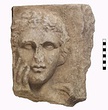
In section ΒΖ, the exploration ... 10 Jun-2 Aug 2002 ... In section ΒΖ, the exploration of the Byzantine settlement and the late Roman remains underneath them continued. ... At the end of the season, a Roman statue head appeared.
In section ΒΕ, various levels in, around and under the Classical Commercial Building were explored. |
| Preliminary Report on the 2001 Excavation Season ... John McK. Camp II ... Excavations were carried out at the northwest of the Agora in sections ΒΖ and ΒΕ, and in the area of the Eleusinion in section ΕΛ.
In Section ΒΖ, the investigation of the settlement of the 11th century ... 11 Jun-3 Aug 2001 ... The lowest floor levels of the buildings were excavated down into layers of the 7th to 9th centuries, exposing the Byzantine walls to their full depth and the upper parts of the late Roman walls beneath. ... In section ΒΕ, the work in the Classical shop building continued. Another Hellenistic pyre was found beneath the floor of one of the rooms. ... In section ΕΛ, the area just south of and uphill from the Eleusinion was excavated, along the east face of the late Roman fortification wall. |
| Preliminary Report on the 2000 Excavation Season ... John McK. Camp II ... Excavations were carried out in three sections, two to the northwest, (ΒΖ and ΒΕ) and one to the southeast of the Agora square (ΕΛ).
In Section ΒΖ the investigation of the remains of the 11th century settlement ... 6 Jun-28 Jul 2000 ... A large amount of late Roman coins were recovered. ... In Section ΒΕ the explorations of early levels in and around the Classical shop building continued. Further cleaning of the two Mycenaean tombs were carried out. |
| ΚΚ Excavation Report 1936 ... Dorothy Burr Thompson ... Section ΚΚ, the area inside the modern fence around the so-called Theseion, was cleared to bedrock in order to determine the entire history of that portion of Kolonos Agoraios. Excavation revealed that ... 10 Feb-13 Mar 1936 ... A closed building, which purpose has not yet been determined, was set into the north side of the hill. ... Two early Roman villas show that the region soon became a popular residential district. ... By the 10th-11th A.D. centuries the flourishing settlement included sizable houses and a monastery, which fell into disuse after 1204. Late Byzantine remains were scanty. |
|
|