|
|
| Section Ω 1938 ... M. Crosby ... Section Ω lies in the east end of the north slope of the Areopagus, well to the southeast of the market square proper. Excavation showed, as expected, that the area was a residential district throughout ... 16 Jan-17 Jun 1938 ... By that time however, there was a street running diagonally up through the section, and remains of buildings, wells, cisterns, etc. from that period and onwards were found. Not until the end of the 4th or early 5th century A.D. are there any traces of buildings other than private houses. Part of the area was covered by a mass of destruction debris from the 7th or 8th century A.D., and it was probably not built up in Byzantine times; the Turkish and modern houses rested directly on the late Roman fill at the north and southeast, on Classical and Hellenistic in the center, and on bedrock in the southwest. |
| Preliminary Report on the 2006 Excavation Season ... John McK. Camp II ... This summer the 75th anniversary of the beginning of the excavations and the 50th anniversary of the reconstruction of the Stoa of Attalos were celebrated.
Excavation were concentrated on two areas: northwest ... 13 Jun-4 Aug 2006 ... In Section ΒΖ excavation continued in the north-south road and in the buildings to the east and west of it. ... In deeper layers, a pyre of early Hellenistic date was found. ... The buildings were presumably houses in a domestic area. |
| Preliminary Report on the 2004 Excavation Season ... John McK. Camp II ... All the work during the season 2004 was concentrated on the northwest corner of the Agora north of the Panathenaic Way.
In BZ North, the last remains of Byzantine fills and walls were removed and Hellenistic, ... 7 Jun-16 Jul 2004 ... In BZ North, the last remains of Byzantine fills and walls were removed and Hellenistic, early Roman and late Roman fills were explored. A gap in the archaeological record between the late Hellenistic/early Roman to late Roman periods was discovered. ... Various walls representing several buildings and phases were exposed. |
| Section Χ 1937 ... Margaret Crosby ... The area signified as Section Χ lays outside the Agora proper and no signs of any public buildings were found. The area seems to have been used for private houses from the end of the 6th c. B.C. Apart ... 25 Jan-18 May 1937 ... The area signified as Section Χ lays outside the Agora proper and no signs of any public buildings were found. ... No traces of walls of the Hellenistic period had survived but two wells and four cisterns show the existence of private houses in the area during this period.
|
| Section Φ Season of 1937 ... Eugene Vanderpool ... In antiquity the area included in Section Φ lay outside the Agora proper and were apparently occupied only by houses and small buildings. The earliest period of which any considerable remains were found ... 25 Jan-17 Jun 1937 ... In antiquity the area included in Section Φ lay outside the Agora proper and were apparently occupied only by houses and small buildings. The earliest period of which any considerable remains were found was the Geometric: three Protogeometic graves and one well, as well as one Geometric grave and one disturbed well, were discovered and excavated.
... Remains of the Hellenistic period are few. ... A late Roman building covered almost the whole section and was probably part of the great complex of late Roman buildings that covered most of the center of the Agora. |
| Preliminary Report on the 2007 Excavation Season ... John McK. Camp II ... Excavation continued this year in the sections ΒΖ, ΒΗ and Γ.
In Section ΒΖ South, two areas were investigated: the north-south road and the areas west of the road. In the road, hard-packed gravel surfaces ... 13 Jun-3 Aug 2007 ... To the west, Hellenistic and Classical levels were excavated, and a pyre buried under a floor was exposed, dating to the late 4th or early 3rd century B.C.
In Section ΒΖ North, mostly Classical and Hellenistic levels in and behind the Classical commercial building were excavated. ... A draw-shaft and part of the tunnel of a Hellenistic cistern complex was found outside the building to the east. |
| Preliminary Report on the 2001 Excavation Season ... John McK. Camp II ... Excavations were carried out at the northwest of the Agora in sections ΒΖ and ΒΕ, and in the area of the Eleusinion in section ΕΛ.
In Section ΒΖ, the investigation of the settlement of the 11th century ... 11 Jun-3 Aug 2001 ... The lowest floor levels of the buildings were excavated down into layers of the 7th to 9th centuries, exposing the Byzantine walls to their full depth and the upper parts of the late Roman walls beneath. ... Another Hellenistic pyre was found beneath the floor of one of the rooms. ... A well with upper fill of the Hellenistic period was found, as was some irregularly placed post-holes. |
| Agora 2019 - Summary Report ... John McK. Camp II ... Excavations were carried out in four sections: in Section ΝΝ in the southwest corner of the archaeological site, and in the northwest corner of the Agora in Sections ΒΖ, ΒΘ East and ΒΘ West.
Section ΝΝ ... 10 Jun-2 Aug 2019 ... It was determined that the buildings in the area were not workshops.
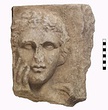
... It was most likely part of an exedra, a common type of Hellenistic dedication monument designed to carry several statues.
|
|
|