|
|
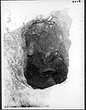
Michael Laughy ... Debris pit, located in Room 2 of ΒΘ East. Pit measures ca. 2.30 by 1.70m., and nearly a meter deep. The pottery from the pit dates ca. 10th-12th c. A.D. The fill of the pit consisted of soft, black charcoal ... 10th-12th c. A.D ... Goat Horn Pit |
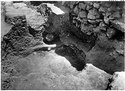
| Pit at 74/ΜΑ (1.10x0.58).
Debris filling containing a quantity of animal bones; probably a household refuse pit Animal bones (domestic animals); cow, pig, goat, sheep, hen, dog, and several varieties ... Ca. 525-470 B.C.
480-440 B.C ... Animal bones (domestic animals); cow, pig, goat, sheep, hen, dog, and several varieties of fishes. |
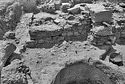
Well G, just south of Room D. It was finally filled in the 6th c. A.D. with some attractive sculpture. Its contents suggest that the building was not used for metal work, but was purely domestic containing ... 3rd-6th c. A.D ... Its contents suggest that the building was not used for metal work, but was purely domestic containing abundant household pottery, remnants of wood, bone, stone, fruit stones and animal bones, especially of boar and goat. |
| Evelyn Lord Smithson ... Grave 3: (Grave XXVII: EG). Urn cremation (trench-and-hole), adult male. Carbonized figs and grapes included in inventoried objects (no number). [JP]
"Craftsman-Warrior" tomb: combination of weapons and ... Early Geometric I ... Animal bones: venile piglet less than 3 months old, sheep/goat astragalus, at least nine fragments of unidentified mammals. |
| Matt McCallum ... Plaster lined cistern. The cistern seems to have been bottle shaped; the walls are narrower at the preserved top, which is broken along its entire circuit, and gradually widen until about a third of the ... 12th c. AD ... About half of the bones were also kept; they contain butchering and food debris, cranial and post-cranial, of horse/donkey, sheep/goat,, pig, cow, and perhaps cat. |
| Homer A. Thompson ... Cremation burial (trench-and-hole) under S. edge of E-W Street, northern burial. In some records as Grave XLVII.
The western part of the offering trench of the tomb was lost to a Turkish cess pit, and ... Middle Geometric I ... The cinerary urn also contained at least one burned fragment of an animal bone, identified as the burnt proximal radius of a goat. No grave goods or pyre sherds survived. |
|
|