|
|
Chariot wheel. In exergue, ivy. C.H.M Nb. No 17
Pit E 71 ... 3 Mar 1934 ... Chariot wheel. In exergue, ivy. |
Mended with small missing pieces restored in plaster and painted. Glaze fired greenish on inside. H. 0.062; diam. at rim 0.17. H. A. Thompson, Hesperia 16, 1947, pl. 47:4, 5.
I, kantharos; small reserved ... Probably late 5th century B.C ... I, kantharos; small reserved exergue. On outside, frieze of ivy with berries. On underside of floor, kantharos; reserved exergue. |
Fragment of discus.
Lion seated right; in the exergue a row of vertical grooves.
Thin purplish-red wash.
Pink clay.
Type XXVIII of Corinth collection. In modern wall. Leica ... 12 April 1932 ... Lion seated right; in the exergue a row of vertical grooves.
|
Obverse: at right, Herakles, left, sitting on a rock. At left a tripod.
Exergue with some symbol.
Cf. IL 450.
Reverse: plain. With coins for the day, nos. 1-77. Leica ... 27 May 1936 ... At left a tripod.
Exergue with some symbol.
|
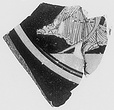
Floor fragment. Max. dim. 0.049; est. outer diam. of tondo 0.12.
I, male (feet, a bit of himation) standing to right. Below, part of reserved exergue. Around tondo, egg pattern with dots ... Probably third quarter of the 5th century B.C ... Below, part of reserved exergue. Around tondo, egg pattern with dots. |
Floor fragment with ring base. Concentric circles and bands on underside. Max. dim. 0.095.
I, woman (lower part of chiton and himation, feet) standing frontally. Below, reserved exergue. Reserved line ... Probably third quarter of the 5th century B.C ... Below, reserved exergue. Reserved line for tondo border. |
| From floor of stemless cup; nothing of foot preserved. Draped female figure from below knees down, seated on a chair. She wears sandals. Plain exergue. Reserved border. Pair of narrow reserved bands beneath ... 9 May 1940 ... Plain exergue. Reserved border. |
Most of the top of lid, a little of the side preserved. Rim around medallion molded; groove around inside of rim. Glazed on underside. Est. diam. 0.055; max. dim. 0.059.
On top side of lid, head of Phrygian ... Early 4th century B.C ... Below, in exergue, egg pattern. |
|
|