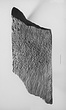
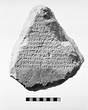
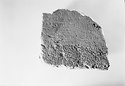
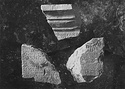
Large fragment of inscription.
Broken top and bottom, smooth on sides. Originally there was a moulding (cavetto?) over the inscribed surface. The builders of the wall probably sliced this off to make the ... Ca. 100 B.C ... Inscribed on three faces; the inscription consists (A) of a list of ephebes, (B) and (C), accounts of contributions by officials, perhaps for some festivity in which the ephebes took part.