|
|
| Excavation Summary Section ΟΟ 1968 ... M. Alison Frantz ... The excavation of the Roman Bath east of the Poros Building was resumed in order to clarify aspects on plan and chronology of the building. It was discovered that there had been a bath in the area from ... 17 Jun-31 Jul 1968 ... The excavation of the Roman Bath east of the Poros Building was resumed in order to clarify aspects on plan and chronology of the building. |
| The Odeum ... Homer A. Thompson ... A rectangular building with poros foundations was excavated in the central part of the eastern area of the excavation. The southwest corner, lying in Section Μ, was excavated in 1934 and the rest of the ... 2 Apr-27 Jun 1935 ... A rectangular building with poros foundations was excavated in the central part of the eastern area of the excavation. ... The east side and the north end of the Burned Building were excavated in Sections Ξ and Ν'. A late Roman complex, of which the Giants were the northern limit, was built over the earlier poros building. |
| Section ΟΟ 1948 ... Margaret Crosby ... Work in Section ΟΟ was concentrated on the east and west ends of the north side of the section: parts of the ancient east-west street were explored; ca 20 meters of the Great Drain was clearly exposed; ... 8 Mar-26 Apr 1948 ... Work in Section ΟΟ was concentrated on the east and west ends of the north side of the section: parts of the ancient east-west street were explored; ca 20 meters of the Great Drain was clearly exposed; remains of a house (House E) from the 4th century and Hellenistic period, with cistern (Cistern A), water storage tank and a well (Well I) were found; the Roman Bath (Building A and Hypocaust area) was further explored, and a well in the central court (Well II) dug out; a trial cut was dug in a long, narrow poros building with a large open yard and a series of small rooms; and an early Geometric grave was found and excavated. |
| Preliminary Report on the 2005 Excavation Season ... John McK. Camp II ... Excavations were carried out in three sections in the summer of 2005: BZ, BH and Γ.
In section BZ, mostly Roman levels were excavated, dating from the 1st to the 5th centuries A.D. Much more of the north-south ... 13 Jun-5 Aug 2005 ... Much more of the north-south street was excavated, revealing a series of hydraulic installations, and the large drain along its east side was further exposed. West of the street evidence of a Roman bath was found. Eeast of the street, areas in line with the northern continuation of the commercial building to the south, were excavated.
|
| Athenian Agora
Excavation Summary for 2021 ... John McK. Camp II ... Excavations continued in sections ΒΖ and ΒΘ in and under the Classical Commercial Building, the Painted Stoa, and the orthostate enclosure suggested to be the Leokoreion.
In section ΒΖ the goal was to ... 14 Jun-6 Aug 2021 ... In the western trench, fragments of a Roman inscription were found. In the area further east, rubble walls of the late Roman period and other disturbances have destroyed most of the original stoa floor.
In Section ΒΘ East, three new inscriptions were revealed on the sides of the large statue base built into the Roman tank. |
| Preliminary Report on the 2007 Excavation Season ... John McK. Camp II ... Excavation continued this year in the sections ΒΖ, ΒΗ and Γ.
In Section ΒΖ South, two areas were investigated: the north-south road and the areas west of the road. In the road, hard-packed gravel surfaces ... 13 Jun-3 Aug 2007 ... It seems to have been a building of at least six rooms/shops set side-by-side along the street. A draw-shaft and part of the tunnel of a Hellenistic cistern complex was found outside the building to the east. ... Further east, the exploration of a series of small irregular buildings started.
|
| Sections Ε, Ν, Η 1952 ... Homer A. Thompson ... Mycenaean graves were excavated in section Ε.
Section Ν was disturbed by late pits, bothroi and walls. Excavation was carried out through Roman levels. The area seemed to have been leveled out and raised ... 4 Mar-31 May 1952 ... Excavation was carried out through Roman levels. The area seemed to have been leveled out and raised as part of a landscaping project turning the area into a level square. ... Work in section Η was confined to cleaning in and around the large late Roman building covering most of the section. ... A series of monument bases, lining the east band of the Great Drain, were examined.
|
| AGORA 2022 - Preliminary Report ... John McK. Camp II ... The initial plan to excavate under the modern building at 14 St. Philip Street had to be postponed due to delayed demolition. Instead, excavations were carried out around and inside the Stoa Poikile.
In ... 14 Jun-5 Aug 2022 ... Instead, excavations were carried out around and inside the Stoa Poikile.
In ΒΘ East, Byzantine levels were excavated and more of several rooms were explored.
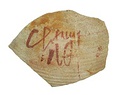
In ΒΘ West, Byzantine and Roman levels inside the western part of Stoa Poikoile were removed. ... In Section ΒΖ, the area of a collapsed late Roman wall was cleared, and excavation took place in late Archaic and early Classical layers, where a large number of ostraka was found.
|
| Agora 2019 - Summary Report ... John McK. Camp II ... Excavations were carried out in four sections: in Section ΝΝ in the southwest corner of the archaeological site, and in the northwest corner of the Agora in Sections ΒΖ, ΒΘ East and ΒΘ West.
Section ΝΝ ... 10 Jun-2 Aug 2019 ... Excavations were carried out in four sections: in Section ΝΝ in the southwest corner of the archaeological site, and in the northwest corner of the Agora in Sections ΒΖ, ΒΘ East and ΒΘ West.
... In section ΒΘ East excavations continued in front of the Painted Stoa. ... In Section ΒΖ the exploration of the lower layers under the floors of the Classical Commercial Building continued. |
| Preliminary Report on the 2010 Excavation Season ... John McK. Camp II ... Excavations took place in five sections: ΒΗ, ΒΘ, ΒΖ, Γ and Δ.
In Section ΒΗ, excavation continued and late fills overlying the Stoa Poikile were cleared. A good cross-section of the stoa foundations was ... 15 Jun-6 Aug 2010 ... Two Byzantine wells within the interior of the building were left undug. ... In Section ΒΖ, excavations were concentrated on the northern parts of the Classical Commercial Building, in an attempt to clarify its plan and building history. ... In Section ΒΘ East, more walls of the Byzantine settlement were recovered. |
| Preliminary Report on the 2002 Excavation Season ... John McK. Camp II ... Excavations continued in the northwest corner of the Agora (sections ΒΕ and ΒΖ) and in the Eleusinion area (ΕΛ), and a trial trench was opened up in the Panathenaic Way (Σ).
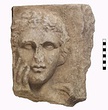
In section ΒΖ, the exploration ... 10 Jun-2 Aug 2002 ... In section ΒΖ, the exploration of the Byzantine settlement and the late Roman remains underneath them continued. ... At the end of the season, a Roman statue head appeared.
... In the Panathenaic Way, a trial trench was opened up with the hope of finding the edge of the road on its east side.
|
| Preliminary Report on the 2001 Excavation Season ... John McK. Camp II ... Excavations were carried out at the northwest of the Agora in sections ΒΖ and ΒΕ, and in the area of the Eleusinion in section ΕΛ.
In Section ΒΖ, the investigation of the settlement of the 11th century ... 11 Jun-3 Aug 2001 ... The lowest floor levels of the buildings were excavated down into layers of the 7th to 9th centuries, exposing the Byzantine walls to their full depth and the upper parts of the late Roman walls beneath. ... In section ΒΕ, the work in the Classical shop building continued. Another Hellenistic pyre was found beneath the floor of one of the rooms. ... In section ΕΛ, the area just south of and uphill from the Eleusinion was excavated, along the east face of the late Roman fortification wall. |
| Preliminary Report on the 2011 Excavation Season ... John McK. Camp II ... Excavations were carried out in three sections, two of them overlying the Painted Stoa (ΒΗ and ΒΘ) and one in the Panathenaic Way (ΒΓ).
In Section ΒΓ, excavations were concentrated on the Panathenaic Way ... 13 Jun-5 Aug 2011 ... In Section ΒΗ, overlying the east part of the Painted Stoa, a well was dug and over 100 pots were recovered. It seems that the well was part of the latest face of the use of the Stoa in the late Roman period when inner walls were built to create rooms probably used as shops.
... The building walls contain reused blocks, one of which comes from the Painted Stoa. |
|
|