|
|
Herbert, Sharon ... American School of Classical Studies at Athens ... Inferior clays and glazes, unsuited to the red-figure style, means that the indigenous production of red-figure vases in Corinth was very limited. However for about 75 years, in the middle of the 5th century ... 1977 ... All items in the catalogue are illustrated in photographs; line drawings are used to demonstrate details of technique. |
Bookidis, Nancy Stroud, Ronald S ... American School of Classical Studies at Athens ... A careful and detailed presentation of the architectural remains of the Sanctuary of Demeter and Kore on the slopes of Acrocorinth, beginning with the earliest traces of occupation in the Mycenaean period ... 1997 ... The first chapter presents the ancient testimonia for the location of the sanctuary and details its discovery by the excavators. |
Biers, Jane C ... American School of Classical Studies at Athens ... The large Roman bath situated on the Lechaion Road must have been conspicuous in the architecture of ancient Corinth at the beginning of the third century A.D. and for several centuries afterward. The ... 1985 ... This book is a valuable resource for archaeologists and ancient historians, especially those interested in the details of one of Rome's favorite pastimes: public bathing. |
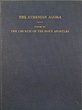
| Frantz, M. A ... American School of Classical Studies at Athens ... The Church of the Holy Apostles stands at an important crossroads in the southeast corner of the area of the ancient Agora. The earliest church on the site, built over a wall of the 5th-century B.C. Mint ... 1971 ... Mint and the foundations of the Roman Nymphaeum, is here dated to the last quarter of the 10th century on the basis of its plan and details. The original plan was revealed as a tetraconch cross-in-square with dome on pendentives carried on arches supported by four freestanding columns, the west of the four apses penetrating into the narthex. |
|
|