|
|
Cistern System #1a: Shaft (Manhole) at 10/ΞΗ (10-11/ΞΖ-ΞΗ). Filling consistently late Hellenistic in hole and in passage; probably 1st c.
B.C. Coins:
26 May 1936 #1 ... 110-75 B.C. |
Deposit in the industrial area west of the Areopagus, underlying a Roman bath. Pottery examined in June 1955; latest pieces noted: one fragment Pergamene and one fragment brittle ware; no certainly post-Sullan ... Late 2nd c. B.C ... Late 2nd c. B.C ... ΝΝ:60-75/ΛΑ-ΝΣΤ |
Square pit in bedrock southwest of the Hephaisteion. Many marble chips from the construction of the temple of Hephaestus were found here together with a large quantity of pottery and other objects ... Ca. 450 B.C.
Ca. 390-380 B.C. |
Great Drain north end, filling under tiles (55-58).
Only the finds from 55-58/* are recorded here (as found in the notebooks) although the deposit notebook shows additional finds from the entire sand fill ... 3rd-2nd c. B.C ... These additional finds are recorded separately C 18:14.2 (pf) ... Coins:
N 38058, N 38059-60
N 38062, N 38063, 38064, N 38065, N 38066,N 38067-68, N 38069, N 38070, N 38071, N 38072, N 38073, N 38074-75, N 38076-77, N 38078
N 38092-93, N 38094-96, N 38097, N 38098, N 38099, N 38100-06, N 38107, N 38108, N 38109, N 38110, N 38111, N 38112, N 38113-14
55-58/* |
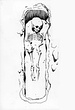
| James H. Oliver ... (E.L. Smithson: Grave IX: PG). Two children's skeletons one on top of the other. Cf. PD 329 for PD 430 for second skeleton, same deposit.
PG grave about 25m. SW of Cistern A at 46/ΜΔ.
[In some records, ... Developed Protogeometric |
Well at 75/Ε. Dumped debris of Herulian destruction, including much material from the first half of the 3rd c ... 3rd c. A.D ... 3rd c. A.D ... ΔΔ:75/Ε |
| Cistern at 75/ΜΓ connected with cistern N 18:3 by tunnel.
Only coin is Bioiotian dating between 220 and 197. Only indications of date are 1st c. lamps, two long-petal bowls, and fragments of early Roman ... 1st. c. B.C ... Cistern at 75/ΜΓ connected with cistern N 18:3 by tunnel.
... Only indications of date are 1st c. lamps, two long-petal bowls, and fragments of early Roman brittle ware. |
Top fill to 1.00m. = dump of late Hellenistic ware mixed with some Roman of 2nd c. to early 3rd. c. Intermediate fill 1.20-2.00m. = dump with tiles and stucco, almost no sherds. Coins:
6 February 1937 ... 2nd-3rd c. A.D ... 2nd-3rd c. A.D ... Χ:75/ΟΑ |
A 3rd. c. B.C. cistern and an unfinished rectangular cutting of the 2nd c. B.C. which destroyed some of its upper part. These two features are combined in this deposit; the following objects are identified ... 3rd-2nd c. B.C. |
| Date of filling early third c. B.C.
Little pottery. Seven stamped amphora handles. Latest coin dates in first third of 3rd c. One small fragment of moldmade bowl of undetermined type. Coins:
12 August ... 310-220 B.C. |
Chamber of water system with one blind tunnel and two cisterns connected by tunnel. Pottery consistent throughout, late Hellenistic. Late 2nd c. B.C.
Ten stamped amphora handles. Most of bowls long-petal ... 100-75 B.C. |
| Mycenaean Small Chamber tomb.
The cist measures 1,90m E to W, 0.75-0.90m N to S, max. depth -1.30m. Nothing was found in it; cleaned in modern times and used as a cesspool. Some of the SW part of it had ... Myc. IIIA, early 14th c. |
Cistern at 70/ΛΣΤ in the northeast slope of the Areopagus.
Part of system with two chambers and well. Homogeneous fill.
13 stamped amphora handles. Latest lamp type 46 B. N 72206 (Ω-344), picked up near ... Second half of 3rd c. - Early 2nd c. B.C. |
Mycenaean Tomb to E of Stoa Shop 19 (ΣΑ 2).
Found while digging just east of Stoa Shop XIX, when came upon some bones, Mycenaean sherds and a pot. As the excavation was enlarged the legs of two skeletons ... Myc. III A:2 (2nd half of 14th c.) |
| Pyre in Room 2, area west of street (RSY=Pyre 12).
In courtyard. Artifacts, bone, ash, carbon, and cinders in pit in floor sequence. The rectangular pit was cut into a white strosis with marble chips (ΠΠ ... 315-300 B.C ... Hesperia Suppl. 47 (2013), no. 36, pp. 145, 146, figs. 4, 67, 74, 75 ... Hesperia 20 (1951), p. 128-129, pl. 53 c (Pyre 12). |
Cistern in Room 12, House C=House N.
Simple flask-shaped chamber with draw shaft, in House M, Room 1; no tunnels. Excavated as single fill, but later analysis of material suggested two fills. Coins:
24 ... 4th. c. B.C. |
Cistern on lower northeast slope of the Areopagus.
Two Hellenistic fills with late Hellenistic to Roman fill above.
Use fill characterized by broken water jars (lower fill); contemporary dump (middle fill); ... Early 1st c. B.C ... Early 1st c. B.C ... Χ:75/ΟΑ |
Grid notation in error as 99/ΚΑ sometimes.
A well (diameter 1.20m; diameter inside tiles at bottom 0.85m) in the industrial area west of the Areopagus, at the bottom of the valley, about 10.00m. east of ... 3rd. c. B.C. |
| Mycenaean grave.
Small pit grave (0.50m by 1.35m by 0.75m deep) containing the skeleton of an infant girl. Although a simple grave with a single interment, the pit was packed with gifts. These consisted ... No later than mid-15th c ... Hesperia 21 (1952), pp. 107-108, pl. 26 c. ... Agora XIII, pp. 205-208, 274, pls. 47, 65-66, 75, 77, 79, 87 (Grave XVI). |
Associated with the Tholos.
Originally a well but after it had been in use for a short time the shaft was partially filled in and the upper part widened to form a large cistern.
The pottery falls into ... 335-250 B.C ... Hesperia Suppl. 4 (1940), pp. 98-101, fig 75 (Marked C). |
Klepsydra: Filling in antechamber, behind the parapet of the Klepsydra. Dated to the time of the rebuilding of the springhouse after the Sullan sack, but containing earlier material. Coins:
31 May 1938 ... Second quarter of 5th c. to middle of 1st c. B.C. |
Hellenistic fill South of Middle Stoa near NW corner of Heliaea. This fill contained material later in date than that which made up the middle Stoa Building Fill.
Only the coins (and a few amphora handles ... To ca. 140 B.C. |
Well at 67/ΛΓ on the northeast slope of the Areopagus. Connected with the same cistern system as O 20:2.
Dug as several fills but probably a continuous accumulation Coin
28 May 1938 #1 (?) Illegible N ... 300-250 B.C. |
The West Chamber of a double cistern lying between the northeast corner of the Theseion and the Annex to the Stoa of Zeus Eleftherios. ... Both chambers went out of use as water containers simultaneously ... 225-165 B.C. |
Dump, Sullen clean-up. Coins:
9 February 1937 #6-#10
10 February 1937 #11-#13
11 February 1937 #16-#20 ... First quarter 1st c. B.C ... First quarter 1st c. B.C ... Χ:75/ΟΑ |
Cistern with two tunnels, the one entering its neck cut off by an early Roman well, the other, at the bottom not excavated.
Chamber conical in shape, with a depressed draw basin in the center of the floor ... Early Roman-3rd c. B.C. |
South Stoa II Construction Fill.
About 85 stamped amphora handles, many with parallels in building fills of Middle Stoa and Stoa of Attalos. Fragments of long-petal bowls confirm date after mid-2nd c ... To ca. 140 B.C. |
"Not much earlier than middle fill" Coins:
12 February 1937 #5-#7 ... Fourth quarter of 2nd c. B.C ... Fourth quarter of 2nd c. B.C ... Χ:75/ΟΑ |
Dumped fillings thrown in during second quarter of 1st c. B.C. containing mostly debris resulting from Sulla's sack in 86 B.C.
Agora XXIX, p. 464: Four fills distinguished during excavations ... but seemingly ... Late 2nd c. and early 1st c. B.C. POU; 110-75 B.C ... Late 2nd c. and early 1st c. ... POU; 110-75 B.C. |
| Mycenaean Chamber Tomb below Middle Stoa Terrace.
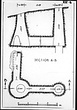
The tomb was entered from the west by a stepped dromos, at least 4.20m long by 1.10 to 1.50m. wide, splaying slightly toward the doorway, which was 1.26m ... Myc. IIIA:1 |
Construction fill below floor of Brick Building.
Areas involved:
a) Western portion of Room A: packing below floor.
b) Room B: packing below floor of northern,larger room.
c) Fill over water channel in ... First quarter 2nd century, before its end |
Middle Stoa Building Fill (with filling to S) (See also Κ: H-I-J 14-15 and Λ: K-M 13-14)
This deposit is not definitive and must be considered with the above deposits before details are entered into database; ... To ca. 180 B.C. |
| Mycenaean Chamber Tomb occupies a considerable part of the western half of section ΕΕ; lies about half way up the north slope of the Areopagus towards its eastern end, just below the highest point of the ... Myc. III A:1 |
|
|