|
|
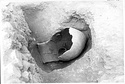
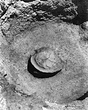
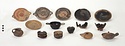
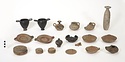
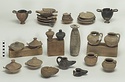
| RSY Grave 51.
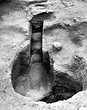
The grave lay on the slope of the Areopagus in Roman house O, just east of the line where the hillside is scarped for the foundation of the west wall of the house.
Cutting:the pit cut in ... Archaic period/6th or 7th c ... Hesperia 20 (1951), p. 109, pl. 48 c, d (Grave 51), plan pl. 33. |
Great Drain fills, including "packing over elliptical tiles" and "gravel fills". The central drain area covered by the sections below; other sections are with other deposits. Coins:
9 May 1947 #2-#5
16 ... 1st c. A.D ... 1st c. A.D ... ΟΟ:51-52/ΛΕ ... ΟΟ:51-52/ΛΖ-ΜΣΤ |
| Rodney S. Young ... Grave 4 in notebook (E.L. Smithson: Grave XX: PG). Bones discarded. Grave of older child.
JP
Rectangular pit, cut into bedrock to a depth of 0.26m, approximately 0.97m long and 0.36m wide. Tomb oriented ... Late Protogeometric |
| Located in House H, Room 13 on the lower northwest slope of the Areopagus ... Late 2nd c. B.C. |
| In area West of the Areopagus. Fills with many figurines and molds, possibly from a terracotta factory.
Twelve stamped amphora handles; no long-petal bowls; Type 54 A lamp Coins:
31 May 1939 #11
1 June ... Mostly 200-150 B.C. |
Continuous filling over its mouth and in it to a depth of -7.30m. Clearly the fill thrown in at the time of Archaic Building, to raise the ground level. The last few centimeters of the well represented ... 550-500 B.C. |
| Pyre in House C, Room 8 (RSY=Pyre 6).
Near east corner of room 8. Artifacts, burnt bone, burnt sticks, and large cinders in a shallow pit dug into surface of layer 3, and covered by layer 2. Some cinders ... 350-325 B.C.-end of 4th c. B.C ... Hesperia 20 (1951), pp. 120-121, pl. 51 c (Pyre 6). |
5th c. A.D ... 5th c. A.D ... Δ:51/Κ |
Coins:
4 May 1932 #1-#8 (#8 from dump) ... 4th c. A.D ... 4th c. A.D ... Δ:51/Κ |
Bottom of well plus dump. Coins:
4 May 1932 #8
5 May 1932 #8-#42 'from mud', #42 uncertain ... 2nd. c. A.D ... 2nd. c. A.D ... Δ:51/Κ |
Coins:
5 May 1932 #1-#7
Laughing faun found at this level with pottery similar to that of group K (miniature) ... 3rd c.-267 A.D ... 3rd c.-267 A.D ... Δ:51/Κ |
Well cut through cistern at 51/ΙΑ (merged with R 17:1); well and cistern filled at one time ... 5th c. A.D ... 5th c. A.D ... ΑΑ:51/ΙΑ |
Nbp. 661: Dug in 1st c. Cleaned out almost to bottom shortly after the middle of the 3rd c. and used for a few years. During Herulian invasion of 267, Laughing Faun broken up and thrown in. Thereafter ... 1st-5th c. A.D., 2nd c. A.D.=POU ... 1st-5th c. A.D., 2nd c. A.D ... Δ:51/Κ |
Cistern System #3: West Chamber at 69/ΛΣΤ, joined by a crooked passage to 69/Λ. Under the southwest corner of the Hellenistic Building to the north of the Temple of Hephaistos. Upper fill of early 1st ... 175-125 B.C ... Upper fill of early 1st c.
E 6:2 (upper fill): Three Knidian amphora handles; type 51 C lamp; long-petal bowls.
... Twenty stamped amphora handles; long petal bowls; figured bowls with thick walls and small indistinct figures must date in second quarter of 2nd c. |
| Sacrificial pyre, disturbed; a small pyxis (P 14864) is close to that from B 18:4. First half of 4th. c. B.C., perhaps first quarter.
West of House C. Pottery and cinders in pit in stratum. The pyre was ... First half 4th. c. B.C. |
Well on lower slopes of Areopagus.
Diameter ca. 1.50m. Dumped filling of 8th c. at the top. Fill mostly Geometric but containing bits of later (even Roman) pottery. Perhaps cleaned out and refilled with ... 730-700 B.C. |
Actually 1 meter into section Δ, the well lies under a filling of primarily Hellenistic date which had been thrown in as underpinning for the support of a 2nd c. A.D. Roman tile-mosaic floor.
POU is 15.80-16.35m ... First half of 1st c. A.D ... Actually 1 meter into section Δ, the well lies under a filling of primarily Hellenistic date which had been thrown in as underpinning for the support of a 2nd c. A.D. Roman tile-mosaic floor.
POU is 15.80-16.35m.
Lot 51-54 : now in one tin [tenkes'.
|
Pit in bedrock (disturbed child's grave?). No bones or ashes. No lots.
No coins listed. P 14520 was certainly from the north end, doubtless a grave offering; few sherds (first half of 5th century) came ... Late 6th - early 5th c. B.C ... Late 6th - early 5th c. B.C ... ΕΕ:51/ΚΔ |
| Unfinished well-shaft with debris filling (apparently of the Sullan sack), on the lower NW slopes off the Areopagus. Abandoned due to poor quality of bedrock.
Three closely contemporary fills, considered ... End 2nd c. B.C.-second quarter 1st c. B.C ... End 2nd c. B.C.-second quarter 1st c. ... ΓΓ:51/ΜΣΤ |
| Debris filling in a bronze casting pit and workshop, characterized by mold fragments but including also a few plain vases and fragments of wine jars. Third quarter of 4th. c. BC.
The pit was cut into the ... Ca. 350-325 B.C. |
| Pyre in House T, Room 2 through floor of second period (RSY=Pyre 5) in the industrial area west of the Areopagus.
4th. c. BC.
Concentration of artifacts, burnt bone, and charcoal in floor makeup consisting ... 375-350 B.C. |
Disturbed burial set into a cutting in hardpan. No lot ... 2nd half of 5th c. B.C ... 2nd half of 5th c. B.C ... Β':51-52/ΙΒ-ΙΓ |
| Pyre in House D, Room 4 (RSY=Pyre 4) in the industrial area west of the Areopagus.
Notebook refers to House N.
Pottery belongs late in third quarter of the 4th. c. BC. Pyre burned near beginning of last ... 350-300 B.C. |
| Well A, early 5th c. B.C. Near the Agora Boundary Stone, northwest corner of Middle Stoa; diameter at top 0.92m, widening to 1.15m and more below. Shaft neatly faced with stones to a depth of 0.70m below ... Ca. 520-480 B.C. |
| Grave V, under room 18 in House 3, plus burned deposit at 94/IΘ. Identified as sacrificial pyre by SIR on Agoraios Kolonos:
In southeast corner of house 3. 35 artifacts, bone and charred material in pit, ... Ca. 300-275 B.C. |
Cistern on the lower Acropolis slopes, west of Panathenaic Way; dumped filling of 1st century B.C.
Bottom diameter 3.90m. Cistern with connecting draw-shaft and a dead end tunnel dates from Late Hellenistic ... 1st century B.C ... Types 48 D and 51 b lamps indicate cistern remained open until end of 2nd c. |
Destruction debris in Late Roman Buildings on Lower N slope of Areopagus (see summaries under M-Q 17-21).
Over 130 coins came from this filling, of which some 51 survived in a condition to permit accurate ... 6th c. A.D. |
Accumulated debris on the west side of the market square.
Related layers added 1999/2000 (JWH), e.g. "Gravelly layer above burning", "Clearing Classical floor", "Lowest level above bedrock", "Below burning", ... First half of 5th c. A.D. |
|
|