|
|
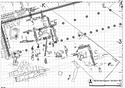
| Athenian Agora 2023: Preliminary Report ... John K. Papadopoulos Debby Sneed ... A summary of the first excavation season in Section ΒΚ, an area beneath a building demolished in the fall of 2022.
Prior the excavation a geophysical survey was undertaken.
Modern, Ottoman, and Byzantine ... 12 Jun-4 Aug 2023 ... Modern, Ottoman, and Byzantine contexts were excavated and several features were revealed, such as foundation walls and pits. ... In addition, a Geomatics study was conducted in order to produce a model of the Hephaisteion, and a study of the ancient DNA from burials in the Agora was initiated. |
| Summary Report - Agora 2018 ... John McK. Camp II ... Excavations were carried out in Sections ΒΘ, ΒΖ and Ω.
In Section ΒΘ the investigations continued in the area in front of and above the Stoa Poikile. In ΒΘ East, built into a late structure, a large inscribed ... 11 Jun-3 Aug 2018 ... In ΒΘ West the exploration of the Byzantine settlement continued. ... In Section ΒΖ more burials from the Bronze and Iron Age cemetery along the ancient road were explored.
|
| Excavations in the Athenian Agora, 2024: Preliminary Report ... John K. Papadopoulos Debby Sneed ... A summary of the second excavation season in Section ΒΚ, in the area beneath the former building at 14 St. Philip Street.
The area was divided into three trenches and yielded mixed material from the Modern ... 10 Jun-2 Aug 2024 ... Notable features from this season were walls in ΒΚ North from the Middle Byzantine period and pits from both ΒΚ West and South, the purpose and dating of which is still under investigation. ... The study of the ancient DNA from burials in the Agora was resumed. |
| Preliminary Report on the 2008 Excavation Season ... John McK. Camp II ... Excavations took place in three sections, two north of Hadrian Street (ΒΗ and ΒΘ) and one in the old area south of the Tholos (Γ).
In Section ΒΗ, layers in, over and behind the building identified as the ... 10 Jun-1 Aug 2008 ... Behind the back wall a small fragment of a large terra cotta pipe was found in situ in middle Byzantine layers. Layers contemporary with the Stoa were not reached this season. ... Mostly late fills were dug but the top of Byzantine walls came to sight in some places, as was large worked blocks that may have come from one or several Classical buildings.
... Some fill contained pottery of the 8th and 7th centuries B.C., perhaps indicative of earlier houses or disturbed burials. |
|
|