|
|
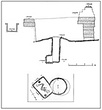
| Side-chamber at the bottom of a circular shaft. AA 27; ST 103 from shaft above burial. PD 427 ... Neolithic ... Side-chamber at the bottom of a circular shaft ... AA 27; ST 103 from shaft above burial. |
Well at 29/ΛΕ, to the SE of the market square, west of the Panathenaic Way.
Circular shaft, caved in at mouth. Diameter 1.20m. Diameter narrows to 0.50m at bottom of shaft, which is slightly concave. No ... Late 8th century B.C ... Well at 29/ΛΕ, to the SE of the market square, west of the Panathenaic Way.
Circular shaft, caved in at mouth. ... Diameter narrows to 0.50m at bottom of shaft, which is slightly concave. |
| Marcie Handler ... The contents of this Hellenistic cistern shaft were excavated in a series of layers: the preserved top of the shaft, six layers in the shaft and the fill within the tunnel. At the bottom of the shaft on ... POU: Mid-3rd c. BC
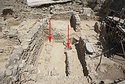
Dumped fill: after 225 BC ... The contents of this Hellenistic cistern shaft were excavated in a series of layers: the preserved top of the shaft, six layers in the shaft and the fill within the tunnel. At the bottom of the shaft on its northwest side, a vaulted tunnel lead off to the northwest, which was excavated to a distance of 1.5m. The shaft was filled with a mixture of pottery, roof tiles (mostly painted), bone, charcoal, and chunks of the shaft lining that must have fallen from the upper portion of the shaft, which is no longer preserved. |
Cistern shaft, part of cistern system in Η-Ι 16-17. Filling disturbed to bottom; general run of the pottery is to late Hellenistic, lamps as late as Knidos type. Finds from 60/ΙΘ-62/ΙΘ, 61/ΙΗ. "Some Arretine" ... 5 May 1932
18 June 1932 ... Cistern shaft, part of cistern system in Η-Ι 16-17. Filling disturbed to bottom; general run of the pottery is to late Hellenistic, lamps as late as Knidos type. |
A well on the NW slope of the Areopagus; unfinished well-shaft dug to a depth of only 3.05m., and refilled with broken pottery and other debris. The shaft clearly was begun with the intention of digging ... Ca. 520-480 B.C ... A well on the NW slope of the Areopagus; unfinished well-shaft dug to a depth of only 3.05m., and refilled with broken pottery and other debris. The shaft clearly was begun with the intention of digging a well, since footholds were cut in the sides; the reason for the abandonment was not clear; the rock appeared quite suitable for well-sinking. ... Lots ΓΓ 512-515: -1.75m to bottom (Fill II), coarse. |
| A cave-in not long after the digging of this shaft destroyed its possible usefulness as a well and thereafter it was used as a dump. Two principle periods of such use were noted, and within these several ... Ca. 575-480 B.C ... A cave-in not long after the digging of this shaft destroyed its possible usefulness as a well and thereafter it was used as a dump. Two principle periods of such use were noted, and within these several phases.
... Subdivisions:
.1=Upper fill, 0.00m. to 12.00m.
.2=Lower fill, 12.00m. to bottom. |
Well at 53/ΙΗ, east of the east Stoa Plateia. Diameter 1.40-1.50m. Shaft worked with chisel, tapers toward bottom. Plentiful water. Uniform fill with field-stones, perhaps including period of use ... 775-725 B.C ... Well at 53/ΙΗ, east of the east Stoa Plateia. Diameter 1.40-1.50m. Shaft worked with chisel, tapers toward bottom. ... Uniform fill with field-stones, perhaps including period of use |
Diameter 0.95m; water level -9.10m.
Plais shaft cut in stereo from bottom of slender flask-shaped cistern. Scanty fill from house destruction in 5th c. A.D.; Christian lamps; unfinished statuette of Castor ... Late Roman ... Diameter 0.95m; water level -9.10m.
Plais shaft cut in stereo from bottom of slender flask-shaped cistern. ... A.D.; Christian lamps; unfinished statuette of Castor. |
|
|