|
|
Terminus post quem of ca. 240 provided by amphora handle ... 1st c. A.D ... Terminus post quem of ca. 240 provided by amphora handle. |
Well at 19/ΙΑ (corrected from O 13:2) Incised bowl
Graffito bowl
Water jug x2
Small amphora
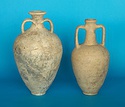
Amphora x2
Canteen x2 Tins 132-138 (not found in notebook) ... 12th c. A.D ... Incised bowl
Graffito bowl
Water jug x2
Small amphora
Amphora x2
Canteen x2 |
Diameter 0.83m. Water level -4.20m. Tiled well; height of tiles 0.60m. Heavy deposit of pottery throughout; stamped amphora handles, five Knidian; one Rhodian; one Parian. Semi-coarse stamnos; funnel-mouthed ... Ca. 120 B.C ... Heavy deposit of pottery throughout; stamped amphora handles, five Knidian; one Rhodian; one Parian. ... Subdivisions:
.1=upper fill (seven amphora handles, Type 37B lamp).
.2=lower fill (no amphora handles or coins). |
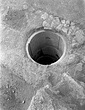
Manhole-square pit providing access to aqueduct; the dumped filling includes many fragments of coarse pottery, including 5 stamped amphora handles ... Late 2nd-1st c. B.C ... Manhole-square pit providing access to aqueduct; the dumped filling includes many fragments of coarse pottery, including 5 stamped amphora handles. |
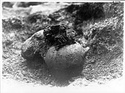
| Rodney S. Young ... Disturbed burial (no remains), probably an infant pot inhumation.
Inhumation grave 17 in notebook. (E.L. Smithson: Grave XIX: PG).
Shallow oval cutting containing a banded amphora on its side, mouth ... LPG ... Shallow oval cutting containing a banded amphora on its side, mouth to west, sheathed in a large two-handled cooking jar, split irregularly lengthwise, south to east. ... Both pots Protogeometric, the amphora probably intrusive in the 4th. c. ... JP
Young: "It is possible that a baby whose bones have completely disappeared was placed in the larger coarse amphora, and that the other amphora was a Beigabe (offering)" The fact that no precedent exists in Athens at this time for a full-sized amphora as an offering in an infant or child grave renders such a suggestion unlikely.
|
| Urn Burial in Tholos Cemetery. Grave 9 in notebook.
Amphora containing bones of a small child. Little pots had been put under its neck ... Late 8th-Early 7th c. B.C ... Grave 9 in notebook.
Amphora containing bones of a small child. |
Cistern shaft southeast foot of Kolonos Agoraios. Unstratified fill.
Ten stamped amphora handles; Type 34A lamp; many fragments of long-petal b suggesting material deposited ca. 140 or later. Cf. Pireus ... Ca. 200-125 B.C ... Ten stamped amphora handles; Type 34A lamp; many fragments of long-petal b suggesting material deposited ca. 140 or later. ... Pireus cistern for occurrence of long-petal bowls with amphora handles of early second quarter of 2nd c. owls, |
Water channel in north part of section, giving access to water system. Channel Mouth 1. Six stamped amphora handles; two-thirds of bowls long-petal ... Late 2nd century-Early 1st c. B.C ... Six stamped amphora handles; two-thirds of bowls long-petal. |
Rodney S. Young ... Grave 1 in notebook. Slightly disturbed by the digging of Pit A.
A large oil jar/amphora lay on its side with a flat stone stopping its mouth. The three small vases offered at the burial were found, together ... Ca. 600 B.C ... A large oil jar/amphora lay on its side with a flat stone stopping its mouth. The three small vases offered at the burial were found, together with a few of the bones of a small child, inside the amphora. |
Rodney S. Young ... Grave 17 in notebook. No offerings.
Amphora containing skeleton of small child was laid on its side in pit. RSY
Lot Β 304 Fill over Grave 17 ... Early 6th century B.C (?) ... No offerings.
Amphora containing skeleton of small child was laid on its side in pit. |
Amphora dump at P/2,3-6/6,8.
Layer "8b" in Room 6 of Greek House δ.
Trench cut into lower levels next to west wall of Room 6. Fragments of amphorai, tiles.
No coins ... Early Hellenistic ... Amphora dump at P/2,3-6/6,8.
|
| Marcie Handler ... A deposit of six amphorae and one micaceous water jar was excavated between 20 June and 6 July 2005 in the area north of Wall K. The neck and one handle of one of the amphorae (BZ 1213) had been poking ... Ca. 1st c. A.D ... Amphora Deposit |
| Rodney S. Young ... Grave 4 in notebook. Amphora, no other pots but carbonized remains of food offerings. Over urn two stone slabs, on top, mass of small stones containing Late Geometric sherd ... Late Geometric ... Grave 4 in notebook. Amphora, no other pots but carbonized remains of food offerings. |
A well behind the Stoa of Zeus. Noted as the finding place of the bronze head of Nike, B 30.
Two Rhodian stamped amphora handles. Fragments of only two bowls ... 260-210 B.C ... Two Rhodian stamped amphora handles. Fragments of only two bowls. |
Water channel in north part of section. Coins:
20 February 1936 #2-#3
Five stamped amphora handles; Type 48 A lamp; one-third of bowls long-petal; one long-petal mold ... Second half of 3rd c.-Early third quarter of 2nd c ... Coins:
20 February 1936 #2-#3
Five stamped amphora handles; Type 48 A lamp; one-third of bowls long-petal; one long-petal mold. |
| Laura Gawlinski ... Ovoid pit cut into bedrock or sterile fill just north of preserved floor surfaces in the so-called Strategeion. Length (west-east) 2.6m; widens at 1.25m from the east scarp so that at west pit is 0.75m ... 4th B.C ... Hellenistic (?) Amphora Deposit |
| Susan Rotroff ... Grave 1. Burial of a child perhaps 6 years old, covered by broken amphora. Skeleton lay extended on its back, oriented N-S, with head at south. No grave gifts. PD 2207 ... Final Mycenaean/Submycenaean ... Burial of a child perhaps 6 years old, covered by broken amphora. Skeleton lay extended on its back, oriented N-S, with head at south. |
Well at 15/ΜΓ (Well E: PG, ELS). Supplementary filling around its top Small partly glazed one handler
Fragment of black figured kylix
Small protogemetric cup
Fragment of skyphos
Rim fragment of Large Open ... Protogeometric-6th - 5th c. B.C ... Small partly glazed one handler
Fragment of black figured kylix
Small protogemetric cup
Fragment of skyphos
Rim fragment of Large Open Vase
Protogeometric Oinochoe
Handmade wide-mouthed amphora
Fragmentary oinochoe
Hnadmade pitcher x3
Vertibrae strung on rib bone
Conical foot
Amphora (?) |
Grave 2 in notebook. The burial was destroyed by the digging of Pit A, at the edge of which was found a mass of sherds belonging to the grave amphora. Among the sherds were found small cups, fragments ... Late Geometric ... The burial was destroyed by the digging of Pit A, at the edge of which was found a mass of sherds belonging to the grave amphora. Among the sherds were found small cups, fragments of a skyphos, and a kantharos, together with a few remnants of a small child's skeleton. A coarse pitcher and an oinochoe were found in the undisturbed filling just beside the broken amphora, which lay at the very edge of Pit a.
there can be no doubt that the body of the child, with the small vases, had been placed in the amphora, and that the coarse pitcher and oinochoe stood beside the shoulder or the neck of the burial urn. |
Cistern at 79/Γ (= 80/Δ) on lower north slope of the Areopagus. Filling of 2nd c. B.C. with some later intrusions (Turkish pottery indicates disturbance).
Single Knidian stamped amphora handle dates around ... Hellenistic-Turkish ... Single Knidian stamped amphora handle dates around 108. |
Fill in abandoned cistern, lower terrace adjacent yo the Eleusinion on the north.
Uncatalogued material: 189 sherds, 4 objects. Many kernoi fragments.
Objects : loom weights; lamp.
Early ware : Gray Minyan; ... Mid. 4th c. B.C ... Archaic-Classical : black figure; black glaze; amphora; cup; krater; oinochoe; skyphos; cup-kantharos; bolsal; stemmed dishes; echinos bowls; fish plates; plates; lekanis; pyxis; thurible; miniature kothon; unglazed; plemochoai.
Household : amphora; lekane; cooking ware; lopas; plain; coarse ware. |
Cistern System in East Portico.
Drawshaft with two blind tunnels, in court of House of the Greek Moisaic; partially excavated by Dorpfeld. No legible coins or amphora handles. Coins:
26 June 1964 # ΔΕ3 ... 2nd c. B.C ... No legible coins or amphora handles. |
Grave 3 in notebook. Grave partly destroyed by well B. Skeleton and offerings lost. The amphora mouth was doubly stopped by the bases of two other amphoras, one in its neck, the other in its mouth ... 750-725 B.C ... Skeleton and offerings lost. The amphora mouth was doubly stopped by the bases of two other amphoras, one in its neck, the other in its mouth. |
Water channel in north part of Section: Channel Mouth 4. Coins:
22 February 1936 #16-#18
24 February 1936 #1-#2
Twenty stamped amphora handles; type 38 lamp; type 56 A lamp; over half of bowls long-petal ... 120-86 B.C ... Coins:
22 February 1936 #16-#18
24 February 1936 #1-#2
Twenty stamped amphora handles; type 38 lamp; type 56 A lamp; over half of bowls long-petal. |
Hellenistic fill, north of Temple of Ares, on either side of wall running east-west over 50/ΙΓ. Mostly coarse pottery including many stamped amphora handles.
Cf. also nb. P XII, pp. 2297-2298. Coins:
13 ... 275-200 B.C ... Mostly coarse pottery including many stamped amphora handles.
Cf. also nb. |
| Date of filling early third c. B.C.
Little pottery. Seven stamped amphora handles. Latest coin dates in first third of 3rd c. One small fragment of moldmade bowl of undetermined type. Coins:
12 August ... 310-220 B.C ... Seven stamped amphora handles. Latest coin dates in first third of 3rd c. |
Shallow pit containing pottery, burning and tiny fragments of bone. A dumped group of pottery in an amphora pit, ca. 1.00 m. in diameter, 0.60m. in depth. Many tiny fragments of bone were in the fill ... 375-325 B.C ... A dumped group of pottery in an amphora pit, ca. 1.00 m. in diameter, 0.60m. in depth. |
| Phaidon Street Cistern: South Chamber.
Connected by tunnel to O 17:5.
Knidian stamped amphora handle; fragments of five long-petal bowls, one made in worn mold. Type 35 A lamp. Coins
9 August 1957 #1-#3 ... Late 2nd c. B.C ... Knidian stamped amphora handle; fragments of five long-petal bowls, one made in worn mold. |
| Dumped filling of late 2nd c. B.C.; Roman Group F, dumped filling of second quarter to end of 1st c. B.C. on the lower northeast slope of the Areopagus.
Diameter at bottom -3.20m Upper fill: Latest coins ... Second quarter to end of 1st c. B.C ... Stamped amphora handles earlier. ... Middle fill: Three Knidian stamped amphora handles. Two coins of 87/86 and several more either of 87/86 or slightly earlier. |
Shaft fill, not mouth fill, of drawshaft at 42/Θ. This is part of the cistern system 44/ΙΓ - 46/ΙΑ - 42/Θ.
Thirteen stamped amphora handles; fragments of Arretine pottery; over half of bowls long-petal ... 1st c. B.C.-early 1st c. A.D ... Thirteen stamped amphora handles; fragments of Arretine pottery; over half of bowls long-petal. |
Filling over Floor of Square Peristyle (beneath Stoa).
122 stamped amphora handles. Many parallels with handles from cistern M 21:1. Latest coin dates ca. 200. latest lamp types 33 A and 34 A. Fragment ... 200 B.C ... Filling over Floor of Square Peristyle (beneath Stoa).
122 stamped amphora handles. Many parallels with handles from cistern M 21:1. |
North of Eleusinion: Fill in Room 3 of Roman Building. 614 sherds (6 miniature shapes, 20 intrusive sherds).
Objects : terracottas; loom weights; spindle whorls; disks; handmade tray; lamps.
Early ware ... First half of 6th c. B.C.-Mixed Fill to ca. 480 B.C ... Archaic ware : black figure; amphora; column krater; dinos; skyphoi; black figure; lekythoi; lekanis; miniatures; saltcellars; cups; stemmed dishes.
Household: amphora; lekane; mottled black-glazed ware; cooking ware; coarse ware.
|
Well ΑΒ located on the lower terrace to the north of the sanctuary(diameter 1.10m). Foot-holes were cut into the shaft at intervals of ca. 0.40m. The fill consisted mostly of small stones, dug bedrock, ... Second quarter of the 6th century B.C ... Coarse ware and plain ware : SOS amphora; storage jar; lekane; coarse ware.
... Black figured : amphora; column krater; ray-based kotyle; cup-skyphos; lekythos; pyxis lid.
... Coarse ware-plain ware : amphora; lekane; pithos; cooking wares; unglazed; mottled black/brown-glazed ware; mottled red/brown-glazed ware; coarse ware. |
Cistern at 70/ΛΣΤ in the northeast slope of the Areopagus.
Part of system with two chambers and well. Homogeneous fill.
13 stamped amphora handles. Latest lamp type 46 B. N 72206 (Ω-344), picked up near ... Second half of 3rd c. - Early 2nd c. B.C ... Homogeneous fill.
13 stamped amphora handles. Latest lamp type 46 B. |
Chamber of water system with one blind tunnel and two cisterns connected by tunnel. Pottery consistent throughout, late Hellenistic. Late 2nd c. B.C.
Ten stamped amphora handles. Most of bowls long-petal ... 100-75 B.C ... Ten stamped amphora handles. Most of bowls long-petal. |
South Stoa II Construction Fill.
About 85 stamped amphora handles, many with parallels in building fills of Middle Stoa and Stoa of Attalos. Fragments of long-petal bowls confirm date after mid-2nd c ... To ca. 140 B.C ... About 85 stamped amphora handles, many with parallels in building fills of Middle Stoa and Stoa of Attalos. |
Well at 15/ΙΕ = Pocket in side of Turkish Pit at 15/ΙΔ.
Shallow well on the lower slopes of the Acropolis, east of the Panathenaic Way, in the area later occupied by the Archaic Building.
Located 3.5m ... 700-675 B.C. with intrusions ... Early Ware: Gray Minyan; Mycenaean; Protogeometric; Late Geometric-Protoattic: miniatures; banded amphora; amphora decorated; oinochoe; krater; bowls; bowl with return handle; shallow bowl; small bowl; standed bowl; lekanis; plate; large skyphos; skyphos; cup/skyphos; kotyle; one-handled cup; one-handled mug with graffito; lid; pyxis lid; assorted shapes, not identifiable; distinctive for decoration: krater; jug; hydria; decorated lid; kantharos; bowl; large closed pot.
... Household: Unglazed; double-yoked handle for large amphora ("cow's head handle"); amphora; utility amphoras; storage amphoras; kados; spouted kados; cooking ware; cooking jug; cooking stand; brazier; cooking ware basin; oinochoe; hydriai; bowl, deep spouted; lekane; large basin; coarse ware basin; pithos; incised coarse ware.
Intrusions: Archaic ware; terra cotta figurine; blac figure; black glaze; lamp; Roman ware; Late wares: green glaze; yellow glaze; orange/brown glaze; green/white ware; grooved ware, white slip; incised wavy ware; white slip ware, amphora; globular jug; lamp; jug; unglazed plate; micaceous coarse ware; other coarse ware. |
Cistern at 63/ΛΑ (part of cistern system 63/ΛΑ-65/ΜΑ-70/ΛΣΤ, consisting of two chambers and a well). Roman upper fill with modern cesspool fill above. Channel finds: MC 517, SS 8078.
Only datable object ... 300-195 B.C ... Only datable object a Rhodian stamped amphora handle (ca. 211). |
Tiled well, ca. 30m south of the Tholos. Associated with Building D. Hellenistic Group A with Late Roman fill in upper 3.00m. Objects A 245 and P 4597 are from fill on floor around well-head, contemporary ... 325-260 B.C ... No coins or stamped amphora handles.
Lower fill: Close correspondence with pottery from Koroni indicate deposit closed in 260's. One Thasian amphora handle. No coins. |
Well at 66/ΛΖ. Homogeneous fill.
14 stamped amphora handles. Rhodian and Knidian handles find parallels in Middle Stoa building fill. Type 27 D lamp agrees with this date. Fragments of 50 bowls and one ... 225-175 B.C ... Homogeneous fill.
14 stamped amphora handles. Rhodian and Knidian handles find parallels in Middle Stoa building fill. |
Well in the industrial area west of the Areopagus.
A flask-shaped cistern in House H with a dumped fill of the late fifth century brought from elsewhere and evidently deposited sometime in the 3rd c. B.C ... Ca. 420-400 B.C ... Especially to be noted is the stamped Thasian amphora handle SS 9636, one of the earliest stamps recording names of officials. |
Stoa Construction Fills (n.b. for all Stoa and pre-Stoa fills later than construction filling of Square Peristyle see P-R 6-12)
Over 100 stamped amphora handles in fill. No long-petal bowls, but one fragment ... Before ca. 150 B.C ... Stoa Construction Fills (n.b. for all Stoa and pre-Stoa fills later than construction filling of Square Peristyle see P-R 6-12)
Over 100 stamped amphora handles in fill. |
Cistern System #3: West Chamber at 69/ΛΣΤ, joined by a crooked passage to 69/Λ. Under the southwest corner of the Hellenistic Building to the north of the Temple of Hephaistos. Upper fill of early 1st ... 175-125 B.C ... E 6:2 (upper fill): Three Knidian amphora handles; type 51 C lamp; long-petal bowls.
... Twenty stamped amphora handles; long petal bowls; figured bowls with thick walls and small indistinct figures must date in second quarter of 2nd c. |
Connected with G 14:3.
There was a layer of Late Roman fill. It rested over a layer of 2nd c. B.C Hellenistic and then another of 4th c. B.C Hellenistic; the passage between the two cisterns contained ... Late Hellenistic ... Therefore, it appears that this cistern had several periods of use: Hellenistic (at least one phase contemporary with the 2nd century B.C, phase of House E to the north), Late Roman (probably associated with the amphora and perhaps also maybe the platform and the drain), and finally Byzantine.
Only stamped amphora handle dates ca. 125. |
Cistern connected by tunnel to another chamber filled in Byzantine period. Small Hellenistic deposit on floor. somewhat contaminated by Byzantine fill above
No stamped amphora handles later than 3rd c.; ... 250-190 B.C ... Small Hellenistic deposit on floor. somewhat contaminated by Byzantine fill above
No stamped amphora handles later than 3rd c.; latest lamp type 45C; fragments of many bowls (ca. 40), similar to those in M 21:1 and P 21:4. |
Unfinished well, all one fill; solid bedrock at a depth of -2.47m.
It contained masses of broken rooftiles and probably was used as a refuse pit after the sack of Athens by Sulla.
Twenty-three stamped ... Early 1st c. B.C ... Twenty-three stamped amphora handles; "Pergamene" ware; "Samian" ware and Pompeian-red ware must be intrusive; two-thirds of bowls long-petal. |
Filling in a cistern chamber in the area west of the Areopagus. Main dumped fill of 2nd. c. B.C., with small amount of later material in uppermost 1.00m. A connecting passage contained some material of ... 2nd. c. B.C ... 17 stamped amphora handles; Types 33 and 34 variant lamps; possible fragment of long-petal bowl (must be intrusive); later lamps (also intrusive); one mold. |
| Pithos ay the bottom of the north slope of the Areopagus with single fill; Part of Hellenistic Group D.
One stamped amphora handle dates slightly after 146. Latest coin dates in first two decades of 2nd ... 160-130 B.C ... One stamped amphora handle dates slightly after 146. |
| In area West of the Areopagus. Fills with many figurines and molds, possibly from a terracotta factory.
Twelve stamped amphora handles; no long-petal bowls; Type 54 A lamp Coins:
31 May 1939 #11
1 June ... Mostly 200-150 B.C ... Twelve stamped amphora handles; no long-petal bowls; Type 54 A lamp |
Well of Christian Lamp; west of Stoa terrace wall near north end. Pottery spread out June 1952. A big amphora was made up (ΣΑ 1780), but nothing else went together. Fill appeared o be all of one period ... Late 5th-early 6th century A.D ... A big amphora was made up (ΣΑ 1780), but nothing else went together. |
A 3rd. c. B.C. cistern and an unfinished rectangular cutting of the 2nd c. B.C. which destroyed some of its upper part. These two features are combined in this deposit; the following objects are identified ... 3rd-2nd c. B.C ... Upper cistern and shaft fill: 14 stamped amphora handles. Latest coins date in first two decades of 2nd c. ... Lower cistern fill: 3 Rhodian amphora handles. latest coin dates in last quarter of 3rd c. |
| Margaret Crosby ... Grave 1 (Grave XXVI: EG) Urn cremation (trench-and-hole), adult male?
[JP]
Boots or Booties Grave. Near the west branch of the Great Drain, about 100m to the southwest of the Agora horos inscription ... Early Geometric I ... After cremation the remains of the bones, together with the jewelry which had probably served to fasten the clothed, were gathered up and placed in an amphora. A deeper hole at the southwest corner of the pit, going to a total depth of 0.80m, served to hold the amphora containing the ashes, which was placed upright in it and packed around with small stones to keep it in place. ... After burial the amphora must have been empty save for the charred bones in its bottom, and all the space under the cover slab must have been likewise empty. In later times a watercourse, perhaps a tributary of the Great Drain, passed over or just to the south of the grave, and silt deposited by the water had filling the amphora to within twelve centimeters of its mouth. |
| Cistern on lower north slope of Areopagus.
Latest of thirteen amphora handles dated ca.199; twelve legible coins, the latest dating ca. 196-190. Three intrusive pieces:two semiglazed fragments and piece ... 260-190 B.C ... Latest of thirteen amphora handles dated ca.199; twelve legible coins, the latest dating ca. 196-190. |
Cistern on lower northeast slope of the Areopagus.
Two Hellenistic fills with late Hellenistic to Roman fill above.
Use fill characterized by broken water jars (lower fill); contemporary dump (middle fill); ... Early 1st c. B.C ... Sixty-eight stamped amphora handles. Middle fill contained fruit measure conforming to late 2nd c. decree. |
Tiled well near the SW corner of the market square between the Southwest Fountain House and the Great Drain, three fills noted: lower fill of earth and stones with a few fragments only of coarse pottery ... 4th-2nd c. B.C.
100-70 B.C ... Finds from the Dump (no subdivision): MC 621, T 2177, IL 824
Depth uncertain (no subdivision): A 115
Upper fill: Two Knidian amphora handles. Most of bowls long-petal.
Middle fill: No coins or datable stamped amphora handles. Lamps indicate broad range of date. |
Well 2: archaic. Diameter, top ca. 1.00; bottom ca. 0.90m.
Water level:ca -7.00m In the use filling, along with the plain water pots was a black-figured neck amphora assigned to the Edinburgh painter ... Last quarter of the 6th c. B.C ... In the use filling, along with the plain water pots was a black-figured neck amphora assigned to the Edinburgh painter.
|
North of Eleusinion: Loose fill in pit outside Roman Building. 14 inventoried items, 22 objects, 325 sherds.
Objects : terracottas; handmade object; large figurine; lamps.
Early ware : Gray Minyan; Mycenaean; ... 6th c. B.C. and earlier ... Archaic ware : black figure; oinochoe; cup; lekythos; louterion; miniature; black glaze amphora; lebes/louterion; krater; oinochoe; olpe; skyphos; cups; stemless; cup-skyphos; one handler; bowls; stemmed dishes; aryballos; amphoriskos; lekanis; pyxis; thymiaterion; ray-based vessels.
|
| Susan I. Rotroff ... Grave 5. Adult (female?) inhumation.
Cist grave lined and covered with slabs of limestone, sandstone and schist. Cut into virgin soil under Royal Stoa at I/12,13-5/3,4. Grave measures 1.79x0.39-0.49x ca ... Final Mycenaean/Submycenaean ... Contained small neck amphora resting on skeleton's knees, upside down. |
A small square well at 37/ΚΑ (about 0.60x0.70m), on the north slope of the Areopagus. Curbed with rough stones.
Filling of a small shallow well which contained nothing from the POU and since no water was ... Ca. 350-320 B.C ... Thasian amphora dates around 340. |
Cistern and drawshaft connected by tunnel; used in modern times as cesspool. No stratigraphy noted, but pottery from first five boxes excavated is later than that from boxes 6-18.
11 stamped amphora handles ... Hellenistic and Late Hellenistic ... No stratigraphy noted, but pottery from first five boxes excavated is later than that from boxes 6-18.
11 stamped amphora handles. Bowls are from worn molds, of poor workmanship, probably dating in second quarter of 2nd c. |
| Cistern at 77/Μ on lower north slopes of the Areopagus. Bottom diameter of 2m connected by tunnel to cistern M-N 18:1.
Only stamped amphora handle dates slightly after 240. Latest coin dates about 200 ... 3rd c. B.C.-196/190 B.C ... Only stamped amphora handle dates slightly after 240. |
Well near southwest corner of market square; successive use fillings, and dumped filling.
Lower use filling, second half of 4th century B.C.
Main use filling, second quarter of 2nd century B.C. to shortly ... 10 April-31 May 1935 ... Seventy-four stamped amphora handles; over half of bowls long-petal. |
| Cistern in the valley between the Areopagus and the Hill of the Nymphs. Simple, flask-shaped chamber withdraw-shaft; no tunnels. Mouth cut away in Byzantine times. Lower filling, 3rd c. B.C. Coins:
25 ... 25-30 April 1947 ... Coins:
25 April 1947 #1
26 April 1947 #1-#5
28 April 1947 #1-#3
29 April 1947 #1
29 April 1947 #2-#4
30 April 1947 #1-#2
6 May 1947 #6-#7 Dump
Several Rhodian amphora handles. Fragments of six bowls. |
| Dorothy Burr Thompson ... Grave 1. Urn cremation (trench-and-hole), adult female 30-40 years old).
Mentioned as Grave XVII in Deposit list.
Consisted of a roughly circular pit, approximately 0.30-0.40m in diameter, cut into ... Late Protogeometric ... P 325 served as cinerary urn and was placed upright within the pit and firmly fixed in place by small stones packed tightly around the amphora from shoulder to mouth.
Virtually nothing of the pyre trench survived, but it's presence was indicated by hard red-colored burned earth packed tightly against the rim of the amphora along the northwest side. |
| Julia Shear ... Burial. Roman Temple south half, in fill south of temple crosswall and norh of polygonal wall, layer 37a.
Small, roughly circular pit. The diameter of the pit appeared to be only slightly greater than ... Late Helladic IIIC Late-Final Mycenaean/Submycenaean ... The diameter of the pit appeared to be only slightly greater than the maximum diameter of the amphora (P 32307), which is 0.254m
The fill of the pit was a fine, loose-textured, dark red-brown earth, distinct from that of the surrounding fill. |
Dumped fillings thrown in during second quarter of 1st c. B.C. containing mostly debris resulting from Sulla's sack in 86 B.C.
Agora XXIX, p. 464: Four fills distinguished during excavations ... but seemingly ... Late 2nd c. and early 1st c. B.C. POU; 110-75 B.C ... Thirteen stamped amphora handles. Two thirds of bowls long-petal. |
| Tiled Well at S edge of E-W Road, 73/ΜΗ. Contemporary upper and lower fills separated by layer of sterile mud.
Latest coin dates ca. 200. Koan amphora handle with stamped handle dates slightly after 200 ... 210-160 ... Latest coin dates ca. 200. Koan amphora handle with stamped handle dates slightly after 200. type 43 A (?) |
Well East of Circular Building, at 25/ΙΗ.
Well dug originally in 5th c. B.C. and probably had POU fill. In 2nd c. A.D. the shaft was intersected by a horizontal vaulted brick tunnel belonging to the Brick ... 5th c. B.C.(?) ... Uncatalogued XXVII lamp fragments, amphora of the "fluted-handle" type with smooth handles. |
A cistern leading to the east of the road leading from the southwest corner of the market square. Filled all at one time, last quarter of 2nd. c. B.C. (nbp. 493).
Included are the Hellenistic finds from ... Late 2nd c. B.C ... Thirteen Knidian stamped amphora handles. |
At 67/ΙΗ, at the northeast slope of the Areopagus.
Cistern with drawshaft, 4.60m deep. The drawshaft had been cleared to bottom in the eighteenth or nineteenth century, and some of the fill in the main ... Most second half of 3rd c. B.C ... Nine stamped amphora handles. Latest coin dates to 2nd or 1st c. |
| Stucco-lined bottle-shaped cistern, with tunnel and subsidiary manhole, in SW Baths, Room Α 10. Homogeneous dumped fill, mostly of mold-made bowls and and molds for terracotta figurines. Sixteen stamped ... 225-190 B.C ... Sixteen stamped amphora handles; Type 45C lamp. |
Cistern with two tunnels, the one entering its neck cut off by an early Roman well, the other, at the bottom not excavated.
Chamber conical in shape, with a depressed draw basin in the center of the floor ... Early Roman-3rd c. B.C ... Middle fill: Only stamped amphora handle comes from Late Corinthian jar of second half of 3rd c. ... Lower fill: 13 stamped amphora handles. Latest coin dates in first third of 3rd c. |
RSY Grave A.
Under the Roman House with three rooms floored with mosaic near the southwest side of the area. The burial consisted of a pot laid on its side over the bedrock, presumably containing a child ... 7 August 1947 ... The grave had been disturbed in early times by the building of a wall (6th or 5th century B.C.) which in part overlay it; only the part of the pot immediately over the stereo was preserved. it was an amphora with banded body and conventional ornaments on the reserved neck, probably late 8th century. |
Grid notation in error as 99/ΚΑ sometimes.
A well (diameter 1.20m; diameter inside tiles at bottom 0.85m) in the industrial area west of the Areopagus, at the bottom of the valley, about 10.00m. east of ... 3rd. c. B.C ... Coins:
1 June 1946 #10
Upper fill contained moldmade bowls; seven stamped amphora handles; latest lamp type 43C; fragments of about 20 bowls. |
Part of the cistern system 44/ΙΓ - 46/ΙΑ - 42/Θ. The filling of the 46/ΙΑ cistern shaft, with the exception of a little Roman at the top, was the same as the bottom fill of 44/ΙΓ - late Hellenistic, running ... Late 2nd-early 1st c. B.C ... Nine stamped amphora handles. One-fifth of bowls long-petal. |
Cistern-system west of the Stoa of Zeus. Two chambers connected by a tunnel, each with two fills. Lower fill in south chamber contemporary with upper fill in north chamber, at the end of the 4th c. B.C ... Ca. 375-160 B.C ... Twelve stamped amphora handles. Fragments of Roman lamp and bowl indicate disturbance. small fragments of bowls of M Monogram Class; one mold. |
Thra (ΘΡΑ) Well (East of Stoa Room 2). Heavy dumped filling, including figured, black and plain wares, and also a quantity of animal bones, mostly skulls of oxen. On many of these the horns had been sawn ... Ca. 520-480 B.C ... All sherds except ware fragments of household pitchers ie. amphora; semi-glazed kraters; handmade hydriai; casseroles etc saved. |
Built against the south wall of the annex to the Poros Building
west of the Areopagus. At the west the upper layer of marble chips carried against it, the lowest were cut by it.
Part of same system as ... 225-100 B.C ... [Nbp. 3001]
Upper fill: two stamped amphora handles; one-third of bowls long petal.
|
Great Drain: fillings in south part of section; Martyrs I, II and III, all layers (essentially no difference in the layers).
Pottery sorted and recorded by H.A. Thompson 12 may 1950: "Having gone through ... Second half of 2nd c. B.C.-Early 1st c. B.C ... Twenty-five stamped amphora handles; latest of 79 coins date in last quarter of 2nd c.; pottery closely similar to that in Thompson's Group E; two molds, one for long-petal bowl. |
With cistern at 18/Π (P 10:1), two chambers connected by a passage.
18/Π went out of use first and was closed off from 17/ΟΕ-ΟΣΤ; filled up at one time with material dating between 350 and 300 B.C.
17/ΟΕ-ΟΣΤ ... 17 April 1937
27-28 May 1937 ... Two Rhodian amphora handles. Latest lamp type 32. |
Cistern on the lower Acropolis slopes, west of Panathenaic Way; dumped filling of 1st century B.C.
Bottom diameter 3.90m. Cistern with connecting draw-shaft and a dead end tunnel dates from Late Hellenistic ... 1st century B.C ... Four stamped amphora handles. Types 48 D and 51 b lamps indicate cistern remained open until end of 2nd c. |
| Sacrificial pyre in Poros Building, NW Room (RSY= Pyre 1).
Against east wall of room 5 west. artifacts, bone, carbon and ash in pit in floor sequence. the pyre lay below a floor covered with marble dust, ... Middle of 4th c. B.C ... A lekane and the lower part of an amphora set into the floor of this room may have served industrial purposes. |
| A well in the industrial area of the Areopagus, about 7.00m. west of the West Bath, to a depth of 14.60m. This well was the direct successor to A 17:1, replacing it when it collapsed. The use filling at ... Second quarter 6th. c ... The use filling at the very bottom contained the black figured amphora P 18348 (Hesp. 17 (1948), p. 184, pl. 65, 1) and a well head (P 18853, Hesp. 18 (1949), p. 125, no. 8). |
| Second century B.C. fill with early 13th c. A.D. fill in mouth.
The Byzantine objects from the mouth are P 13713-P 13718, L 3585.
Lower fill contained bones of many infants and dogs.
The bones from this ... Mid-2nd c. B.C ... Stamped amphora handles; Type 33A and 45C lamps. |
| Laura Gawlinski ... Circular pit uncovered in Early Building II, south of Room E latrine, adjacent to the preserved latrine floor surface. Continues beneath the latrine surface and the western scarp (unexcavated). Fill relatively ... Late 5th c. B.C ... Layer II 57.61-57.45m, large tiles and substantial fragments of amphora.
This pit seemed to be cut into surrounding harder fills that were also of the 4th c. |
Part of the cistern system 44/ΙΓ - 46/ΙΑ - 42/Θ.
Objects with context as "cistern 44ΙΓ, mouth of 46/ΙΑ" are listed with D 12:2.
The following objects are from "earth", i.e. no context layer:
SS 5334, ... Late Hellenistic-Early Roman ... The following objects are from "earth", i.e. no context layer:
SS 5334, SS 5336, SS 5343, SS 5438, SS 5441, SS 5442, SS 5444, SS 5446, SS 5635, SS 5740
LL 2130, L 2132, L 2188
T 1045, T 1067
P 7138
Nineteen stamped amphora handles; many late 2nd c. lamps. |
The East Chamber of a double cistern lying between the northeast corner of the Theseion and the Annex to the Stoa of Zeus Eleftherios. ... Both chambers went out of use as water containers simultaneously ... Ca. 200 B.C ... One stamped amphora handle of ca. 200. |
Evidence of stratification into five layers, although joins between the layers. Layer VI added when the construction of the Roman building above required it. No subdivisions assigned.
Flask-shaped cistern ... Early 3rd-late 2nd c. B.C ... Layer V: consisted of much heavy pottery, lead, metal slag, amphora fragments, SAH's. |
Hellenistic fill South of Middle Stoa near NW corner of Heliaea. This fill contained material later in date than that which made up the middle Stoa Building Fill.
Only the coins (and a few amphora handles ... To ca. 140 B.C ... Only the coins (and a few amphora handles [why only these?]) |
Filling of Middle Drain (Tr. H+F in Section Ζ). Sand and gravel filling of the old course of the west branch of the Great Drain, a large (ca. 1.00m. deep and 1.30m. wide) underground channel in the area ... 150-100 B.C ... Twenty-five stamped amphora handles. Pottery similar to Thompson's Group E. |
| A cave-in not long after the digging of this shaft destroyed its possible usefulness as a well and thereafter it was used as a dump. Two principle periods of such use were noted, and within these several ... Ca. 575-480 B.C ... This was sorted all together, and regrouped by "Kind', lettered under these numbers, as follows (6 tins).
a) Large black glaze amphora; other large pots.
b) Wine jars; black glaze.
c) Cooking ware.
d), e), f) Roof tiles, pithoi, tubs.
|
| Komos Cistern at 66/Κ, on the north slope of the Areopagus. Homogeneous fill.
Thirty-four stamped amphora handles. Eight Histiaian tetrobols, dating 170-160 at the earliest, found near top, possibly an ... Last quarter of 3rd c. B.C.-Early 2nd century B.C ... Thirty-four stamped amphora handles. Eight Histiaian tetrobols, dating 170-160 at the earliest, found near top, possibly an intrusive hoard. |
| Rodney S. Young ... Grave 3 in notebook (E.L. Smithson: Grave XIII: PG). Urn cremation (trench-and-hole), adult female.
JP
Rectangular trench, measuring approximately 1.10x0.45m, but which may have been larger, cut through ... Late Protogeometric ... Young " The burial seems to have been quite normal-cremation on the spot, the bones and jewelry gathered up and placed in the amphora, and the whole buried in a pit. |
Cistern at the southeast foot of Kolonos Agoraios.
Nbp. 2369: Two chamber cisterns, 88/ΛΔ and 100/ΚΘ, united by a long straight passage running almost due N-S. A draw shaft at 95/ΚΘ is set just off the ... Late 2nd-early 1st c. B.C.-86 B.C ... Eighteen stamped amphora handles. |
Well in Coletti Garden.
Diameter 1m. There were no traces of hand holes in its walls. At 5.2m depth below datum on the S-E side of the shaft, a small underground stream emptied into the well. The stratigraphy ... Ca. 425-400 B.C ... Uncatalogued:
Quantities of amphora fragments, some possible to be mended: graffiti on necks. |
Michael Laughy ... West and adjacent to Modern Wall 5, we excavated 12th-13th c. A.D. fill, in some places a half meter deep or more. The fill was remarkably uniform in content throughout. Typical pottery included: fine ... 12th-13th c. A.D ... Lot T 131:
amphora toe; coarse handles, body sherds, rims, bases; cooking ware; combed ware; ridged ware; slip painted; inscribed sgraffito; Byzantine lamp; monochrome sgraffito; polychrome sgraffito; monochrome glaze; brown and green ware; plain glaze.
|
Construction fill below floor of Brick Building.
Areas involved:
a) Western portion of Room A: packing below floor.
b) Room B: packing below floor of northern,larger room.
c) Fill over water channel in ... First quarter 2nd century, before its end ... Fours stamped amphora handles. Type 48 A lamp. |
Well shaft cut through a cistern channel which was then packed with three amphorae (P 3123, P 3125, P 4201) of 1st or at latest early 2nd c. A.D. (These three amphorae could be considered with F 15:2) ... 3rd-4th c. A.D ... It seems more likely that tiles were robbed in late 4th c., one 1st c. amphora of packing fell in and then a 4th c. dump was dropped in, capped by tile fragments; later a 5th c. dump on top.
|
Great Drain South (ca. 70-113, from SW edge of section as far north as the Roman Bath) Hellenistic Sand Fill. Silted-up filling of the southern branch of the Great Drain, abandoned due to some damage at ... 4th. c.-86 B.C ... Silted-up filling of the southern branch of the Great Drain, abandoned due to some damage at time of Sulla.
134 stamped amphora handles; latest lamp is type 35A. |
Cistern-shaft at the southeast foot of Kolonos Agoraios.
Nbp. 2369: Two chamber cisterns, 88/ΛΔ and 100/ΚΘ, united by a long straight passage running almost due N-S. A draw shaft at 95/ΚΘ is set just ... Upper fill, Late Roman with some Hellenistic.
Middle fill, Sullan debris to last quarter of 1st c. B.C.
Lower fill, 4th-3rd c. B.C.=POU and abandonment ... Twenty stamped amphora handles. Over two-thirds of bowls long-petal. |
|
|