|
|
| Cistern. Well. Agora XII, p. 388. Agora XXI, p. 97. Agora XII, p. 389. Road. Pit. Other. Fill. Agora XII, p. 390. Agora XXI, p. 98. Agora XII, p. 388-389 ... Agora 23 331 D-E 8-9:1 F 11:2 F 12:3 G 11:4 D-E 18-19 F 12:5 E 2:3 F 12:6 E 13:1 F 12:7 E 14:5 F 13:3 E 14:8 F 14:1 E 14:11 F 19:4 F 19:5 E 15:6 F-G 12:1 E 19:5 E 19:7 G 3:1 E 29:4 G 6:3 E-F 12-14 F 10:1 ... 330-305 B.C ... Agora XII, p. 388 ... Agora XII, p. 389 ... Agora XII, p. 388-389 |
Rectangular pit over bedrock in north part of E. Building. Broken jars and household basins with a few black glazed and black-figured fragments (uninventoried). The figured pieces indicate the lower limit ... Late 6th-ca. 480 B.C ... Agora XII, p. 389. |
The almost complete red figure hydria set into this cutting suggests the possibility of a 5th c. burial put into a much earlier grave cutting; however, the remainder of the filling appears thoroughly disturbed ... 450-425 B.C- Late Roman disturbance ... Agora XII, p. 389 ... Agora XXX, p. 361. |
Scanty dumped filling in an abandoned well cutting ... Ca. 425-420 B.C ... Agora XII, p. 389 ... Agora XXX, p. 362. |
Small compact deposit. Cutting. High proportion of good black glaze; 21 loom weights (19 pyramidal, 2 lentoid); a very large red-figured skyphos somewhat recalls the style of earlier work of the Dinos ... Ca. 430-420 B.C ... Agora XII, p. 389 ... Agora XXX, p. 362. |
Exploration of area of small early house walls on the NW slopes of Areopagus. Considerable deposits of late 6th-early 5th c. B.C., but some later (all periods) and some early levels, disturbed.
Objects ... Late 6th-Early 5th c. B.C ... Agora XII, p. 389 ... Agora XXIII, p. 331 ... Agora XXX, p. 362. |
Cutting in stereo. Early 4th c. fill with some Hellenistic-Early Roman disturbance ... Ca. 400-375 B.C ... Agora XII, p. 389 ... Agora XXIII, p. 331 ... Agora XXX, p. 362. |
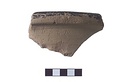
| From a closed pot (squat small amphora?).
Below, rays. Frieze of animals: preserved, two sirens facing; in field, incised rosettes. Above, double line of dots separating it from next frieze. Added purple ... 27 March 1935 ... ABV, p. 49, no. 2 ... Agora XII, p. 389 ... Agora XXIII, no. 623, pl. 59. |
Disturbed burial set into a cutting in hardpan. No lot ... 2nd half of 5th c. B.C ... Hesperia Suppl. 50 (2018), p. 131, n. 136 ... Agora XII, p. 389. |
North and South Rectangular Stereo-cut Rubbish Pits. These two adjacent rock-cut pits, of uncertain original purpose, were filled with deposits of rubbish evidently contemporary and probably dumped simultaneously, ... Second half of 5th c. B.C ... Agora XII, p. 389 ... Agora XXI, p. 97 ... Agora XXIII, p. 331. |
Pit on north slope of Kolonos Agoraios. Traces of burning in the dirt fill; mixed in with this many fragments of fine pottery ... Ca. 450-420 B.C ... Agora IV, p. 238 ... Agora XII, p. 389 ... Agora XXX, p. 362. |
| Crevice in Rock (Grave?) at 70/ΝΣΤ (below modern surface accumulation).
Identified as a sacrificial pyre, with characteristic banded plates and saucers, by SIR ... 4th c. B.C./300-250 B.C ... Agora XII, p. 389. |
Well A (depth 10.20m, diameter 1.04m, water level 4m) outside the SW corner of the market square, to the east of the north-south road.
At the bottom of the well were scanty remains probably from a period ... Ca. 425-375 B.C ... Agora IV, p. 238 ... Agora XII, p. 389 ... Agora XXX, p. 362. |
Lower levels of cistern to N. of House of Greek Mosaic.
Connected by tunnel to another chamber that was apparently cleared by Wilhelm Dorpefeld in the 19th c. Roman fill in mouth. Coins:
6 July 1964 # ... Ca. 325-290 B.C ... Agora XII, p. 389 ... Agora XXIX, p. 448 ... Agora XXX, p. 362. |
| Cistern. Nicolaou, 1984, no. 221, p. 249, fig. 3:65 on p. 238, pl. LV:65. Imported Pottery. ILN, October 19, 1935, p. 648, fig. 3. Shear, 1936, p. 37, fig. 37. Shear, 1937, pp. 375-376, fig. 40. Guerrini, ... Agora 29 389 P 16269 P 18741 P 18740 P 6313 P 7194 P 12098 N 21:4 M 21:1 E 14:1 D 11:2 N 20:4 ... 250-225 B.C. |
Mended from two pieces; type 2. Shoulder fragment with wishbone handle and two mastoid projections near the roots of the handle. Broad, carefully molded ribbing.
Thick glaze inside. Pink clay burned ... February 1955 |
Fillings in and to the north of Building A/Poros Building/Greek Building ("Strategeion"), the accumulation mostly a late archaic dump, but not deposited till near the middle of the century. Most of the ... First half of 5th c. to ca. 460-450 B.C ... Agora IV, p. 238 ... Agora VIII, p. 126 ... Agora XII, p. 389. |
| Profile similar to P 1832 but with slightly more curve. High ring base. At the center inside, within a triple rouletted circle, five overlapping palmettes carelessly stamped.
Glaze cloudy, mottled with ... 4 April 1933 |
N-S Cut on 50m. line (area of Road, area of Stoa, area N of Stoa) various levels and dates over the three areas.
Investigations to the northwest of the market square in the area of the road running out ... Prehistoric to Roman ... Agora XII, p. 389 ... Agora XIII, p. 274 ... Agora XXIX, p. 448. |
Possibly a short period of use but chiefly a debris filling including a number of fragments from disturbed early burials. Two pot fragments, believed to be from lower body of P 18525, added from Well 3 ... Ca. 575-550 B.C ... Agora VIII, p. 126 ... Agora XII, p. 389 ... Agora XXIII, p. 331. |
Intact, except for chips from end of nozzle.
Low raised base, depressed top, vertical loop-handle, side-knob, unpierced.
No glaze.
Buff clay, smoothly surfaced.
Type XII (early spreading variety) of Corinth ... 22 May 1939 |
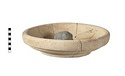
| Mended from many pieces. Small restorations. Out-turned lip; high conical base, hollow and with broad flat resting surface. Inside, reserved disk in center of floor with a circle, fired red, in its center ... 24-28 March 1947 ... Agora XII, no. 389, fig. 4, pl. 18 ... Agora XXXI, p. 143. |
Unfinished well cut in bedrock to the southwest of the Tholos; dumped filling containing much material of the 7th c. B.C. but extending into the 6th ... 7th-ca. 570 B.C ... Agora IV, p. 238 ... Agora VIII, p. 126 ... Agora XII, p. 389. |
Well near southwest corner of market square; successive use fillings, and dumped filling.
Lower use filling, second half of 4th century B.C.
Main use filling, second quarter of 2nd century B.C. to shortly ... 10 April-31 May 1935 ... Agora IV, p. 238 ... Agora X, p. 67 ... Agora XII, p. 389. |
A well (diameter 1.10m) at the east edge of the valley road leading from the SW corner of the Agora, about 90m SW of the Tholos. The mouth of the well was subsequently covered by the east wall of the Great ... Ca. 500-480 B.C ... Agora IV, p. 238 ... Agora XII, p. 389 ... Agora XXI, p. 97. |
| Collared rim.
Pale buff gritty clay; smooth buff slip, much worn inside and out.
ADDENDA Agora XII, no. 1899: Corinthian mortar. Finished Well beneath Stoa gutter. Context ca. 520-490 B.C. Leica, 81-146 ... May-June 1954 ... Hesperia 79 (2010), p. 573, n. 75, fig. 7a, p. 574, n. 80, p. 575 n. 82 ... Hesperia 55 (1986), p. 59, no. 389 ... Agora XII, no. 1899, pl. 90. |
| Kothons. Kothons; Lids. Agora XII, p. 180. ABV, passim. Akropolis 506. Athens, N.M. 19172. Pyxides. Pyxides; Corinthian Type. Agora XII, pp. 180-181. Agora XII, p. 181. ABV 348-349. B. F. Cook, Bull. Metr ... Agora 23 49 ... Agora XII, p. 180 ... Agora XII, pp. 180-181 ... Agora XII, p. 181 |
| Grave V, under room 18 in House 3, plus burned deposit at 94/IΘ. Identified as sacrificial pyre by SIR on Agoraios Kolonos:
In southeast corner of house 3. 35 artifacts, bone and charred material in pit, ... Ca. 300-275 B.C ... Agora IV, p. 238 ... Agora XII, p. 389 ... Agora XXIX, p. 448. |
Evidence of stratification into five layers, although joins between the layers. Layer VI added when the construction of the Roman building above required it. No subdivisions assigned.
Flask-shaped cistern ... Early 3rd-late 2nd c. B.C ... Agora IV, p. 238 ... Agora XII, p. 389 ... Agora XXI, p. 97. |
| Mended from five fragments; complete. Bottom flat, unfinished; concave sides.
Pink to buff clay. Unglazed. Pithos. Leica, 4-333, color slide PD 1231-3 ... 22 April 1932 ... Hesperia 3 (1934), p. 389, no. D 64, fig. 76 ... Agora XII, p. 219, n. 6 ... Agora XXXIII, no. 345, fig. 57, pl. 47. |
Associated with the Tholos.
Originally a well but after it had been in use for a short time the shaft was partially filled in and the upper part widened to form a large cistern.
The pottery falls into ... 335-250 B.C ... Agora IV, p. 238 ... Agora X, p. 67 ... Agora XII, p. 389. |
| Pauphilet, D., "Monument Megalithique à Mactar," Karthago, IV, 1953, cf. pp. 58-59, pl. IX. P. Perdrizet, Fouilles de Delphes, V, Paris, 1908, cf. pp. 184-195. E. Pernice, Die hellenistische Kunst in Pompeji, ... Agora 7 xiii ... P. Perdrizet, Fouilles de Delphes, V, Paris, 1908, cf. pp. 184-195 ... Agora 5 ... Shear, J. P., "The Coins of Athens," Hesperia, II, 1933, pp. 231-278 |
| Ἀρχαιολογική Ἐφημερίς, 1953-54, Part 1, pp. 205-206. Archeologia, Warsaw, XV, 1964, p. 192, fig. 25. Ashmolean Museum: Select Exhibition of Sir John and Lady Beazley's Gifts, 1912-1966, London, 1967 [Beazley ... Agora 12 445 ... Archeologia, Warsaw, XV, 1964, p. 192, fig. 25 ... Archaeologia, Warsaw, XV, 1964, p. 195, fig. 31 ... Αρχαιολογικόν Δελτίον, Athens, XII, 1929, p. 204, fig. 13 |
| From the rim of a large krater. Rather small rolled rim. Black glaze on the inside, on the rim, and probably for a band below the inscription on the outside.
Scratched in the dry clay: Mixed fill over ... 14 May 1934 ... Camp and Mauzy (2009), p. 22, fig. 15 ... Hesperia 19 (1950), p. 389, no. 32, fig. 24 ... Agora XII, no. 1757, fig. 21. |
Well associated with the Tholos, with scanty use fill but primarily dumped filling. Coins:
5 April 1934 #1-#4
10 April 1934 #1-#2
11 April 1934 #1
12 April 1934 #1
18 April 1934 #1-#2
19 April 1934 #1-#5 ... Ca. 350-294 B.C ... Agora IV, p. 238 ... Agora XII, p. 389 ... Agora XXI, p. 97. |
|
|
.png.icon.jpg)

.png.icon.jpg)

.png.icon.jpg)
.png.icon.jpg)
.png.icon.jpg)