|
|
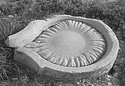
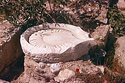
| Olive press east of the Late Roman Complex. Block of olive oil press found in situ in the Late Roman establishment on the terrace of the East Building ... Horizontal (normal) ... April 1961 ... Olive press east of the Late Roman Complex. Block of olive oil press found in situ in the Late Roman establishment on the terrace of the East Building. |
| Olive press east of the Late Roman Complex. Block of olive oil press found in situ in the Late Roman establishment on the terrace of the East Building ... AMS Horizontal (normal) ... April 1961 ... Olive press east of the Late Roman Complex. Block of olive oil press found in situ in the Late Roman establishment on the terrace of the East Building. |
| Late Roman olive press east of the Late Roman Complex. Block of olive oil press found in situ in the Late Roman establishment on the terrace of the East Building ... Cf. Π 323 ... 1958 ... Late Roman olive press east of the Late Roman Complex. Block of olive oil press found in situ in the Late Roman establishment on the terrace of the East Building. |
Neck, half of handle, lower body, and pieces of upper body missing.
Scraped groove above greatest diameter; offset and scraped groove at base of neck. Opposing olive garland around shoulder. Shiny black ... Early 3rd century |
Neck and handle missing.
Scraped groove below ridge at base of neck. Opposing olive garland on shoulder. Shiny black glaze with metallic patches, outside only.
Cf. Rostovtzeff 1941, p. 162, pl. XX; Patsiada ... 275-250 |
| Nuts. Wine. Theophrastos, Characters. Isaios, VI (Philoktemon), 20. Flowers. Wreaths. Judeich, p. 137, fig. 10. Aristophanes, Thesmophoriazusae, 448. Pollux, VII, 192-193. Pollux, VII, 199. Diogenes Laertius, ... Agora 3 199 ... 364-363 B.C ... Olives, Olive Oil |
| Odeion. Parmenides. Parrhasios. Parsley. Parthenon. Odyssey. Patrokleides. Oedipus. Pausanias. Offices, public. Oikema (prison etc.). Peace. Oineus. Oinoe, battle-painting. Pegasos of Eleutherai. Olbiades ... Agora 3 255 ... Olive oil ... Olive trees |
http://agathe.gr/democracy/administration_and_bureaucracy.html Administration and Bureaucracy The economy of Athens was supervised by numerous boards of officials in charge of the mint, the marketplace, weights and measures, and the grain and water supplies. Most ... Official measures come in clay and bronze and were used both for dry goods (nuts, grain) and for liquids (wine, oil). Dry measures normally had a cylindrical or mug-like form; liquid measures, much less abundant, were in the shapes of jugs, amphoras, or other vessels. ... The coin type was appropriate to Athens and easily recognizable: on one side the helmeted head of Athena, patroness of the city, on the other side her sacred symbols, the owl and olive sprig. These figures were used for centuries with only the slightest changes. |
|
|

.png.icon.jpg)
.png.icon.jpg)