|
|
Rotroff, Susan I. John McK. Camp ... American School of Classical Studies at Athens ... Hesperia 65.3 3 263-294 10.2307_148378 ... 1996 |
Exploration in the peristyle of the Heliaea (1960); evidence for rebuilding in the third quarter of the 4th c. B.C. with some disturbance as late as 1st-2nd c. A.D. Date of reconstruction ca. 325 B.C ... Ca. 350- 325 B.C. |
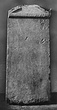
| Left corner, and top of pediment of stele broken away; otherwise complete save for minor fractures on surface and edges.
The front of the stele is rough at the bottom for 0.39m. and uninscribed for 0.39m ... 283/2 B.C. |
Weinberg, Saul S ... American School of Classical Studies at Athens ... This volume discusses the important, mainly Roman, buildings at the east end of the Corinthian Agora; the Julian Basilica and the Southeast Building, the South Basilica (immediately behind the South Stoa), ... 1960 |
| Temple of Zeus and Athena. Fragments of Doric Entablature. Clearing East Front. Great Drain. Clearing South Part of Section. In North Part of Section. Clearing in South. Rehabitation for Re-use in North ... Η'-12 2249, 2250 A 376 A 377 A 378 A 379 S 1222 A 1198 A 1199 ... 1934 ... Temple of Zeus and Athena ... Date of Period I ... Date of Period II |
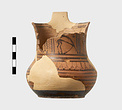
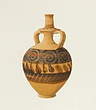
| Neck divided by triple verticals into panels: on either side of handle, four sets of diminishing triangles with apices meeting at center; at front, a deer to right with head bent back as if reaching for ... LG IB-LG IIA ... Neck divided by triple verticals into panels: on either side of handle, four sets of diminishing triangles with apices meeting at center; at front, a deer to right with head bent back as if reaching for something, perhaps the leaves of a branch. ... These tankards are difficult to date precisely without context. They probably belong to the end of the LG I period or the beginning of L.G. |
| Miles, G. C ... American School of Classical Studies at Athens ... All but 9 of the 6,449 Islamic coins found at Athenian Agora up to the date when this book was written belong to the Ottoman period. The earliest datable Ottoman coin is from the reign of Mehmed I (1413-21) ... 1962 ... All but 9 of the 6,449 Islamic coins found at Athenian Agora up to the date when this book was written belong to the Ottoman period. The earliest datable Ottoman coin is from the reign of Mehmed I (1413-21). Most of the coins come from overseas mints such as those of Istanbul, Cairo, Macedonia, Serbia, and Bosnia. |
| Extract from notebook ΠΘ XIX, pp. 3644-3646. Well at 105/ΝΗ (report on sorting of pottery, July 19, 1951 - H.S. Robinson).
"Not a useful well" HSR.
Well dug to 1.50m., vi/9/36; dug from 1.50m. to bottom ... Early Roman; use fillings of 2nd. c. B.C. and 1st. and 4th. c. A.D.; dumped filling of late 4th. c. (HSR)
Fill I: 2nd. c. B.C.
Fill II-V: to second half of 4th. c. A.D.
Fill VI: mixed to Byzantine ... A.D. respectively, represent "period of use' of the well. For perhaps two centuries thereafter the well must have been out of regular use; cont. 4 (ca. 21.30m.) probably dates from this period and contains predominantly pre-herulian wares: wheel-ridged mugs and pitchers, type XXVII lamp frag. ... One coin (iv/9/37 #1) of Constantine II (323-361 A.D.) suggests a late 4th cent. date for this destruction fill. |
|
|
.jpg.icon.jpg)