|
|
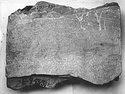
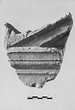
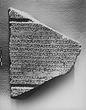
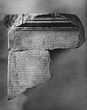
| Part of a large stele with six engraved wreaths.
Broken top and bottom, but original width and thickness preserved; face finished with toothed chisel; back rough picked.
The wreaths are in two rows of ... 240 B.C. |
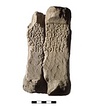
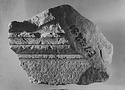
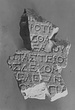
| Corner of a rectangular base with dedication to Nemesis.
Part of two sides, and of bottom surface, preserved; top hollowed out. Mouldings top and bottom, the lower one largely worn away, the upper one ... 240 A.D. |
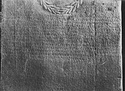
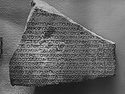
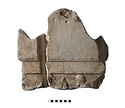
| Inscribed large stele with pediment top.
In the pediment is a small urn; below, on the stele proper, a wreath.
Inscribed above and below the wreath, but letters almost totally illegible except for the ... 163/2 B.C. |
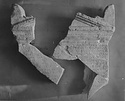
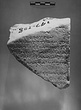
| Two fragments from the upper part of a stele with pedimental top.
Both corners, with finials, are preserved, the right hand piece mended from six fragments; the left hand, from two. The central part of ... 125/4 B.C. |
| Inscribed fragment of upper left hand corner of stele with pediment top.
Broken at bottom and right side; only a bit of the stele proper, with traces of letters in the first line is preserved.
Hymettian ... 250-150 B.C. |
| Fragment from top of stele.
Only inscribed and a little of top surfaces preserved.
Archonship of Asteios; preamble of the year 373/2.
Inscribed stoichedon.
Pentelic marble. Catalogued 1932. Found in wall ... 373/2 B.C. |
| Inscribed fragment from right side of stele.
Front and right surfaces preserved, smooth back surface rough picked, crowned careless work.
Gives information about the constitution.
Pentelic marble.
Cf ... After 166 B.C. |
| Inscribed fragment.
Right edge and surface preserved; other edges broken; rough picked back, well finished face.
Inventory of Temple Dedications; archonship of Lysimachides.
Pentelic marble. Found at a ... 339/8 B.C. and 338/7 B.C. |
| Inscribed fragment.
Broken all around; back roughly picked.
The third line from the top, and the third line from the bottom of this fragment have been erased and recut.
Pentelic marble.
ADDENDA Apparently ... 177-180 A.D. |
| Inscribed fragments.
Broken all round; back roughly picked
Fragment Θ 1753, the left side and part of the rough picked back preserved.
This piece, (thirty-two lines), forms a direct join with I 64 and ... 177-180 A.D. |
| Fragment of stele with pediment top.
The upper left corner is preserved, with a bit of the sloping top surface of the pediment top; back rough picked; other sides broken.
Archonship of Chairephon.
Pentelic ... 219/8 B.C. |
| Inscribed fragment.
Face and top surface preserved; back bottom and sides broken.
Pentelic marble. Finished Found in the wall of late cistern in the Stoa of Zeus. 541 Leica ... 325-300 B.C. |
Inscribed fragment.
Broken all round.
Pentelic marble.
ADDENDA Joined with I 685, I868, I 1883, I 1985. Found at a late Roman level, inside enclosure of the Eponymus Heroes Monument. 553 Leica ... 150-190 A.D. |
| Upper part of inscribed stele with crowning moulding.
Full width of block preserved, but inscription damaged at right edge.
Vote granting a golden crown to Taxiarches who served under the archonship of ... First half of 3rd. century B.C. |
Fragment of inscription.
Front surface preserved though badly worn.
Curves slightly in both directions; otherwise broken so as to present a triangular section.
Pentelic marble.
ADDENDA Joined with I 965, ... 168/9 A.D. |
| Small fragment of inscription.
Only front surface preserved.
Dedication to Tribellius Rufus.
Hymettian marble.
ADDENDA Joined with I 849, I 786, I 1827. Found in late context, at the southeast of the ... late 1st. century A.D. |
| Upper part of inscribed grave relief.
Mended from two fragments found on different dates.
The smaller left piece was found first; the two fragments do not meet along front edge; may have been cut apart ... 4th. century B.C. |
NM 16080
Complete.
Flat bottom; straight neck, increasing upward. Dot series on upper edge of lip; two glaze bands below lip inside; on handle, alternating sets of bars and St. Andrew's crosses.
Dull ... LG II |
NM 16061
Disk foot; wide neck. In handle zone a checkerboard; panels with 8-armed crosses on handle ... LG I |
NM 16070
Disk foot and oval mouth. All glazed inside.
Thick black glaze inside, thin and brown outside.
Brann lists other clay-ground kantharoi under I 49 and suggests that the idea may have been inspired ... LG I |
NM 16085
Very low ring foot; rolled handle. At either side, five large concentric circles with dot in center; at back, alternating straight and wavy horizontal lines to lower handle attachment; to each ... LG IIA |
NM 16071
Complete.
Flat bottom; continuous profile; rising band handle. Top of lip glazed; inside unglazed; ladder pattern on handle interrupted by a St. Andrew's cross.
Dull black to red glaze ... LG II |
NM 16086
Complete.
Ring foot. All glazed inside except for reserved dot on floor and three bands at rim.
Shiny black glaze.
Cf. Kerameikos V, 1, pl. 92, inv. no 238 ... MG II |
NM 16084
Complete.
Disk foot; pointed lower body; high, slightly concave rim. Ladder pattern on handles. Inside all glazed except for a reserved dot at center of floor and three reserved bands at rim ... LG IIB |
Thin brown glaze ... LG II |
Wheelmade.
Dull black glaze all over ... 8th-7th c. B.C. |
Complete.
Flaring ring foot; plain rim, slightly inturned; tiny elongated rolled handles.
Dot row in handle zone bordered above and below by single purple bands. All glazed inside.
Streaky black glaze ... 600-550 B.C. |
Handle and most of trefoil mouth restored.
Disk foot, sharply offset from body.
Streaky brown glaze, much worn and peeled.
Cf. Brann 58 ... Early 7th c. B.C. |
Intact.
Flat bottom and slightly convex lower body. Inside all glazed except for a reserved dot at center of floor and three bands below lip.
Black to brown glaze.
Cf. Kerameikos V, 1, pl. 98, inv ... LG I |
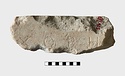
Thin, rough slab of hard, gray limestone. Upper, lower, and left sides roughly smooth, right side broken away; inscribed face smooth, back face rough.
In center of slab, running left to right, the letters ... 7th c. B.C.? |
Three of the legs restored.
Mane pinched to a sharp, straight ridge; tail applied against left rear leg. Faint traces of glaze show that the horse was glazed over most of its body, with reserved band ... 7th c. B.C. |
| Eleven pieces comprising two non-joining fragments. To Young's publication of six pieces are now added five more, two of which help to complete to inscription.
Part of the side wall with reserved panel ... 600 B.C. |
Disk: rosette and framing band; rim: wavy line. Bottom: incised branch within double almond-shaped groove.
Cf. Perlzweig 1833 ... 350-400 A.D. |
Disk plain; rim: tendril. Bottom: a kappa turned left, and two rings.
Cf. Perlzweig 2664 ... 400-450 A.D. |
Nothing of sides or bottom. Disk: long-beaked bird and a rearing animal (wolf?) facing each other across filling hole; rim: leaved tendril.
According to R. S. Young the scene on the disk is from one of ... 5th c. A.D. |
Both handles restored.
Low irregular base with wheel marks on the bottom.
Unglazed ... 8th-7th c. B.C. |
A small fragment from the same vessel as H 518, preserving a single letter, theta. Votive dump ... 7th c. B.C.? |
Joins with H 240.
Mended from two pieces.
Left to right. ΒΛΟ,-
Light pinkish buff clay burned gray; thick, dull black glaze.
IN the final stroke is taken as part of a sigma, we may restore the word ... Ca. 625-600 B.C. |
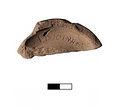
| Fragment from the lower wall and bottom of a closed vessel with flat bottom.
Inscription incised on the inside of the sherd after the pot was broken. It is complete and written retrograde
Σημιοι Δι
... 7th c. B.C. |
NM 16176
Ring foot. On handle, ladder pattern interrupted by a panel with parallel verticals.
Shiny black glaze.
Probably later than the examples from the Isis Grave, C.V.A., Athens 1[1], 3[3], 8-10, ... LG I |
|
|