|
|
| Section Ψ
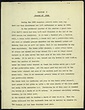
Season of 1939 ... Eugene Vanderpool ... During the 1939 campaign in Section Ψ, several wells were dug that had been discovered but left unfinished or undug in 1938: Great Hole and Early Well at 33/Z (N 18:8); Tiled Roman Well at 18/H (N 17:1); ... 11 Apr 1939 ... During the 1939 campaign in Section Ψ, several wells were dug that had been discovered but left unfinished or undug in 1938: Great Hole and Early Well at 33/Z (N 18:8); Tiled Roman Well at 18/H (N 17:1); Tiled Roman Well at 14/B (N 17:1). |
| Section X
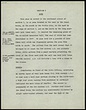
Miscellaneous Notes Compiled in Summer of 1946 ... Margaret Crosby ... This report is a summary of the excavations taken place in 1937 as well as in 1946.
Some pottery indicate habitation in the area from the Geometric period. Two shallow graves of the 6th and 5th centuries ... 27 May-21 Jun 1946 ... The lower part of another 5th century B.C. well was also found.
... A Roman period water channel and a drain were uncovered, and a well, "The Amphora Well", was dug. ... A late Roman well was partly excavated. |
| Section ΟΟ 1948 ... Margaret Crosby ... Work in Section ΟΟ was concentrated on the east and west ends of the north side of the section: parts of the ancient east-west street were explored; ca 20 meters of the Great Drain was clearly exposed; ... 8 Mar-26 Apr 1948 ... Work in Section ΟΟ was concentrated on the east and west ends of the north side of the section: parts of the ancient east-west street were explored; ca 20 meters of the Great Drain was clearly exposed; remains of a house (House E) from the 4th century and Hellenistic period, with cistern (Cistern A), water storage tank and a well (Well I) were found; the Roman Bath (Building A and Hypocaust area) was further explored, and a well in the central court (Well II) dug out; a trial cut was dug in a long, narrow poros building with a large open yard and a series of small rooms; and an early Geometric grave was found and excavated. |
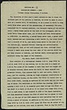
| Section Χ 1937 ... Margaret Crosby ... The area signified as Section Χ lays outside the Agora proper and no signs of any public buildings were found. The area seems to have been used for private houses from the end of the 6th c. B.C. Apart ... 25 Jan-18 May 1937 ... Close by the graves was a garbage pit from about 480 B.C., one well from ca. 420 B.C, and another well from ca. 375 B.C.
... A late Roman well was partly excavated.
All traces of post classical habitation had been destroyed by the Turkish and modern houses, except for a Byzantine well. |
| Section Ζ 1951 ... Homer A. Thompson ... The remaining pieces of the so-called Byzantine wall were removed, as well as a late Roman wall. Excavations in front of the Civic Offices revealed a hard road surface from the 3rd century A.D. More than ... 21 May-13 Jun 1951 ... The remaining pieces of the so-called Byzantine wall were removed, as well as a late Roman wall. ... Two monument bases, cut off by a Turkish well, were discovered.
|
| 1961: Season's Report for Section K ... Homer A. Thompson ... A report on the completing of the exploration of the Heliaia, the Southwest Fountain House and the southwest entrance to the Agora, as well as some work of conservation and path-making in the area ... 24 Jul-19 Aug 1961 ... A report on the completing of the exploration of the Heliaia, the Southwest Fountain House and the southwest entrance to the Agora, as well as some work of conservation and path-making in the area. |
| Section Φ Season of 1937 ... Eugene Vanderpool ... In antiquity the area included in Section Φ lay outside the Agora proper and were apparently occupied only by houses and small buildings. The earliest period of which any considerable remains were found ... 25 Jan-17 Jun 1937 ... The earliest period of which any considerable remains were found was the Geometric: three Protogeometic graves and one well, as well as one Geometric grave and one disturbed well, were discovered and excavated.
... Some of the objects from the well belong to the early years of the 5th century B.C.
... Two Roman wells were excavated, as well as a late Roman tomb. |
| Excavation Summary Section ΟΟ: 1969 ... John McK. Camp II ... Further excavations were conducted in Section ΟΟ, supplementing those done earlier. The large Roman complex, now known as the Southwest Bath, were completely explored. Cuts to the north of the building ... 13 May-6 Jul 1969 ... Cuts to the north of the building reveal a series of stratified roads. A well was cleared and excavated, and a Hellenistic cistern complex was dug out. |
| Sections Rho and Eta 1937 ... James H. Oliver ... Byzantine settlements in Sections Η and Ρ were removed and the foundations of the Temple of Ares exposed.
The most noticeable feature was the road serving as the main thoroughfare in the neighborhood from ... 24 Feb 1937 ... A vast amount of road filling was removed as well as a series of rooms. ... Parts of the foundations, together with cuttings for the complete rectangular outline of the temple, are well preserved. |
| Sections Ε, Ν, Η 1952 ... Homer A. Thompson ... Mycenaean graves were excavated in section Ε.
Section Ν was disturbed by late pits, bothroi and walls. Excavation was carried out through Roman levels. The area seemed to have been leveled out and raised ... 4 Mar-31 May 1952 ... A Mycenaen well was found as well as a fine Archaic altar and peribolos. |
| Sections ΝΝ - ΞΞ Excavation Summary 1946 ... Rodney S. Young ... The objective of this year's excavation was to clear the southern part of the section to bedrock. Features earlier investigated (the 6th century cemetery, the Hellenistic-Early Roman terrace and one large ... 31 May-14 Aug 1946 ... Features earlier investigated (the 6th century cemetery, the Hellenistic-Early Roman terrace and one large Roman tank), as well as some discovered this season (a second Roman water tank, a great built shaft, a part of the Great Drain and early house walls), were removed. |
| Section ΟΟ 1949
Grave Area ... Margaret Crosby ... A report on the excavation in the immediate vicinity of the Early Geometric burial found in 1948 in Section ΟΟ. Two Geometric graves were uncovered, and also walls and drainage systems belonging to the ... 28 Mar-9 Nov 1949 ... Two Geometric graves were uncovered, and also walls and drainage systems belonging to the industrial establishments of the later 6th and 5th B.C. centuries, as well as sporadic remains from later periods, such as a 4th B.C. century pit and a Hellenistic cistern. |
| Section Υ
1937 Excavation Summary ... Rodney S. Young ... Section Υ had suffered from modern leveling operations and in some parts there were no visible antiquities. In the southeast corner were traces of Proto-Geometric grave cuttings. Excavation revealed the ... 1 Oct 1936-24 Apr 1937 ... In one corner of the court was a well and a trough. The well was excavated and objects from Byzantine and Roman periods were found. |
| Section ΝΝ
Season of 1939 ... Rodney S. Young ... Section ΝΝ lies at the mouth of the valley between Pnyx and Areopagus, which was the important thoroughfare from the Agora to the Pnyx and to the southern parts of the city, as well as to the Piraeus Gate, ... 26 Sep 1938-24 Jun 1939 ... Section ΝΝ lies at the mouth of the valley between Pnyx and Areopagus, which was the important thoroughfare from the Agora to the Pnyx and to the southern parts of the city, as well as to the Piraeus Gate, and it is outside the area of the public buildings of the Agora.
... Extensive remains of private houses and a bath of the Roman period were discovered, as well as walls of houses from earlier periods. |
| Preliminary Report on the 2000 Excavation Season ... John McK. Camp II ... Excavations were carried out in three sections, two to the northwest, (ΒΖ and ΒΕ) and one to the southeast of the Agora square (ΕΛ).
In Section ΒΖ the investigation of the remains of the 11th century settlement ... 6 Jun-28 Jul 2000 ... Several pithoi were more fully exposed and one tile-lined well was uncovered and partially excavated. ... The last of the fill containing ostraka was cleared adding another dozen or so to the total number of ostraka found, and the excavation of the 5th century B.C. well was completed.
|
| Section Ε: 1967 ... T. Leslie Shear, Jr ... The campaign of 1967 included both excavation and architectural study of various monuments in Section Ε along the east side of the Great Drain.
Excavation took place in and about the Peribolos of the Eponymous ... 4 Jun-2 Aug 1967 ... An early well was discovered and partly excavated. |
| Excavation Summary Section K: 1968 ... S. Grobel ... Excavations in Section Κ were conducted in the Marble Worker's Establishment, a series of rooms grouped around a courtyard. A cistern-well was discovered and excavated, as was a pit and a pyre burial ... 17 Jun-17 Aug 1968 ... A cistern-well was discovered and excavated, as was a pit and a pyre burial. |
| Preliminary Report on the 2002 Excavation Season ... John McK. Camp II ... Excavations continued in the northwest corner of the Agora (sections ΒΕ and ΒΖ) and in the Eleusinion area (ΕΛ), and a trial trench was opened up in the Panathenaic Way (Σ).
In section ΒΖ, the exploration ... 10 Jun-2 Aug 2002 ... However, a shaft of a Protogeometric or early Geometric well was partially excavated.
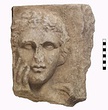
... In the Eleusinion area there are no surviving architectural remains. A well from the late 6th to early 5th century B.C. was excavated, and while scraping bedrock, a marble portrait head was discovered. |
| Preliminary Report on the 1999 Excavation Season ... John McK. Camp II ... Most of the work this season was concentrated in the northern half of Section ΒΖ where the Byzantine levels were further explored. Street walls along both sides of the north-south road were revealed and ... 7 Jun-30 Jul 1999 ... In Section ΒΕ excavation continued in the Classical commercial building where another pyre was discovered. A well was uncovered and was partly dug. |
| Preliminary Report on the 2008 Excavation Season ... John McK. Camp II ... Excavations took place in three sections, two north of Hadrian Street (ΒΗ and ΒΘ) and one in the old area south of the Tholos (Γ).
In Section ΒΗ, layers in, over and behind the building identified as the ... 10 Jun-1 Aug 2008 ... A tile-lined well was found and its location should indicate that the area was an open courtyard surrounded by buildings. The well went probably out of use in the 4th century B.C. |
| Preliminary Report on the 2011 Excavation Season ... John McK. Camp II ... Excavations were carried out in three sections, two of them overlying the Painted Stoa (ΒΗ and ΒΘ) and one in the Panathenaic Way (ΒΓ).
In Section ΒΓ, excavations were concentrated on the Panathenaic Way ... 13 Jun-5 Aug 2011 ... In Section ΒΗ, overlying the east part of the Painted Stoa, a well was dug and over 100 pots were recovered. It seems that the well was part of the latest face of the use of the Stoa in the late Roman period when inner walls were built to create rooms probably used as shops.
|
| Report on Excavations in the Athenian Agora 1990 ... T. Leslie Shear, Jr ... This is a report on the archaeological field work conducted in the Athenian Agora during the period from December 1989 to December 1990. The actual excavation period was preceded by preparatory operations ... 4 Jun-3 Aug 1990 ... Three structures, already visible in Section ΒΕ, were revealed which led to a better understanding of these monuments. A well was dug and produced a large amount of pottery.
|
| Preliminary Report on the 2001 Excavation Season ... John McK. Camp II ... Excavations were carried out at the northwest of the Agora in sections ΒΖ and ΒΕ, and in the area of the Eleusinion in section ΕΛ.
In Section ΒΖ, the investigation of the settlement of the 11th century ... 11 Jun-3 Aug 2001 ... The lowest floor levels of the buildings were excavated down into layers of the 7th to 9th centuries, exposing the Byzantine walls to their full depth and the upper parts of the late Roman walls beneath. A well was partially excavated, a stone-lined cesspit was uncovered and a large plaster-lined pit was discovered. ... This material lay directly on bedrock leaving no sign of earlier activity in the area. A well with upper fill of the Hellenistic period was found, as was some irregularly placed post-holes. |
| Agora Excavations 1995 Preliminary Report ... John McK. Camp II ... Excavations continued in the areas of the Panathenaic Way, west of the Stoa Poikile, and in and around the Classical commercial building north of the Stoa Poikile.
In the Panathenaic way the exploration ... 12 Jun-4 Aug 1995 ... West of Stoa Poikile, the clearing of a late Archaic well was completed. |
| ΚΚ Excavation Report 1936 ... Dorothy Burr Thompson ... Section ΚΚ, the area inside the modern fence around the so-called Theseion, was cleared to bedrock in order to determine the entire history of that portion of Kolonos Agoraios. Excavation revealed that ... 10 Feb-13 Mar 1936 ... The filling of a pit provided extremely fine fragments from red figure and black figure vases, as well as ostraka.
The foundations of the temple were entirely exposed. ... B.C., while the work on the terrace continued well down into the 5th century B.C.
|
| Section ΛΛ 193
Excavation Summary ... Dorothy Burr Thompson ... Excavations in Section ΛΛ revealed that the original contour of Kolonos Agoraios had been much sharper than in modern times. No traces of early graves were found in the area; first sign of habitation is ... 1 Feb-23 Jun 1937 ... The area was probably covered with houses of which five establishments were well preserved, several others less preserved.
|
| Section Ω 1938 ... M. Crosby ... Section Ω lies in the east end of the north slope of the Areopagus, well to the southeast of the market square proper. Excavation showed, as expected, that the area was a residential district throughout ... 16 Jan-17 Jun 1938 ... Section Ω lies in the east end of the north slope of the Areopagus, well to the southeast of the market square proper. |
| Preliminary Report on the 2003 Excavation Season ... John McK. Camp II ... Excavations in 2003 were carried out largely in the northwest corner of the Agora known as Section BZ. The area was divided into two parts: the north-south road and areas to the west, and east of the road ... 13 Jun-25 Jul 2003 ... East of the road, further evidence of occupation in the area were discovered, as well as of activity by coroplasts.
|
| Preliminary Report on the 2009 Excavation Season ... John McK. Camp II ... Excavations were conducted in four sections: Γ, ΒΘ, ΒΗ and ΒΖ.
In Section Γ, the investigation of the Classical buildings south of the Tholos continued with the aim to find out if they were civil, commercial ... 8 Jun-31 Jul 2009 ... It was clarified that the complex consists of three houses grouped around a central courtyard. A well in the courtyard was emptied, and the finds recovered indicate a domestic or commercial use of the buildings. The well is one of the earliest tile-lined wells found in the Agora, dating to the first half of the 4th century B.C.
|
| 1. The Tholos. A Brief Sketch of the History of the Building as Revealed by the Excavations of 1934
2. The Bouleuterion ... Eugene Vanderpool ... A report mainly about the results of the excavations of the Tholos and the Bouleuterion, but a notebook index attached refer to all features excavated during 1934. A list of coins associated with the construction ... 15 Jan-19 May 1934 ... The Tholos has been mentioned by several ancient authors as well as on ancient inscriptions. |
| Section ΜΜ
Season of 1939 ... Homer A. Thompson ... Section Μ was to be refilled this year and supplementary explorations took place to resolve some remaining obscurities. The most significant discovery was a road running northwest-southeast, probably the ... 20 Feb-8 Apr 1939 ... The history of the road is well documented by the pottery from its successive layers of gravel, the earliest being Neolithic, going down to at least Roman times.
|
| Report on Excavations in the Athenian Agora 1992 ... T. Leslie Shear, Jr ... This is a report on the archaeological excavations in the Athenian Agora during 1992. The investigations continued in two areas: on the south side of Hastings Street and along the north side of Hadrian ... 8 Jun-7 Aug 1992 ... Three large pithoi were found in one of the rooms. A well, first used in the Roman period and then reused in the Byzantine period ,was dug and produced a large number of finds, amongst them a herm head from the Classical period. |
| Section Υ: 1958 Excavation Report ... Dorothy Burr Thompson ... Two areas at the north foot of the Areopagus were uncovered. The first area did not yield much of interest due to modern disturbances. Excavations of a well, three pits and a water channel produced however ... 3 Mar-3 May 1958 ... Excavations of a well, three pits and a water channel produced however ancients material.
|
| Preliminary Report on the 2012 Excavation Season ... John McK. Camp II ... Excavations were carried out in four areas during the 2012 season: three in the area of the Painted Stoa at the northwest corner of the Agora (sections ΒΗ, ΒΖ, ΒΘ), and one in the Panthenaic Way (section ... 11 Jun-3 Aug 2012 ... In section ΒΗ, a well was excavated to its full depth. |
| Athenian Agora
Excavation Summary for 2021 ... John McK. Camp II ... Excavations continued in sections ΒΖ and ΒΘ in and under the Classical Commercial Building, the Painted Stoa, and the orthostate enclosure suggested to be the Leokoreion.
In section ΒΖ the goal was to ... 14 Jun-6 Aug 2021 ... Pottery of the 8th century B.C. and the discovery of another well suggest that the area was used for habitation in the Iron Age after centuries as a burial ground. |
| Agora 2019 - Summary Report ... John McK. Camp II ... Excavations were carried out in four sections: in Section ΝΝ in the southwest corner of the archaeological site, and in the northwest corner of the Agora in Sections ΒΖ, ΒΘ East and ΒΘ West.
Section ΝΝ ... 10 Jun-2 Aug 2019 ... The digging of an Archaic well was finished and the removal of a Middle Byzantine wall started. |
| Preliminary Report on the 2007 Excavation Season ... John McK. Camp II ... Excavation continued this year in the sections ΒΖ, ΒΗ and Γ.
In Section ΒΖ South, two areas were investigated: the north-south road and the areas west of the road. In the road, hard-packed gravel surfaces ... 13 Jun-3 Aug 2007 ... In Section Γ, the excavation of the building identified as the Strategeion continued. Well preserved floor levels in the eastern part of the building were excavated, including a pit full of marble chips overlying a pit filled with several amphorae. |
|
|