|
|
Oval stamp; Nike crouched before triphy. Area south of east-west late Roman wall; 4th century A.D. Hole. victory and trophy (in oval) 1635 Leica ... 19 March 1952 ... victory and trophy (in oval) |
Only a fragment of the side wall and upper zone remains. The lower side wall is divided by a fine raised line into two zones; in the lower a winged victory stands, a wreath in her left hand, the right ... 3-12 March 1934 ... The lower side wall is divided by a fine raised line into two zones; in the lower a winged victory stands, a wreath in her left hand, the right arm raised above her head; in the upper a victory flies right; above, a band of ovules.
|
Top and a little of body preserved.
Discus, decorated with Victory at altar. On rim, ovules, panels.
Soft, light buff clay.
Type 27 of Agora collection.
ADDENDA Earlier version of L 2249. Well; container ... June 1955 ... Discus, decorated with Victory at altar. On rim, ovules, panels.
|
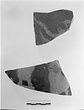
Wall fragment from just below rim. Reserved band on inside. Max. dim. 0.081.
Man or youth (left arm and hand, a bit of drapery) to right, seizing a bull (most of head) by the horn. Above, about half of ... Late 5th century B.C ... Perhaps the sacrifice of a bull following a victory. Cf. 118, the slightly earlier stamnoid that depicts such a sacrifice following a victory in a torch race. |
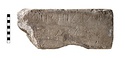
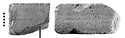
Inscribed fragment.
Inscribed face, left face and original top preserved.
Victory dedication of a Herm.
Five lines of the inscription preserved, and traces of a sixth.
Hymettian marble. Found in a wall ... 5 May 1936 ... Inscribed face, left face and original top preserved.
Victory dedication of a Herm.
|
Wall fragment of large moldmade bowl.
Winged figure (Victory?). Above, inscription , three ridges, and indistinct motifs (birds and running animals?) below rim.
The inscription was incised in the mold ... 3 March 1953 ... Winged figure (Victory?). Above, inscription , three ridges, and indistinct motifs (birds and running animals?) |
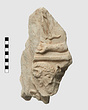
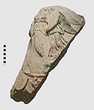
| Flake from front of cuirass statue of Roman emperor.
Above, right arm of a Triton (?) holding a victory (?) in his hand; below, one of the lappets of the first row, with ram's head in profile, and one ... February 1954 ... holding a victory (?) in his hand; below, one of the lappets of the first row, with ram's head in profile, and one of second row with a rosette.
|
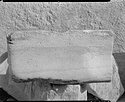
| Inscribed base.
A rectangular base, fully preserved, with a cutting in the top surface, presumably the bedding for a Herm.
The front inscribed surface, which was used as a bench, badly worn.
Records victory ... 4th. century B.C ... Records victory (choregic?) |
| a) Numerous joining fragments from wall, partly strengthened by plaster. Flying victory carrying tripod upside down in left hand and vase in right hand.
b) Fourteen joining fragments. Woman on left with ... 24 July 1967 ... Flying victory carrying tripod upside down in left hand and vase in right hand.
|
| Fragment of inscribed block.
The top is smooth dressed, polished as if from wear, and covered with a hard cement; the bottom is rough picked. On the preserved right side is an anathyrosis band along the ... 4th. century B.C ... Dedication commemorating a choregic victory.
Part of two lines of the inscription preserved.
|
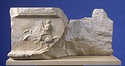
| Broken all around.
Left side of large-scale cuirass decorated with Athena and two Nikai.
Athena stands front in center with aegis and a shield in her left hand. To her left a winged victory helps to support ... 6 July 1972 ... To her left a winged victory helps to support the shield. |
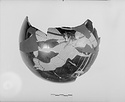
| Two fragments from the walls of a red figure krater. A Victory crowns a figure on a pedestal.
a) From near the rim; the head and arms of a Nike (flesh white, hair gathered in with part of fillet(?) and ... 14 March 1937 ... Two fragments from the walls of a red figure krater. A Victory crowns a figure on a pedestal.
|
| Left corner of inscribed block.
Epigram commemorating the victory over the Persians.
Fragment Θ 50 a), top smooth; bottom, very fine picked; side, anathyrosis. Broken at back and right.
Face dressed with ... 1933 ... Epigram commemorating the victory over the Persians.
|
Wall fragment. Reserved band on inside at top. Glaze pitted. Max. dim. 0.087.
At the right, someone (hands, part of right arm with a little drapery) carries a tripod cauldron (about half of cauldron, ... Ca. 400 B.C ... Cf. the unattributed bell-krater in Copenhagen, VIII 939, on which Nike is about to place a tripod on an Ionic column, the scene depicting a victory in a dithyrambic contest. |
Wall fragment. Glaze dull and misfired reddish here and there on inside and outside; slightly abraded. Max. dim. 0.107. H. A. Thompson, Hesperia 17, 1948, pl. 67:4; Matheson, Polygnotos, p. 354, cat. no ... Ca. 440 B.C ... Bryn Mawr College, 1972), p. 158, who points out that the lyre occurs in the victory dance on the François Vase, Florence 4209 (ABV 76, 1; Paralip. 29, 1; Addenda 21; M. |
| Inscribed fragments.
Fragment ΒΕ 43, upper right hand corner of stele preserved, fascia and moulding chipped at corner. Back broken away. The stele is topped by a fascia with a flattened ovolo moulding ... First half of 4th. century B.C ... The piece is a dedication by a tribe commemorating the victory of one of its members in cavalry race.
|
Three non-joining wall fragments. Dull, hard glaze on inside. Max. dim. a) 0.091, b) 0.075, c) 0.071. L. Talcott, Hesperia 8, 1939, pp. 268--269, figs. 1, 2 (the fragments have been relettered since this ... Ca. 470-460 B.C ... In her discussion of 623, Talcott (Hesperia 8, 1939, p. 271) remarked that the broad fillet on the mask is the type seen most often on maenads but even more often in scenes of victory or of mourning. |
Two non-joining fragments. Fragment a comes from the lower part of the vase; fragment b is a shoulder fragment. Glaze on b is slightly abraded; streaky and pitted on inside. P.H. a) 0.175; max. dim. b) ... Ca. 420 B.C ... Sacrifice of a bull in celebration of a victory in a torch race, the figures continuing around the vase without interruption. |
|
|