|
|
http://agathe.gr/overview/the_archaeological_site.html The Athenian Agora The Agora of Athens was the center of the ancient city: a large, open square where the citizens could assemble for a wide variety of purposes. On any given day the space might be used ... The Athenian Agora The Agora of Athens was the center of the ancient city: a large, open square where the citizens could assemble for a wide variety of purposes. ... Here administrative, political, judicial, commercial, social, cultural, and religious activities all found a place together in the heart of Athens, and the square was surrounded by the public buildings necessary to run the Athenian government. ... It is during this “Classical” period that the Agora and its buildings were frequented by statesmen such as Themistokles, Perikles, and Demosthenes, by the poets Aeschylos, Sophokles, Euripides, and Aristophanes, by the writers Thucydides and Herodotos, by artists such as Pheidias and Polygnotos, and by philosophers such as Sokrates, Plato, and Aristotle. |
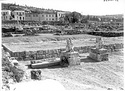
| View showing the Philosophers replaced on their bases ... southwest ... 31 Jul 1951 ... View showing the Philosophers replaced on their bases. |
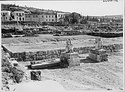
| View showing the Philosophers replaced on their bases ... AMS southwest Horizontal (normal) ... 31 Jul 1951 ... View showing the Philosophers replaced on their bases. |
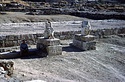
| View showing the Philosophers replaced on their bases ... southwest ... 1951 ... View showing the Philosophers replaced on their bases. |
Oliver, James H ... American School of Classical Studies at Athens ... Hesperia 36.1 1 42-56 10.2307_147616 ... 1967 ... Philosophers and Procurators, Relatives of the Aemilius Juncus of Vita Commodi 4, 11 |
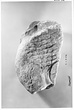
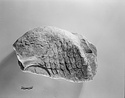
| Fragment of a winged creature from the throne of a Philosopher. Pentelic marble. Left side view ... ca. 1947 |
| Fragment of a winged creature from the throne of a Philosopher. Pentelic marble. Left side view ... AMS Horizontal (normal) ... ca. 1947 |
| Preface. List of Plates. Abbreviations and Bibliography. Introduction. Catalogue. Observations on Athenian Portrait Style in the Roman Period. The Romanization of Greek Portraits. The Late Republican Period ... Agora 1 vii ... The Augustan Period ... Athenian Portraits in the Style of the Roman Empire ... The "Philosophers" |
| Athens National Museum, no. 511. Graindor, Cosmétes, no. 28. The "Philosophers". 99. L'Orange, Studien, figs. 146-150, 157, 158, 163-166. Delbrück, Spätantike Kaiserporträts, pls. 27-39. Richter, Roman ... Agora 1 100 50 BI 1016 ... The "Philosophers" |
http://agathe.gr/democracy/democracy.html Introduction Classical Athens saw the rise of an achievement unparalleled in history. Perikles, Aischylos, Sophokles, Plato, Demosthenes, and Praxiteles represent just a few of the statesmen and philosophers, ... Introduction Classical Athens saw the rise of an achievement unparalleled in history. Perikles, Aischylos, Sophokles, Plato, Demosthenes, and Praxiteles represent just a few of the statesmen and philosophers, playwrights and orators, historians and artists who flourished there in the 5th and 4th centuries B.C., when Athens numbered among the most powerful and influential city-states in Greece. ... The two books presented here (The Birth of Democracy and The Athenian Citizen) illustrate and tell the story of the development and practice of democracy in Athens. |
http://agathe.gr/guide/introduction.html Introduction Classical Athens saw the rise of an achievement unparalleled in history. Perikles, Aeschylus, Sophokles, Plato, Demosthenes, Thucydides, and Praxiteles represent just a few of the statesmen ... Introduction Classical Athens saw the rise of an achievement unparalleled in history. Perikles, Aeschylus, Sophokles, Plato, Demosthenes, Thucydides, and Praxiteles represent just a few of the statesmen and playwrights, historians and artists, philosophers and orators who flourished here during the 5th and 4th centuries B.C., when Athens was the foremost city-state in Greece. ... Nowhere is the history of Athens so richly illustrated as in the Agora, the marketplace that was the focal point of public life. |
| Sv. 82.1, 2. C. Habicht, Hellenistic Athens and Her Philosophers (David Magic Lecture 1988), Princeton 1989, pp. 20-21. FdD III, ii, no. 169. Cicero (pro Flacco 62). Plutarch, Moralia 345 F. Pliny the ... Agora 26 121 ... Habicht, Hellenistic Athens and Her Philosophers (David Magic Lecture 1988), Princeton 1989, pp. 20-21 ... Pliny the Younger (Letters 8.14.2) |
http://agathe.gr/guide/stoa_poikile.html Stoa Poikile Across modern Hadrian Street are the most recent excavations (2003), along the north side of the square. Here have been revealed the remains of another large stoa, identified on the basis ... Stoa Poikile Across modern Hadrian Street are the most recent excavations (2003), along the north side of the square. Here have been revealed the remains of another large stoa, identified on the basis of Pausanias as the Stoa Poikile (Painted Stoa). ... Among those who plied their trade in the building were the philosophers of Athens, in particular Zeno, who came to Athens from Cyprus in ca. 300 B.C. and so preferred the Painted Stoa as his classroom that he and his followers became known as the Stoics. |
| The Athenian Agora 24; Late Antiquity A.D. 267-700; Appendix; The Post Herulian Wall; Description of the Post Herulian Wall by Sections; West Flank; Third Section. Hesperia 8, 1939, p. 218 (Shear, Jr.) ... Agora 24 130 I 5250 I 4712 I 4924 I 848 ... 1958 ... The Athenian Agora 24; Late Antiquity A.D. 267-700; Appendix; The Post Herulian Wall; Description of the Post Herulian Wall by Sections; West Flank; Third Section ... Stevens, Lintel with the Painted Lioness, Hesperia 23, 1954, pp. 169-184 ... Ross Holloway, Exploration of the Southeast Stoa in the Athenian Agora, Hesperia 35, 1966, pp. 79-85 |
| Craft, F. 1974. Eleusis und die orphische Dichtung Athens in vorhellenistischer Zeit, Berlin. Graindor, P. 1927. Athènes sous Auguste, Cairo. Graindor, P. 1930. Un milliardaire antique: Hérode Atticus ... Agora 31 xiv ... Athens and the Attalids in the Second Century B.C., Hesperia 59, pp. 561-577 ... Hägg, R. 1987, Gifts to the Heroes in Gifts to the Gods: Proceedings of the Uppsala Symposium 1985, T. ... U and Her Neighbors in the West Pediment of the Parthenon, in Essays in the History of Art Presented to Rudolph Wittkower, D. |
|
|
.png.icon.jpg)
.png.icon.jpg)
.png.icon.jpg)
.png.icon.jpg)
.png.icon.jpg)