|
|
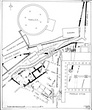
| Actual state plan of "Simon's House" and buildings of the southwest side ... John Travlos ... PD 1062-a Public offices or admistrative buildings, no. 8 in Agora Guide, 1990 ... 1958 ... Public offices or admistrative buildings, no. 8 in Agora Guide, 1990. |
| Actual state plan of "Simon's House" and buildings of the southwest side ... John Travlos ... PD 1062-a Public offices or admistrative buildings, no. 8 in Agora Guide, 1990. Horizontal (normal) ... 1958 ... Public offices or admistrative buildings, no. 8 in Agora Guide, 1990. |
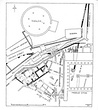
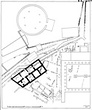
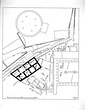
| Area west of the Middle Stoa. Enlightened in black the restored plan of the admistrative buildings on the southwest side of the Agora (photograph of heliotype of PD #1062b, no separate plan exists) ... John Travlos ... PD 1062-b Public offices or admistrative buildings, no. 8 in Agora Guide, 1990. Horizontal (normal) ... 1958 ... Public offices or admistrative buildings, no. 8 in Agora Guide, 1990. |
| Area west of the Middle Stoa. Enlightened in black the restored plan of the admistrative buildings on the southwest side of the Agora (photograph of heliotype of PD #1062b, no separate plan exists) ... John Travlos ... PD 1062-b Public offices or admistrative buildings, no. 8 in Agora Guide, 1990. Horizontal (normal) ... 1958 ... Public offices or admistrative buildings, no. 8 in Agora Guide, 1990. |
| Table of Contents. Preface. List of Plates. Introduction. The Stoas. Shrines. Public Buildings and Offices. Market. Honorary Statues. Miscellaneous. Boundaries. Trees. Kerameikos. Panathenaic Street. Old ... Agora 3 ix ... Public Buildings and Offices |
| Public Buildings and Offices. Archeia. Pollux, IX, 41. Hesperia, XVII, 1948, pp. 151ff. Hesperia, XIX, 1950, p. 174. Hesperia, XXIII, 1954, pp. 33ff. Hesperia, XXIV, 1955, pp. 52ff. Synedrion. Demosthenes, ... Agora 3 126 ... 12th A.D ... Public Buildings and Offices |
Broneer, Oscar ... American School of Classical Studies at Athens ... After a discussion of the fragmentary evidence for several buildings of the Greek period which were swept to construct it, the South Stoa at Corinth is treated in detail. Careful description of all the ... 1954 ... After a discussion of the fragmentary evidence for several buildings of the Greek period which were swept to construct it, the South Stoa at Corinth is treated in detail. ... One of the largest secular buildings in Greece, the South Stoa appears to have been planned as a kind of hotel to accommodate visitors at a time when Corinth served as the capital of a briefly united Greek world. After the destruction of the city, it remained comparatively undamaged and was taken over by the Roman Colony as the seat of its administrative offices. In its final phase various buildings, including a bouleuterion, a fountain house, a bathing establishment, and a public latrine were built into the ground floor. |
| Wycherley, R. E ... American School of Classical Studies at Athens ... Here are presented all the ancient written references, both literary and epigraphical, to the Agora (including its environs) and its monuments. The introduction summarizes chronologically the authors cited, ... 1957 ... They are grouped in parts: the Stoas, Shrines, Public Buildings and Offices, Market, Honorary Statues, Miscellaneous including Boundaries, Trees, Kerameikos, Panathenaic Street, Old Agora. |
http://agathe.gr/overview/the_archaeological_site.html The Athenian Agora The Agora of Athens was the center of the ancient city: a large, open square where the citizens could assemble for a wide variety of purposes. On any given day the space might be used ... Here administrative, political, judicial, commercial, social, cultural, and religious activities all found a place together in the heart of Athens, and the square was surrounded by the public buildings necessary to run the Athenian government. These buildings, along with monuments and small objects, illustrate the important role it played in all aspects of public life. ... Following the total destruction of Athens at the hands of the Persians in 480 B.C., the city was rebuilt and public buildings were added to the Agora one by one throughout the 5th and 4th centuries, when Athens contended for the hegemony of Greece. |
http://agathe.gr/democracy/democracy.html Introduction Classical Athens saw the rise of an achievement unparalleled in history. Perikles, Aischylos, Sophokles, Plato, Demosthenes, and Praxiteles represent just a few of the statesmen and philosophers, ... In 500 B.C., soon after the Kleisthenic reforms, new buildings were added. ... The model of the Agora in 400 B.C. shows the civic center at a time when Athens had provided herself with all the public buildings necessary for the functioning of the fully developed democratic system. The buildings shown on the model served in one form or another for the next several generations. |
http://agathe.gr/democracy/the_agora_and_pnyx.html The Agora and Pnyx Center of public activity, the Agora was a large open square where all the citizens could assemble (2, 3). It was used for a variety of functions: markets, religious processions, athletic ... The Agora and Pnyx Center of public activity, the Agora was a large open square where all the citizens could assemble (2, 3). ... Around its edges stood the buildings needed to run the democracy: the Council House (Bouleuterion), magistrates’ headquarters, archives, mint, lawcourts, and civic offices. ... It was on the Pnyx (5) that policies initiated by magistrates and committees in the offices of the Agora were submitted to the Athenian citizens. |
http://agathe.gr/democracy/sources_and_documents.html Sources and Documents Our understanding of the workings and history of Athenian democracy comes from a variety of sources. Most useful, perhaps, are the ancient literary texts that survive, many of which ... The democracy, with average citizens holding public offices which changed hands every year, required elaborate and accurate record-keeping. ... It stood in a central location among the public buildings of the city, next to the Bouleuterion. |
http://agathe.gr/overview/contact.html Staff and Contact Information The Agora Excavations offices are located within the ancient Agora archaeological site, on the upper floor of the Stoa of Attalos. The offices in the Stoa of Attalos are open ... Staff and Contact Information The Agora Excavations offices are located within the ancient Agora archaeological site, on the upper floor of the Stoa of Attalos. The offices in the Stoa of Attalos are open Monday through Friday, from 9 am to 2.30 pm. ... This digital archive is searchable and accessible from anywhere and freely available to the public. For further information, please contact Bruce Hartzler at . |
http://agathe.gr/publications/monographs.html Monographs Excavations in the civic and cultural center of classical Athens began in 1931 and have continued almost without interruption to the present day. The first Athenian Agora volumes presenting ... Each volume covers a particular chronological period, set of buildings, or class of material culture. ... They are grouped in parts: the Stoas, Shrines, Public Buildings and Offices, Market, Honorary Statues, Miscellaneous including Boundaries, Trees, Kerameikos, Panathenaic Street, Old Agora. ... At the end of the 5th century, a group of public buildings was constructed, perhaps to house some of the lawcourts. |
|
|
.png.icon.jpg)
.png.icon.jpg)