|
|
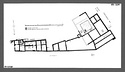
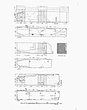
| Partially restored plan of the Greek buildings in section ΡΡ ... W.B. Dinsmoor, Jr ... Replaces PD 2246. f Fragile Dirty Faded Heavy Tracing Paper Drafting Ink
Pencil ... 1975 |
| Partially restored plan of the Greek buildings in Section ΡΡ. Replacing PD 2246 ... W.B. Dinsmoor, Jr ... PD 2328 Horizontal (normal) ... 1975 |
| Partially restored plan of the Greek buildings in Section ΡΡ. Replacing PD 2246 ... W.B. Dinsmoor, Jr ... PD 2328 AMS Horizontal (normal) ... 1975 |
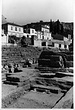
| Street leading to the market of Caesar and Augustus ... Cf. 88-22 southeast ... 1950 ... Site | By Area | East | Street to the Roman Market Place | Arch at South End of Stoa of Attalos | General Views ... Site | By Area | East | Street to the Roman Market Place | General Views ... Site | By Type | Roads | Street to the Roman Market Place |
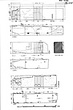
| Epistyle blocks reused in the south outer wall of the Market of Caesar and Augustus ... W.B. Dinsmoor, Jr ... PD 1515 Horizontal (normal) ... 1966 |
| Epistyle blocks reused in the south outer wall of the Market of Caesar and Augustus ... W.B. Dinsmoor, Jr ... PD 1515 AMS Horizontal (normal) ... 1966 |
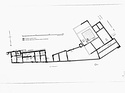
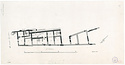
| Partially restored plan of Greek buildings in section ΡΡ. Plan of remains plus restored walls ... W.B. Dinsmoor, Jr ... Classical Shops beneath Stoa. Restored Plan as of mid-4th Century B.C. with earlier and later alterations. Replaced by PD 2328. 87-416 87-416 f Fragile Drafting Film Drafting Ink
Pencil ... 1973 |
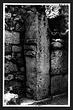
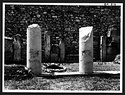
| Frieze block, originally used in the Square Peristyle, incorporated in the south outer wall of the Market of Caesar and Augustus ... southwest 692 Horizontal (normal) ... 7 Jul 1966 |
| Frieze blocks, originally used in the Square Peristyle, incorporated in the south outer wall of the Market of Caesar and Augustus ... southeast 690 Horizontal (normal) ... 7 Jul 1966 |
| Frieze blocks, originally used in the Square Peristyle, incorporated in the south outer wall of the Market of Caesar and Augustus ... southwest 691 Horizontal (normal) ... 7 Jul 1966 |
| Frieze block, originally used in the Square Peristyle, incorporated in the south outer wall of the Market of Caesar and Augustus ... AMS southwest 692 Horizontal (normal) ... 7 Jul 1966 |
| Frieze blocks, originally used in the Square Peristyle, incorporated in the south outer wall of the Market of Caesar and Augustus ... AMS southeast 690 Horizontal (normal) ... 7 Jul 1966 |
| Frieze blocks, originally used in the Square Peristyle, incorporated in the south outer wall of the Market of Caesar and Augustus ... AMS southwest 691 Horizontal (normal) ... 7 Jul 1966 |
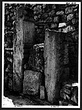
| Three frieze blocks, originally used in the Square Peristyle, incorporated in the south outer wall of the Market of Caesar and Augustus ... south 689 Horizontal (normal) ... 7 Jul 1966 |
| Three frieze blocks, originally used in the Square Peristyle, incorporated in the south outer wall of the Market of Caesar and Augustus ... AMS south 689 Horizontal (normal) ... 7 Jul 1966 |
| Table of Contents. Preface. List of Plates. Introduction. The Stoas. Shrines. Public Buildings and Offices. Market. Honorary Statues. Miscellaneous. Boundaries. Trees. Kerameikos. Panathenaic Street. Old ... Agora 3 ix ... Public Buildings and Offices ... Market |
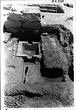
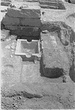
| Floor of Building D with basin ... At first, H.A.T. thought that the Sq. Peristyle might be a Gymnasium or a market building. Here is why there is mention of Gymnasium. Cf. Hesperia XIX, 1950, pp. 322ff. Horizontal (normal) ... August 1949 |
| Floor of Building D with basin ... At first, H.A.T. thought that the Sq. Peristyle might be a Gymnasium or a market building. Here is why there is mention of Gymnasium. Cf. Hesperia XIX, 1950, pp. 322ff. Horizontal (normal) ... August 1949 |
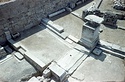
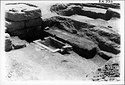
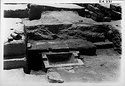
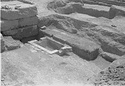
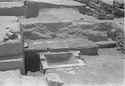
| Water basin in floor of Building D. Pier 15 in background, west wall at right ... At first, H.A.T. thought that the Sq. Peristyle might be a Gymnasium or a market building. Here is why there is mention of Gymnasium. Cf. Hesperia XIX, 1950, pp. 322ff. east 945 Horizontal (normal) ... 3 Aug 1949 |
| Water basin in floor of Building D. Pier 15 in background, floor, west wall at right ... At first, H.A.T. thought that the Sq. Peristyle might be a Gymnasium or a market building. Here is why there is mention of Gymnasium. Cf. Hesperia XIX, 1950, pp. 322ff. southeast 945 Horizontal (normal) ... 3 Aug 1949 |
| Water basin in floor of Building D. Pier 15 in background, floor and west wall ... At first, H.A.T. thought that the Sq. Peristyle might be a Gymnasium or a market building. Here is why there is mention of Gymnasium. Cf. Hesperia XIX, 1950, pp. 322ff. south 946 Horizontal (normal) ... 3 Aug 1949 |
| Water basin in floor of Building D. Pier 15 in background, west wall at right ... At first, H.A.T. thought that the Sq. Peristyle might be a Gymnasium or a market building. Here is why there is mention of Gymnasium. Cf. Hesperia XIX, 1950, pp. 322ff. east 945 Horizontal (normal) ... 3 Aug 1949 |
| Water basin in floor of Building D. Pier 15 in background, floor, west wall at right ... At first, H.A.T. thought that the Sq. Peristyle might be a Gymnasium or a market building. Here is why there is mention of Gymnasium. Cf. Hesperia XIX, 1950, pp. 322ff. southeast 945 Horizontal (normal) ... 3 Aug 1949 |
| Water basin in floor of Building D. Pier 15 in background, floor and west wall ... At first, H.A.T. thought that the Sq. Peristyle might be a Gymnasium or a market building. Here is why there is mention of Gymnasium. Cf. Hesperia XIX, 1950, pp. 322ff. south 946 Horizontal (normal) ... 3 Aug 1949 |
| Lion guarding fountain. Menodoros. Lions, beneath throne. Menon. Livia. Metalworkers. Logistai. Meter. Logisteria. Metichos or Metiochos. Lokros. Meton. Lollianos. Metragyrtes. Long Rocks. Metronomoi ... Agora 3 254 ... Market ... Market, Roman ... Market buildings |
| Colonnade of the "Street Stoa", general view of architectural remains of the Greek buildings (Rooms 1, 3, 5-7). Room 8 of the Street Stoa on the left, north wall of Roman Rooms 7, 8 and G in center. Stylobate ... southwest 2628 Horizontal (normal) ... 21 Aug 1974 |
| Colonnade of the "Street Stoa", general view of architectural remains of the Greek buildings (Rooms 1, 3, 5-7). Room 8 of the Street Stoa on the left, north wall of Roman Rooms 7, 8 and G in center. Stylobate ... AMS southwest 2628 Horizontal (normal) ... 21 Aug 1974 |
| Section Ω 1938 ... M. Crosby ... Section Ω lies in the east end of the north slope of the Areopagus, well to the southeast of the market square proper. Excavation showed, as expected, that the area was a residential district throughout ... 16 Jan-17 Jun 1938 ... Section Ω lies in the east end of the north slope of the Areopagus, well to the southeast of the market square proper. ... By that time however, there was a street running diagonally up through the section, and remains of buildings, wells, cisterns, etc. from that period and onwards were found. Not until the end of the 4th or early 5th century A.D. are there any traces of buildings other than private houses. |
Scranton, Robert L ... American School of Classical Studies at Athens ... Part 3 of Corinth I continues the publication of the architectural remains in the general area of the Agora. The volume includes monuments which limit the Agora at the west, those which run through the ... 1951 ... The volume includes monuments which limit the Agora at the west, those which run through the center of the Agora separating the Lower from the Upper Agora, those immediately above Peirene facing onto the Agora, Roman monuments in the Lower Agora area, and finally the buildings on the north slope of the hill on which stands the Archaic Temple. Since the area of the Lower Agora had not yet been dug to the Greek level, this volume is concerned with the buildings and topography of the Roman period: temples on the West Terrace; shops, circular monument, Dionysion, and Bema on the central terrace; and isolated monuments in the open Agora. Both the Greek Painted Building and the North Stoa and the Roman Market north of the Archaic Temple are treated. |
| The Athenian Agora 24; Late Antiquity A.D. 267-700; Prosperity; Decline and Disaster A.D. 396-582; Prosperity 396-450 A.D.; The Rise of the Christian City; Conversion of Secular Buildings. Agoranomeio, ... Agora 24 71 ... ; The Rise of the Christian City; Conversion of Secular Buildings ... Agoranomeio, Roman Market ... Robinson, The Tower of the Winds and Roman Market-Place, AJA 47, 1943, p. 291, note 1 |
Fowler, Harold North Stillwell, Richard ... American School of Classical Studies at Athens ... The aim of this volume, the first in the Corinth series although not the first to be published, is to describe the surroundings of the ancient site and then document the main buildings identified during ... 1932 ... The aim of this volume, the first in the Corinth series although not the first to be published, is to describe the surroundings of the ancient site and then document the main buildings identified during the first 30 years of ASCSA excavations. ... They then proceed to describe the Temple of Apollo, the Lechaion Road, the Market North of the Basilica, the Colonnades and Shops along the Lechaion Road, the Propylaea, the Basilica, and the North Building. |
| Wycherley, R. E ... American School of Classical Studies at Athens ... Here are presented all the ancient written references, both literary and epigraphical, to the Agora (including its environs) and its monuments. The introduction summarizes chronologically the authors cited, ... 1957 ... They are grouped in parts: the Stoas, Shrines, Public Buildings and Offices, Market, Honorary Statues, Miscellaneous including Boundaries, Trees, Kerameikos, Panathenaic Street, Old Agora. |
http://agathe.gr/overview/the_archaeological_site.html The Athenian Agora The Agora of Athens was the center of the ancient city: a large, open square where the citizens could assemble for a wide variety of purposes. On any given day the space might be used ... On any given day the space might be used as a market, or for an election, a dramatic performance, a religious procession, military drill, or athletic competition. ... These buildings, along with monuments and small objects, illustrate the important role it played in all aspects of public life. ... Administrative buildings and small sanctuaries were built, and water was made available at a fountainhouse fed by an early aqueduct. |
| Table of Contents; Cultural Buildings of the Roman Period. Table of Contents; Cultural Buildings of the Roman Period; Odeion of Agrippa. Table of Contents; Cultural Buildings of the Roman Period; Library ... Agora 14 xii ... Table of Contents; Cultural Buildings of the Roman Period ... Table of Contents; Cultural Buildings of the Roman Period; Odeion of Agrippa ... Table of Contents; Cultural Buildings of the Roman Period; Library of Pantainos |
http://agathe.gr/publications/monographs.html Monographs Excavations in the civic and cultural center of classical Athens began in 1931 and have continued almost without interruption to the present day. The first Athenian Agora volumes presenting ... Each volume covers a particular chronological period, set of buildings, or class of material culture. ... They are grouped in parts: the Stoas, Shrines, Public Buildings and Offices, Market, Honorary Statues, Miscellaneous including Boundaries, Trees, Kerameikos, Panathenaic Street, Old Agora. ... Part II discusses the buildings which could have served as courts and the objects found in them. |
| The Athenian Agora; Volume 014; The Agora of Athens; The History; Index; General; Pnyx. The Athenian Agora; Volume 014; The Agora of Athens; The History; Index; General; Praxiteles. The Athenian Agora; ... Agora 14 253 ... The Athenian Agora; Volume 014; The Agora of Athens; The History; Index; General; Propylon; Of Roman Market ... The Athenian Agora; Volume 014; The Agora of Athens; The History; Index; General; Poros; Foundations of Buildings ... The Athenian Agora; Volume 014; The Agora of Athens; The History; Index; General; Roman Market |
|
|

.png.icon.jpg)
.png.icon.jpg)
.png.icon.jpg)

.png.icon.jpg)
.png.icon.jpg)