|
|
| Excavation Summary Section ΟΟ: 1969 ... John McK. Camp II ... Further excavations were conducted in Section ΟΟ, supplementing those done earlier. The large Roman complex, now known as the Southwest Bath, were completely explored. Cuts to the north of the building ... 13 May-6 Jul 1969 ... Cuts to the north of the building reveal a series of stratified roads. A well was cleared and excavated, and a Hellenistic cistern complex was dug out. |
| Section ΛΛ 193
Excavation Summary ... Dorothy Burr Thompson ... Excavations in Section ΛΛ revealed that the original contour of Kolonos Agoraios had been much sharper than in modern times. No traces of early graves were found in the area; first sign of habitation is ... 1 Feb-23 Jun 1937 ... In the early 3rd century the easternmost houses went out of use to leave space for the Hellenistic Building.
In the early Roman period a filling of large sherds covered most of the area, probably due to the general building activity of that period. |
| Preliminary Report on the 2007 Excavation Season ... John McK. Camp II ... Excavation continued this year in the sections ΒΖ, ΒΗ and Γ.
In Section ΒΖ South, two areas were investigated: the north-south road and the areas west of the road. In the road, hard-packed gravel surfaces ... 13 Jun-3 Aug 2007 ... In Section ΒΖ North, mostly Classical and Hellenistic levels in and behind the Classical commercial building were excavated. ... A draw-shaft and part of the tunnel of a Hellenistic cistern complex was found outside the building to the east. The tunnel may lead to a collapsed cistern located within the building itself.
In Section Γ, the excavation of the building identified as the Strategeion continued. |
| 1996 Excavation Summary ... John McK. Camp II ... Excavations were carried out in two areas: in early levels underneath the west end of the Middle Stoa, and in and around the Classical commercial building north of the Stoa Poikile. The result of the 1996 ... 10 Jun-2 Aug 1996 ... Excavations were carried out in two areas: in early levels underneath the west end of the Middle Stoa, and in and around the Classical commercial building north of the Stoa Poikile. The result of the 1996 season showed a variety both in material recovered and in chronological range, covering the time period from the early Iron Age to Hellenistic times. |
| Section ΟΟ 1948 ... Margaret Crosby ... Work in Section ΟΟ was concentrated on the east and west ends of the north side of the section: parts of the ancient east-west street were explored; ca 20 meters of the Great Drain was clearly exposed; ... 8 Mar-26 Apr 1948 ... Work in Section ΟΟ was concentrated on the east and west ends of the north side of the section: parts of the ancient east-west street were explored; ca 20 meters of the Great Drain was clearly exposed; remains of a house (House E) from the 4th century and Hellenistic period, with cistern (Cistern A), water storage tank and a well (Well I) were found; the Roman Bath (Building A and Hypocaust area) was further explored, and a well in the central court (Well II) dug out; a trial cut was dug in a long, narrow poros building with a large open yard and a series of small rooms; and an early Geometric grave was found and excavated. |
| Preliminary Report on the 2006 Excavation Season ... John McK. Camp II ... This summer the 75th anniversary of the beginning of the excavations and the 50th anniversary of the reconstruction of the Stoa of Attalos were celebrated.
Excavation were concentrated on two areas: northwest ... 13 Jun-4 Aug 2006 ... In section Γ work continued in the building identified as the Strategeion. Considerable new information about the building plan emerged and evidence gathered suggest that the use of the building was commercial rather than public. ... In deeper layers, a pyre of early Hellenistic date was found. |
| Preliminary Report on the 2010 Excavation Season ... John McK. Camp II ... Excavations took place in five sections: ΒΗ, ΒΘ, ΒΖ, Γ and Δ.
In Section ΒΗ, excavation continued and late fills overlying the Stoa Poikile were cleared. A good cross-section of the stoa foundations was ... 15 Jun-6 Aug 2010 ... Two Byzantine wells within the interior of the building were left undug. A Hellenistic cistern was recovered in the area behind and north of the stoa. ... In Section ΒΖ, excavations were concentrated on the northern parts of the Classical Commercial Building, in an attempt to clarify its plan and building history. |
| Preliminary Report on the 2004 Excavation Season ... John McK. Camp II ... All the work during the season 2004 was concentrated on the northwest corner of the Agora north of the Panathenaic Way.
In BZ North, the last remains of Byzantine fills and walls were removed and Hellenistic, ... 7 Jun-16 Jul 2004 ... In BZ North, the last remains of Byzantine fills and walls were removed and Hellenistic, early Roman and late Roman fills were explored. A gap in the archaeological record between the late Hellenistic/early Roman to late Roman periods was discovered. ... In the building, further cleaning took place, revealing more of an early Roman structure. |
| Section ΟΟ 1949
Grave Area ... Margaret Crosby ... A report on the excavation in the immediate vicinity of the Early Geometric burial found in 1948 in Section ΟΟ. Two Geometric graves were uncovered, and also walls and drainage systems belonging to the ... 28 Mar-9 Nov 1949 ... Two Geometric graves were uncovered, and also walls and drainage systems belonging to the industrial establishments of the later 6th and 5th B.C. centuries, as well as sporadic remains from later periods, such as a 4th B.C. century pit and a Hellenistic cistern. Investigation also took place in the Great Drain area.
In addition, limited excavations were carried out in the ancient street north of the Poros Building. |
| Agora Excavations 1997 Season Preliminary Report ... John McK. Camp II ... Excavations were carried out in two separate areas: under the Middle Stoa in the Agora square, and just north of the northwest entrance of the Agora. The excavations produced material covering a wide chronological ... 10 Jun-1 Aug 1997 ... The excavations produced material covering a wide chronological span, from the earliest Iron Age to the beginning of the Hellenistic period. The early material was particularly abundant, for example an iron age burial, and a disturbed grave and two wells from the eighth century B.C. ... In the Classical commercial building, more evidence of the manufacture and sale of miniature works of art were found, as was another pyre.
|
| Section Φ Season of 1937 ... Eugene Vanderpool ... In antiquity the area included in Section Φ lay outside the Agora proper and were apparently occupied only by houses and small buildings. The earliest period of which any considerable remains were found ... 25 Jan-17 Jun 1937 ... A small building with polygonal limestone walls were cleared, its purpose uncertain. ... Remains of the Hellenistic period are few. ... The most prominent feature is an apse. The building was destroyed in the 6th century A.D.
|
| Agora 2019 - Summary Report ... John McK. Camp II ... Excavations were carried out in four sections: in Section ΝΝ in the southwest corner of the archaeological site, and in the northwest corner of the Agora in Sections ΒΖ, ΒΘ East and ΒΘ West.
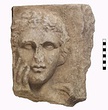
Section ΝΝ ... 10 Jun-2 Aug 2019 ... It was most likely part of an exedra, a common type of Hellenistic dedication monument designed to carry several statues.
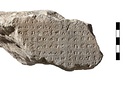
... They were probably part of a large building or monument which now lies under the scarp.
In Section ΒΖ the exploration of the lower layers under the floors of the Classical Commercial Building continued. Early pottery was found but no tomb. |
| Preliminary Report on the 2001 Excavation Season ... John McK. Camp II ... Excavations were carried out at the northwest of the Agora in sections ΒΖ and ΒΕ, and in the area of the Eleusinion in section ΕΛ.
In Section ΒΖ, the investigation of the settlement of the 11th century ... 11 Jun-3 Aug 2001 ... In section ΒΕ, the work in the Classical shop building continued. Another Hellenistic pyre was found beneath the floor of one of the rooms. ... A well with upper fill of the Hellenistic period was found, as was some irregularly placed post-holes. |
| Agora Excavations Preliminary Report - Summer 2014 ... John McK. Camp II ... Excavations in 2014 were carried out in three sections: ΒΘ, ΒΓ and ΒΖ.
In Section ΒΘ, overlying the Painted Stoa, the Byzantine houses of the 11th century A.D. were further exposed in the western part ... 9 Jun-1 Aug 2014 ... In Section ΒΖ, excavation continued in early layers in the area north of the Classical Commercial Building. A Mycenaean chamber tomb, collapsed in antiquity and cleaned out and filled in the late 8th century B.C., was partially excavated. ... Several road surfaces of Hellenistic date were encountered. |
| Preliminary Report on the 2012 Excavation Season ... John McK. Camp II ... Excavations were carried out in four areas during the 2012 season: three in the area of the Painted Stoa at the northwest corner of the Agora (sections ΒΗ, ΒΖ, ΒΘ), and one in the Panthenaic Way (section ... 11 Jun-3 Aug 2012 ... In the Panthenaic Way, Hellenistic and Classical numerous road levels were excavated in two trenches. ... In section ΒΖ, excavation took place in the area beyond the Classical Commercial Building, mostly in late archaic fills. |
| ΚΚ Excavation Report 1936 ... Dorothy Burr Thompson ... Section ΚΚ, the area inside the modern fence around the so-called Theseion, was cleared to bedrock in order to determine the entire history of that portion of Kolonos Agoraios. Excavation revealed that ... 10 Feb-13 Mar 1936 ... B.C., while the work on the terrace continued well down into the 5th century B.C.
In Hellenistic times private houses were built outside the terrace wall, and some time after the middle of the second century B.C. the hill was included in the general scheme of enlarging the Agora region. A closed building, which purpose has not yet been determined, was set into the north side of the hill. |
|
|