|
|
| White ground. Tripod. Tyrant-Slayers. Vambrace. Vari. Vase, representation of. Wine. Wineskin. Women's flesh left black. Vraona. Vulci. Wool. Workshop. Warping. Wash. Wreath: around head. Weathering. Wheat ... Agora 23 367 ... Vase, representation of |
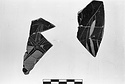
Broken on all sides. Front, back preserved. Mended.
Subject uncertain: two series of radiating loops possibly from a schematic representation of animal hair. Fragment may in fact be the impression rather ... 29 June 1973 ... Subject uncertain: two series of radiating loops possibly from a schematic representation of animal hair. ... ADDENDA RVN: Wing fragment from statuette or plastic vase. |
Wall fragment. Max. dim. 0.058.
Wooly satyr (torso, start of arms, legs, and tail) to right. White: tufts of fur.
The satyr is dressed in the costume of Papposilenos and is closest to the satyrs on the ... Ca. 420 B.C ... Wooly satyr (torso, start of arms, legs, and tail) to right. ... For the most recent discussion of the meaning of the representation on the New York vase, see Froning, Dithyrambos, pp. 25--26, who opts for the scene reflecting a satyr play rather than a dithyrambos performance. ... Simon in The Eye of Greece: Studies in the Art of Athens, D. |
| Fragments a) and b) come from opposite sides of the vase, each showing the hind legs of the horses of a quadriga. The larger (a) shows also the edge of the wheel of the chariot and, behind the horses, ... August-September 1932 ... Fragments a) and b) come from opposite sides of the vase, each showing the hind legs of the horses of a quadriga. The larger (a) shows also the edge of the wheel of the chariot and, behind the horses, part of a draped female figure in embroidered chiton and peplos.
... The representation not entirely clear, not only on fragment e) but also on a) and c), on each of which is preserved part of a leg of a nude figure standing behind the chariot. |
|
|
.png.icon.jpg)