|
|
Evangelidis, Vasilis ... American School of Classical Studies at Athens ... Hesperia 88.2 2 283-318 ... 2019 ... Macella and Makelloi in Roman Greece: The Archaeological and Textual Evidence |
Gardner, Chealsea A. M ... American School of Classical Studies at Athens ... Hesperia 90.2 2 339-358 ... 2021 ... The "Oracle of the Dead" at Ancient Tainaron: Reconsidering the Literary and Archaeological Evidence |
| Gleanings from the West Side of the Agora
Spring of 1935, Section ΟΕ ... Homer A. Thompson ... An account, based on archaeological evidence so far discovered, on some of the buildings in the west side of the Agora: Stoa of Zeus Eleutherios and vicinity, Sanctuary of Apollo Patroos, Sanctuary of ... 27 Jan 1934-30 May 1935 ... An account, based on archaeological evidence so far discovered, on some of the buildings in the west side of the Agora: Stoa of Zeus Eleutherios and vicinity, Sanctuary of Apollo Patroos, Sanctuary of the Mother of the Gods, and the Great Drain. |
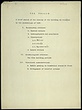
| 1. The Tholos. A Brief Sketch of the History of the Building as Revealed by the Excavations of 1934
2. The Bouleuterion ... Eugene Vanderpool ... A report mainly about the results of the excavations of the Tholos and the Bouleuterion, but a notebook index attached refer to all features excavated during 1934. A list of coins associated with the construction ... 15 Jan-19 May 1934 ... A report mainly about the results of the excavations of the Tholos and the Bouleuterion, but a notebook index attached refer to all features excavated during 1934. ... The first archaeological evidence of the existence of the building came to light during the campaign of 1933 when the porch of the Tholos was partially cleared. ... Other archaeological evidence suggests that it was probably built in the second half of the 4th century B.C., replacing an earlier building which served as both Metroon and Bouleuterion. |
|
|