icon

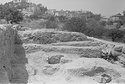
[Agora Image] 2012.37.0096 (Section Κ 528)

View from east of martyra of Section II before removal, showing square 4th B.C. or late 5th B.C. water basin at west end of trench (x) ... AMS Horizontal (normal) ... View from east of martyra of Section II before removal, showing square 4th B.C. or late 5th B.C. water basin at west end of trench (x).

icon

[Agora Notebook Page] Κ-15-72 (pp. 2931-2932)

Square Stone Lined Water Basin at West End, Centre of Trench II. Layer III at South Side of Trench I. Layer II; South Side of Trench II above Cobble-Stone Road Surface. Trench II; Lower Level above Bedrock ... Κ-15 2931, 2932 Lot Κ 345 Lot Κ 346 Lot Κ 347 Lot Κ 348 Lot Κ 349 Lot Κ 350 Lot Κ 351 Lot Κ 352 Lot Κ 353 ... Last quarter 5th B.C.

icon

[Agora Notebook Page] Κ-22-6 (pp. 4299-4300)

Monuments. Great Poros Aqueduct. Poros Gutter. Ancient House Walls. Hieron with Horos. Square 5th B.C. Water Basin. Roman Water System. Byzantine Pithoi. Trenches. Trench I. Trench I; Plan; Upper Level ... Κ-22 4299, 4300 ... Square 5th B.C. Water Basin ... Roman Water System

[Agora Webpage] Birth of Democracy: The Boule

http://agathe.gr/democracy/the_boule.html

The Boule (The Senate) The Athenian legislature also included a deliberative body known as the Boule. It was made up of 500 members -- 50 from each of the 10 tribes -- who were chosen by lot and served ... The Boule met in a building known as the Bouleuterion, which lay along the west side of the Agora square. It originally dated to the years around 500 B.C. and had simple wooden seating sufficient to accommodate the 500 members. ... Fragment of a marble basin, about 500 B.C. ... A fragmentary marble basin or perirrhanterion, marked as belonging to the Bouleuterion, presumably held the holy water in which the Athenians were accustomed to wash or dip their hands before entering any sacred space.