|
|
Domestic, Commercial Unknown Rubble Walls Poor, mostly foundations ... 4th B.C ... Public Offices ... Public Offices |
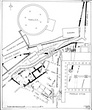
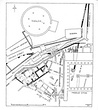
| Actual state plan of "Simon's House" and buildings of the southwest side ... John Travlos ... PD 1062-a Public offices or admistrative buildings, no. 8 in Agora Guide, 1990 ... 1958 ... Public offices or admistrative buildings, no. 8 in Agora Guide, 1990. |
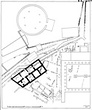
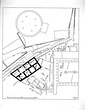
| Area west of the Middle Stoa. Enlightened in black the restored plan of the admistrative buildings on the southwest side of the Agora (photograph of heliotype of PD #1062b, no separate plan exists) ... John Travlos ... PD 1062-b Public offices or admistrative buildings, no. 8 in Agora Guide, 1990. Horizontal (normal) ... 1958 ... Public offices or admistrative buildings, no. 8 in Agora Guide, 1990. |
| Area west of the Middle Stoa. Enlightened in black the restored plan of the admistrative buildings on the southwest side of the Agora (photograph of heliotype of PD #1062b, no separate plan exists) ... John Travlos ... PD 1062-b Public offices or admistrative buildings, no. 8 in Agora Guide, 1990. Horizontal (normal) ... 1958 ... Public offices or admistrative buildings, no. 8 in Agora Guide, 1990. |
| Actual state plan of "Simon's House" and buildings of the southwest side ... John Travlos ... PD 1062-a Public offices or admistrative buildings, no. 8 in Agora Guide, 1990. Horizontal (normal) ... 1958 ... Public offices or admistrative buildings, no. 8 in Agora Guide, 1990. |
| Table of Contents. Preface. List of Plates. Introduction. The Stoas. Shrines. Public Buildings and Offices. Market. Honorary Statues. Miscellaneous. Boundaries. Trees. Kerameikos. Panathenaic Street. Old ... Agora 3 ix ... Public Buildings and Offices |
| Public Buildings and Offices. Archeia. Pollux, IX, 41. Hesperia, XVII, 1948, pp. 151ff. Hesperia, XIX, 1950, p. 174. Hesperia, XXIII, 1954, pp. 33ff. Hesperia, XXIV, 1955, pp. 52ff. Synedrion. Demosthenes, ... Agora 3 126 ... 12th A.D ... Public Buildings and Offices |
| Odeion. Parmenides. Parrhasios. Parsley. Parthenon. Odyssey. Patrokleides. Oedipus. Pausanias. Offices, public. Oikema (prison etc.). Peace. Oineus. Oinoe, battle-painting. Pegasos of Eleutherai. Olbiades ... Agora 3 255 ... Offices, public |
| Wycherley, R. E ... American School of Classical Studies at Athens ... Here are presented all the ancient written references, both literary and epigraphical, to the Agora (including its environs) and its monuments. The introduction summarizes chronologically the authors cited, ... 1957 ... They are grouped in parts: the Stoas, Shrines, Public Buildings and Offices, Market, Honorary Statues, Miscellaneous including Boundaries, Trees, Kerameikos, Panathenaic Street, Old Agora. |
http://agathe.gr/democracy/the_agora_and_pnyx.html The Agora and Pnyx Center of public activity, the Agora was a large open square where all the citizens could assemble (2, 3). It was used for a variety of functions: markets, religious processions, athletic ... The Agora and Pnyx Center of public activity, the Agora was a large open square where all the citizens could assemble (2, 3). ... Around its edges stood the buildings needed to run the democracy: the Council House (Bouleuterion), magistrates’ headquarters, archives, mint, lawcourts, and civic offices. Boundary stones, such as the one shown below (4), indicate that the Agora had well-recognized geographical limits. 2. ... It was on the Pnyx (5) that policies initiated by magistrates and committees in the offices of the Agora were submitted to the Athenian citizens. |
Broneer, Oscar ... American School of Classical Studies at Athens ... After a discussion of the fragmentary evidence for several buildings of the Greek period which were swept to construct it, the South Stoa at Corinth is treated in detail. Careful description of all the ... 1954 ... After the destruction of the city, it remained comparatively undamaged and was taken over by the Roman Colony as the seat of its administrative offices. In its final phase various buildings, including a bouleuterion, a fountain house, a bathing establishment, and a public latrine were built into the ground floor. |
http://agathe.gr/democracy/citizenship_tribes_and_demes.html Citizenship: Tribes and Demes Every male Athenian, above and beyond the regular universal military training for service in the citizen army, was subject to universal political service. Besides being a ... He might be allotted for a year’s service to any of a number of committees or boards such as Treasurers, Lessors of Public Contracts, Auditors, Market Controllers, Controllers of Measures, Grain Wardens, Port Superintendents, etc. Even many of the highest offices in the land were filled by allotment and so could fall on any citizen; almost all offices could be held only for a single year. In this way maximum participation was achieved, and every man was a public servant. 6.Oath stone (lithos) of the Athenians, on the steps of the Royal Stoa. |
http://agathe.gr/guide/stoa_of_attalos.html Stoa of Attalos Lining the east side of the Agora square is the Stoa of Attalos (Fig. 47), built during the reign of Attalos II of Pergamon (159–138 B.C.), who studied in Athens under the philosopher Karneades ... It houses storage facilities in the basement, a public display area on the ground floor, and offices and workrooms on the first floor. ... The reconstruction demonstrates the effectiveness of the stoa as the ideal architectural form for a public building in Greece: the colonnaded walkways provide light and fresh air for literally thousands of people, while protecting them from the intense sun of summer or the wind and rain of winter. |
http://agathe.gr/democracy/sources_and_documents.html Sources and Documents Our understanding of the workings and history of Athenian democracy comes from a variety of sources. Most useful, perhaps, are the ancient literary texts that survive, many of which ... The democracy, with average citizens holding public offices which changed hands every year, required elaborate and accurate record-keeping. ... It stood in a central location among the public buildings of the city, next to the Bouleuterion. |
http://agathe.gr/overview/the_archaeological_site.html The Athenian Agora The Agora of Athens was the center of the ancient city: a large, open square where the citizens could assemble for a wide variety of purposes. On any given day the space might be used ... Here administrative, political, judicial, commercial, social, cultural, and religious activities all found a place together in the heart of Athens, and the square was surrounded by the public buildings necessary to run the Athenian government. These buildings, along with monuments and small objects, illustrate the important role it played in all aspects of public life. The council chamber, magistrates’ offices, mint, and archives have all been uncovered, while the lawcourts are represented by the recovery of bronze ballots and a water-clock used to time speeches. ... Used as a burial ground and for scattered habitation in the Bronze and Iron Ages, the area was first laid out as a public space in the 6th century B.C. |
http://agathe.gr/democracy/standard_weights_and_measures.html Standard Weights and Measures The Controllers of Measures (Metronomoi) have also left us many samples of their work. One set of bronze weights (34), inscribed as standard weights of the Athenians, are ... These weights, found near the Tholos, probably belonged to one of the official sets that, as an extant decree provides, were deposited for public comparison on the Acropolis, in the Tholos, at Eleusis, and at Piraeus. 34. ... Official dry measure, with validating stamp and painted inscription reading DEMOSION (public property), fourth century B.C. 38. ... If anyone sells in a smaller container, the appropriate authority shall immediately sell the contents by auction, pay the money to the public bank and destroy the container.” |
http://agathe.gr/democracy/democracy.html Introduction Classical Athens saw the rise of an achievement unparalleled in history. Perikles, Aischylos, Sophokles, Plato, Demosthenes, and Praxiteles represent just a few of the statesmen and philosophers, ... The Agora seems to have been laid out as a public area late in the 6th century B.C., presumably under the tyrant Peisistratos and his sons. ... Also built at about the same time was the Royal Stoa which housed the offices of the king archon, the official in charge of religious matters and the laws. ... The model of the Agora in 400 B.C. shows the civic center at a time when Athens had provided herself with all the public buildings necessary for the functioning of the fully developed democratic system. |
http://agathe.gr/overview/the_stoa_of_attalos.html The Stoa of Attalos The Stoa of Attalos was originally built by King Attalos II of Pergamon (159–138 B.C.), as a gift to the Athenians in appreciation of the time he spent in Athens studying under the ... The Stoa of Attalos in November of 1952 The Stoa of Attalos in December of 1956 The reconstruction leads the visitor to appreciate why stoas were such a common form of public building among the Greeks, used in agoras, sanctuaries, near theaters, and wherever many people were expected to gather. ... The ground floor is given over to public display, sculpture and large marbles in the colonnades, small objects in a long gallery consisting of ten of the original shops. The first floor is used for the excavation offices, workrooms, and archives as well as for additional storage. |
http://agathe.gr/overview/contact.html Staff and Contact Information The Agora Excavations offices are located within the ancient Agora archaeological site, on the upper floor of the Stoa of Attalos. The offices in the Stoa of Attalos are open ... Staff and Contact Information The Agora Excavations offices are located within the ancient Agora archaeological site, on the upper floor of the Stoa of Attalos. The offices in the Stoa of Attalos are open Monday through Friday, from 9 am to 2.30 pm. ... This digital archive is searchable and accessible from anywhere and freely available to the public. For further information, please contact Bruce Hartzler at . |
http://agathe.gr/democracy/political_organization_of_attica.html Political Organization of Attica: Demes and Tribal Representation Each tribe was divided into three parts, and each third (trittys) was from one of the three regions of Attica, plain, coast, or hills ... Each jury in the lawcourts had an equal number of jurors from each of the ten tribes. Public offices were also apportioned out as fairly as possible. |
|
|
.png.icon.jpg)
.png.icon.jpg)
.png.icon.jpg)