|
|
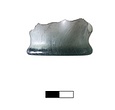
| Bottle fragment ... Angelique Sideris ... Image not in Agora XXXIV by mistake. Horizontal (normal) ... June 2008 ... Image not in Agora XXXIV by mistake. |
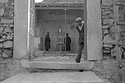
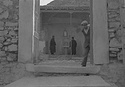
| Church of Hypapanti. Service of desacration. Through the main door. Παπαμαναλόπουλος is a mistake ... Scanned 2005 for the 75th anniversary exhibition and publication. 974 Horizontal (normal) ... 23 Feb 1938 ... Παπαμαναλόπουλος is a mistake. |
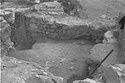
| Room 16 cleared to first floor at -2.15 from northwest. Line is a mistake ... AMS Horizontal (normal) ... Line is a mistake. |
| Church of Hypapanti. Service of desacration. Through the main door. Παπαμαναλόπουλος is a mistake ... AMS 974 Horizontal (normal) ... 23 Feb 1938 ... Παπαμαναλόπουλος is a mistake. |
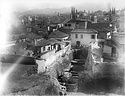
| Excavation of the Agora to the southwest of the Hephaisteion. Dörpfeld's excavation trench, showing the foundations of the second room from the south of the Hellenistic Metroon.
Cf. Athenische Mitteilungen, ... Grundstuck Phinopoulos: Reference to this as the Phinopoulos lot is evidently a mistake; the Phinopoulos lot was clearly at no. 3 Hadrian St. (note on the back of the photo). (SD) east Horizontal (normal) ... ca. 1896 ... Grundstuck Phinopoulos: Reference to this as the Phinopoulos lot is evidently a mistake; the Phinopoulos lot was clearly at no. 3 Hadrian St. |
| From the lip of a coarse pot; micaceous russet clay, unglazed; mended from two pieces.
Inscribed inside:
Note the writer's mistake. 6th. and 5th. c., red sand and tile fill. B' building fill, fill to ... 22 February 1935 ... Inscribed inside:
Note the writer's mistake. |
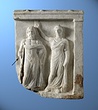
| Votive relief of Asklepios and Hygeieia, with a drill hole for a repair to the right arm of Asklepios, probably to correct a mistake made by the sculptor. 4th century B.C ... Craig Mauzy ... Horizontal (normal) ... 14 Jul 2005 ... Votive relief of Asklepios and Hygeieia, with a drill hole for a repair to the right arm of Asklepios, probably to correct a mistake made by the sculptor. 4th century B.C. |
Fragment from upper wall of a large bowl, flanged for a lid; the edge of the rim inside and of the horizontal flange broken off.
Heavy fabric; glaze streaky, worn outside. Edge of rim reserved.
Cf ... (1950) ... Entered as ΠΘ by mistake, actually from section NN. |
| Broad, level; broken before curve.
Medium coarse red clay; light slip, worn thin.
Impression broken away at left end; letters fairly clear. Rdg: looking at the reverse, evident that in cutting the die ... 16 July 1931 ... Rdg: looking at the reverse, evident that in cutting the die
they simply put the =epi~= at the wrong end of the line, an easy
mistake; read: = 'Epi~ 'Aristi(=
= da( Filam(=* |
Complete except for chips of rim and underside of base. Low ring foot, horizontal, round handles, shallow out-turned rim, nearly flat on top, with slight overhang. Irregular inner surface. Black glazed ... 2 August 1973 ... Black glazed inside and rim; top of one handle partially glazed, probably by mistake. Two narrow bands of glaze on exterior, one just below handles, other at point foot attached to vase. |
Mended from three pieces.
Retrograde. -.hοσπερ εγραφσεν-
The inscriber forgot to write both the final rho of οσπερ and the verb's augment. He later realized his mistake and added the missing letters ... He later realized his mistake and added the missing letters. |
| Synedrion. Synoikia. Synoikeia. Syracuse. Stelai. Syssitia. Tables. Stephano. Stilpon. Stoas. Tablets. Talos. Tarantinos. Tarentum. Taurobolic altar. Taxiarchs. Stoa Alphitopolis. Tears, libation of. Technitai ... Agora 3 258 ... Themistion, mistake for Thesmotheteion ... Thesmophoreion, mistake for Thesmotheteion |
| Ionian alphabet. Ionian influence. Incense. Javelin. Jewelry. Goal post. Kalos name. Gorgoneion. Kamiros. Kantharos. Kerameikos. Graffito. Kithara. Geometric. Grave marker. Krater. Greaves. Krobylos. Glaze: ... Agora 23 365 ... Mistake |
A well about 2.00m. SE of the Tholos precinct wall. The presence of the water-clock strengthens the probability, suggested by its location, that the well served one of the public buildings in the neared ... Ca. 410-390 B.C ... The lower fill seems pure period of use; mostly water-vessels, with a few bits that fell in by mistake. The upper contrasts sharply with the "canonical" late 5th c. fill; very scrappy; very limited variety of shapes. |
|
|


.png.icon.jpg)
.png.icon.jpg)