|
|
Vanderpool, Eugene Wallace, W. P ... American School of Classical Studies at Athens ... Hesperia 33.4 4 381-391 10.2307_147284 ... 1964 ... The Sixth Century Laws from Eretria |
| Xenophon, Oeconomicus, VIII, 22. Cock, C.A.F., III, p. 56, no. 195. Hesychios. Pollux, VII, 11. Plato, Laws, 915d. Xenophon, De Vectagalibus, III, 13. Pollux, X, 18. Suidas, under κύκλος ... Agora 3 189 ... 360 B.C ... Plato, Laws, 915d |
| Summary of the Evidence for the Identification of the City Eleusinion; Sacred Laws on Altars in the Sanctuary. Andokides, De Mys. 1.111. Jeffery 1948, pp. 86-111. LSAG², no.44, pp. 75-76 ... Agora 31 8 ... Summary of the Evidence for the Identification of the City Eleusinion; Sacred Laws on Altars in the Sanctuary |
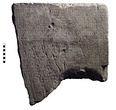
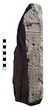
| Fragment of inscribed stele; inscribed on two faces.
Broken away below and on one side.
One face is earlier than the other; face A earlier, laws of 410-404 B.C.; face B later, sacred calendar of 403-400 ... Late 5th. century B.C ... One face is earlier than the other; face A earlier, laws of 410-404 B.C.; face B later, sacred calendar of 403-400 B.C.
... Codification of the laws.
Pentelic marble.
|
Meritt, Benjamin D ... American School of Classical Studies at Athens ... The text of all 331 Greek inscriptions found during the course of excavations at Corinth from 1896 to 1927 is presented in this volume, including some pieces found in fields around the city. The book is ... 1931 ... The book is divided into sections of Laws and Decrees, Catalogues and Boundary Stones, Public Monuments and Dedications, Sepulchral Monuments (Greek, Roman, and Byzantine), and Byzantine Monuments other than Sepulchral Monuments. |
| Inscribed fragment.
Right side, smooth dressed along front edge, heavily picked behind, preserved, and back (?).
Nineteen lines of the inscription preserved, one to four letters in each.
Pentelic marble ... Late 5th. century B.C ... ADDENDA Resembles I 727 (codification of the laws). |
| Plato, Laws, 761c. Plato, Kritias, 117b. Thucydides, VIII, 92, 2. Lycourgos, Leokrates, 112. Agora, 003, no. 405, p. 132. Hesperia, 20, 1951, p. 56. Hesperia, 21, 1952, pp. 86, 97. Hesperia, 22, 1953, ... Agora 14 201 ... 1934 ... Plato, Laws, 761c |
http://agathe.gr/guide/royal_stoa.html Royal Stoa On the west side, lying just south of the Panathenaic Way, are the remains of the Royal Stoa (Stoa Basileios), one of the earliest and most important of the public buildings of Athens (Figs ... It served as the headquarters of the archon basileus (king archon), second in command of the Athenian government and the official responsible for religious matters and the laws. Here, inscribed copies of the full law code of Athens were on display, the annual oath of office was administered to all those about to serve the democracy (Fig. 63), and Sokrates was indicted for impiety in 399 B.C. ... "[The archons] took the oath near the Stoa Basileios, on the stone on which were the pieces of the victims, swearing that they would guard the laws." (Pollux 8.86) Figure 63 (right). |
http://agathe.gr/democracy/the_popular_courts.html The Popular Courts The popular courts, with juries of no fewer than 201 jurors and as many as 2,500, heard a variety of cases. The courts also had an important constitutional role in wielding ultimate ... The courts also had an important constitutional role in wielding ultimate authority by their interpretation of the laws, decrees, and decisions passed by the Ekklesia, Boule, and archons. ... Besides, it is said that his laws were obscurely and ambiguously worded on purpose, to enhance the power of the popular courts. For since parties to a controversy could not get satisfaction from the laws, the result was that they always wanted jurors to decide it, and every dispute was laid before them, so that they were in a manner masters of the laws. |
| The Athenian Agora; Volume 19; Inscriptions; Horoi; Poletai Records; Leases of Public Lands; I; Horoi; Nature and Purposes. Plato, Laws 842E-843A. IG VII, 422. IG II², 2631, 2632. IG I³, 78, lines 54-59 ... Agora 19 5 ... Plato, Laws 842E-843A ... Plato, Laws 760B |
http://agathe.gr/democracy/state_religion.html State Religion: The Archon Basileus There was no attempt in Classical Athens to separate church and state. Altars and shrines were intermingled with the public areas and buildings of the city. A single ... A single magistrate, the archon Basileus or king archon, was responsible for both religious matters and the laws; appointed by lot, he served for a year. ... In addition to housing the king archon, the stoa served also to display the laws of Athens. In the late 5th century B.C. the Athenians inscribed their constitution on stones and set them up inside and in front of the Royal Stoa so any Athenian could come and read the laws of the city. ... In addition, several ancient texts refer to the great unworked stone (lithos) found in place in front of the building (19.3), which was used by the king archon when, as chief of the religious magistrates, he administered their oath of office: "They took the oath near the Royal Stoa, on the stone on which were the parts of the (sacrificial) victims, swearing that they would guard the laws" (Pollux 8.86) and "the Council took a joint oath to ratify the laws of Solon, and each of the thesmothetes swore separately at the stone in the Agord' (Plutarch, Life of Solon 25.2). |
| IG I³, 417. C/J. Schwenk, Athens in the age of Alexander: The Dated Laws and Decrees of the Lykourgan Era 338-322 B.C., Chicago, 1983, pp. 455-463. Ath. Pol. 47.4. Kent, pp. 243-244. E. Posner, Archives ... Agora 19 153 ... Schwenk, Athens in the age of Alexander: The Dated Laws and Decrees of the Lykourgan Era 338-322 B.C., Chicago, 1983, pp. 455-463 |
http://agathe.gr/democracy/the_eponymous_heroes.html The Eponymous Heroes Just as all governmental activity and policy stemmed from the individual Athenian citizen, so there was a center in the Agora from which the lines of power went out to all men in all ... The base served as the official notice board of the Athenian people, on which appeared drafts of new laws, notices of lawsuits, and mobilization orders. |
http://agathe.gr/guide/lawcourts.html Lawcourts Underlying the north end of the Stoa of Attalos are the slight remains of a group of buildings dating to the 5th and 4th centuries B.C. (Fig. 50). Largely open courtyards, they seem to have served ... "As Euboulos says in Olbia, you will find everything sold together in the same place at Athens -- figs, summoners, bunches of grapes, turnips, pears, apples, witnesses, roses, medlars, haggis, honeycombs, chickpeas, lawsuits, puddings, myrtle, allotment machines, lambs, waterclocks, laws, indictments." |
| Quails. Simon, horseman. Simonides. Records. Sitesis. Sitonai honored. Rein makers. Sitophylakes. Rhea. Skenai. Rhodians. Skenites. Rings. Skiadeia. Roman generals. Skias. Roman Market. Skiron. Rome. Skyros ... Agora 3 257 ... Solon, laws of |
| Kephisios. Kykloi. Kephisodotos. Kynegeiros. Kerameia. Kynosarges. Kerameikos. Kyrbeis. Lacedaemonians. Laches. Lamp of Prytaneion. Kerameis. Lamp market. Keramos. Lampon, seer. Kerkopes. Lapiths. Kersobleptes ... Agora 3 253 ... Laws |
| Dow, Prytaneis, pp. 198ff. H.S.C.P., L, 1939, pp. 1ff. Hesperia, XIX, 1950, p. 336. Pollux, X, 61. Bekker, Anecdota Graeca, I, 47, 13. Desmoterion. Judeich, p. 357. Plato, Phaedo, 59d. Demosthenes, XXIV ... Agora 3 149 ... Plato, Laws, 908a |
| Hesperia, VIII, 1939, p. 207. Hesperia, IX, 1940, p. 267. Hesperia, XI, 1942, p. 247, no. 50. I.G. I (2), 839. I.G. I (2), 838. Hesperia, XVI, 1947, p. 163, no. 61. Hesperia, XXVI, 1957, pp. 38-39. Hesperia, ... Agora 3 84 I 5323 I 2253 I 2470 I 4390 I 4432 I 4721 I 4724 I 5033 I 5318 I 5761 I 6140 I 3844 I 4384 I 6311 I 5733 I 5165 ... Sacred Laws |
http://agathe.gr/democracy/sources_and_documents.html Sources and Documents Our understanding of the workings and history of Athenian democracy comes from a variety of sources. Most useful, perhaps, are the ancient literary texts that survive, many of which ... An even more direct source than the literary texts are the laws, decrees, treaties, statue bases, and records that the Athenians themselves kept. ... Over fifty such references in the ancient sources describe a full range of documents kept in the building: laws, decrees, records of lawsuits, financial accounts, lists of ephebes, sacred offerings and weights and measures. |
| The Athenian Agora; Volume 19; Inscriptions; Horoi; Poletai Records; Leases of Public Lands; III; Leases of Public Lands; The Leasing of Public Lands in Attica and in Territories Controlled by Athens; ... Agora 19 152 ... Schwenk, Athens in the age of Alexander: The Dated Laws and Decrees of the Lykourgan Era 338-322 B.C., Chicago, 1983, pp. 455-463 |
|
|
.png.icon.jpg)
.png.icon.jpg)
.png.icon.jpg)
.png.icon.jpg)
.png.icon.jpg)
.png.icon.jpg)
.png.icon.jpg)
.png.icon.jpg)
.png.icon.jpg)
.png.icon.jpg)