|
|
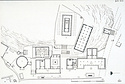
| Plan of Agora in Early Hellenistic period, with buildings containing pyres labeled. Buildings with craft or commercial association are shaded yellow ... Richard. C. Anderson Susan I. Rotroff ... Drawing by R. C. Anderson with alterations and additions by S. I. Rotroff.
Digital file ... 2013 ... Plan of Agora in Early Hellenistic period, with buildings containing pyres labeled. Buildings with craft or commercial association are shaded yellow. |
| Civic buildings along the west side of the Agora in the Hellenistic period ... John Travlos ... PD 1208 To replace the missing PD 125./Numbering in Guide (1990) is different. see neg. 83-221 Horizontal (normal) ... 1962 ... Civic buildings along the west side of the Agora in the Hellenistic period. |
| Cistern. Cisterns. Rooms. Room 20. Room 28. Room 21. Room 27. Room 14. Room 26. Room 22. Room 23. Room 24. Room 24A. Room 25. Modern Deposits. Pipeline. Hellenistic Buildings. Pithoi. Pithos B. Pithos ... ΛΛ-5 996 E 5:1 D 4:1 D 5:2 ... Hellenistic Buildings |
| Index. Hellenistic House 4. Modern Pit. Cisterns. Byzantine Buildings. Byzantine Building 8. Pithoi. Pithos S. Pithos T. Cutting at 88/Γ-Δ. Wells ... ΛΛ-8 1592 ... Hellenistic House 4 ... Byzantine Buildings |
| Blocks in portico of the second room from the south of the Hellenistic Metroon ... Horizontal (normal) ... 15 April 1938 |
| Blocks in portico of the second room from the south of the Hellenistic Metroon ... AMS Horizontal (normal) ... 15 April 1938 |
| Index. Pottery. Greek (other than Geometric Area). Hellenistic Pocket. Sherds Listed. Walls and Floors at 27-30/ΙΘ-ΚΒ. Wells. West Buildings. East Scarp and Walls in 28 ... Δ'-1 186, 187 ... Hellenistic Pocket ... West Buildings |
| Index. Roman Buildings. Roman Building 2. Graves. Grave 1. Hellenistic Building. Cisterns. Cutting under Room 11. Cutting in Bedrock at 86/ΜΓ. Roman Building 3. Pit at 81/ΚΘ. Turkish Garden ... ΛΛ-1 190, 191 ... Roman Buildings ... Hellenistic Building |
| Grave VI. Roman Buildings. Roman Building 5. Hellenistic House 4. Byzantine Buildings. Byzantine Building 6; Room 27. Byzantine Building 7; Room 26. Byzantine Building 6; Room 29. Rooms. Room 26. Room ... ΛΛ-6 1193, 1194 ... Roman Buildings ... Hellenistic House 4 ... Byzantine Buildings |
Roebuck, Carl ... American School of Classical Studies at Athens ... The sanctuary of the healing god, Asklepios, was connected to an adjacent fountain of Lerna in antiquity. This detailed study of the topography and architecture of these two monuments is complemented by ... 1951 ... While the ruins of the buildings date primarily to the Hellenistic period, the ex-votos are almost all earlier. |
Broneer, Oscar ... American School of Classical Studies at Athens ... After a discussion of the fragmentary evidence for several buildings of the Greek period which were swept to construct it, the South Stoa at Corinth is treated in detail. Careful description of all the ... 1954 ... After a discussion of the fragmentary evidence for several buildings of the Greek period which were swept to construct it, the South Stoa at Corinth is treated in detail. ... One of the largest secular buildings in Greece, the South Stoa appears to have been planned as a kind of hotel to accommodate visitors at a time when Corinth served as the capital of a briefly united Greek world. ... In its final phase various buildings, including a bouleuterion, a fountain house, a bathing establishment, and a public latrine were built into the ground floor. |
| Section Ω 1938 ... M. Crosby ... Section Ω lies in the east end of the north slope of the Areopagus, well to the southeast of the market square proper. Excavation showed, as expected, that the area was a residential district throughout ... 16 Jan-17 Jun 1938 ... By that time however, there was a street running diagonally up through the section, and remains of buildings, wells, cisterns, etc. from that period and onwards were found. Not until the end of the 4th or early 5th century A.D. are there any traces of buildings other than private houses. Part of the area was covered by a mass of destruction debris from the 7th or 8th century A.D., and it was probably not built up in Byzantine times; the Turkish and modern houses rested directly on the late Roman fill at the north and southeast, on Classical and Hellenistic in the center, and on bedrock in the southwest. |
| Table of Contents. Bedrock (Early Deposits Over). Bothros (Byzantine). Byzantine Buildings; General. Byzantine Building 1; Rooms 5, 5A, E. Byzantine Building 3. Byzantine Building 4; Rooms 15-17. Byzantine ... ΛΛ-1 4, 5 ... Byzantine Buildings; General ... Channel I (Hellenistic) ... Hellenistic Building |
http://agathe.gr/guide/introduction.html Introduction Classical Athens saw the rise of an achievement unparalleled in history. Perikles, Aeschylus, Sophokles, Plato, Demosthenes, Thucydides, and Praxiteles represent just a few of the statesmen ... Throughout antiquity Athens was adorned with great public buildings, financed first by its citizens, and later with gifts from Hellenistic kings and Roman emperors. ... The excavated buildings, monuments, and small objects (Fig. 2) illustrate the important role it played in all aspects of civic life. The council chamber (Bouleuterion), public office buildings (Royal Stoa, South Stoa I) and archives (Metroon) have all been explored. |
| Preliminary Report on the 2006 Excavation Season ... John McK. Camp II ... This summer the 75th anniversary of the beginning of the excavations and the 50th anniversary of the reconstruction of the Stoa of Attalos were celebrated.
Excavation were concentrated on two areas: northwest ... 13 Jun-4 Aug 2006 ... In Section ΒΖ excavation continued in the north-south road and in the buildings to the east and west of it. ... In deeper layers, a pyre of early Hellenistic date was found. ... The buildings were presumably houses in a domestic area. |
| Preliminary Report on the 2004 Excavation Season ... John McK. Camp II ... All the work during the season 2004 was concentrated on the northwest corner of the Agora north of the Panathenaic Way.
In BZ North, the last remains of Byzantine fills and walls were removed and Hellenistic, ... 7 Jun-16 Jul 2004 ... In BZ North, the last remains of Byzantine fills and walls were removed and Hellenistic, early Roman and late Roman fills were explored. A gap in the archaeological record between the late Hellenistic/early Roman to late Roman periods was discovered. ... Various walls representing several buildings and phases were exposed. |
http://agathe.gr/guide/metroon.html Metroon (Archives) The Metroon served two functions; it was both a sanctuary of the Mother of the Gods and the archive building of the city, a repository of official records (Fig. 19). The present remains ... The present remains date to the mid-2nd century B.C. and overlie traces of earlier public buildings, including the Old Bouleuterion. The Hellenistic building had four rooms set side-by-side, united by a facade of fourteen Ionic columns. |
| Section Χ 1937 ... Margaret Crosby ... The area signified as Section Χ lays outside the Agora proper and no signs of any public buildings were found. The area seems to have been used for private houses from the end of the 6th c. B.C. Apart ... 25 Jan-18 May 1937 ... The area signified as Section Χ lays outside the Agora proper and no signs of any public buildings were found. ... No traces of walls of the Hellenistic period had survived but two wells and four cisterns show the existence of private houses in the area during this period.
|
| Section Φ Season of 1937 ... Eugene Vanderpool ... In antiquity the area included in Section Φ lay outside the Agora proper and were apparently occupied only by houses and small buildings. The earliest period of which any considerable remains were found ... 25 Jan-17 Jun 1937 ... In antiquity the area included in Section Φ lay outside the Agora proper and were apparently occupied only by houses and small buildings. The earliest period of which any considerable remains were found was the Geometric: three Protogeometic graves and one well, as well as one Geometric grave and one disturbed well, were discovered and excavated.
... Remains of the Hellenistic period are few. ... A late Roman building covered almost the whole section and was probably part of the great complex of late Roman buildings that covered most of the center of the Agora. |
http://agathe.gr/overview/the_archaeological_site.html The Athenian Agora The Agora of Athens was the center of the ancient city: a large, open square where the citizens could assemble for a wide variety of purposes. On any given day the space might be used ... These buildings, along with monuments and small objects, illustrate the important role it played in all aspects of public life. ... Administrative buildings and small sanctuaries were built, and water was made available at a fountainhouse fed by an early aqueduct. ... With the rise of Macedon under Philip II and Alexander the Great and during the subsequent Hellenistic period, all significant military, economic, and political power shifted to the East. |
|
|

.jpg.icon.jpg)
.jpg.icon.jpg)
.jpg.icon.jpg)
.jpg.icon.jpg)
.jpg.icon.jpg)

.jpg.icon.jpg)