|
|
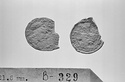
| Athens ... Broken. Coin no. 12; Hoard.
Casts stored in Lab Case no. 52B. Red sandy earth at inner corner of late wall. Head of Athena r., wearing helmet. Border of dots. AθHNAI-ωN
Akropolis, seen from north and ... Ca. 264-267 A.D ... AθHNAI-ωN
Akropolis, seen from north and west. ... Halfway up Akropolis rock, to l. of stairs, niche with curved lintel representing Cave of Pan. ... 456, 466, 496 |
| Athens, once private. Beaulieu-sur-Mer, Villa Grecque. Athens, National Museum, Akropolis Collection, 471. Athens, National Museum, Akropolis Collection, 1296. Athens, National Museum, Akropolis Collection, ... Agora 23 373 ... Athens, National Museum, Akropolis Collection, 471 ... Athens, National Museum, Akropolis Collection, 1296 ... Athens, National Museum, Akropolis Collection, 496 |
| Skyphos-Kraters; Bowls. Skyphos-Kraters. Skyphos-Kraters; Lids. Nettos Painter. Group of the Dresden Lekanis. Louvre C 12296. Antimenes Painter. Athens, N.M. 16399. ABV 275, 136. Villa Giulia 73655. M ... Agora 23 22 ... Akropolis 496 ... Akropolis 497 ... Akropolis 498 |
| Dinoi; Bowls. Fill. R. Young, Hesperia 4, 1935, p. 438. R. Young, Hesperia 4, 1935, p. 439. Painter of London B 76. London B 76. ABV 87, 19. R. Young, Hesperia 4, 1935, pp. 438-439. Rouen 531. ABV 88, ... Agora 23 179 P 3468 P 26758 P 483 P 14939 H 8-10 E 19:7 ... 570-560 B.C ... Akropolis 590 ... Brommer, Heldesnage (3), p. 496 |
Fragment of torus mouth, neck, and start of shoulder, part of body on each side. Neck glazed on inside. Glaze misfired reddish brown; abraded in places, especially on mouth and on Boreas. P.H. 0.14; diam ... Ca. 460 B.C ... Beazley (ARV2 486, 34) suggested that the woman on Side B of 36 is either Herse or Aglauros, most likely on the strength of two representations of this subject where their names are inscribed, both by the Oreithyia Painter: Berlin 2165 (ARV2 496, 1; Paralip. 380, 1) and Munich 2345 (ARV2 496, 2; Paralip. 380, 2; Addenda 250; Reeder, Pandora, p. 40, figs. 2--3 and p. 75, fig. 2). ... The presence of the olive tree indicates that the representation on this side of the vase takes place on the Akropolis (Weil, p. 85; Kron, p. 81), and the position of Erechtheus' right hand with the palm outward suggests that he has already heard the bad news.
|
| Cook, J.M. 1965. Old Smyrna: Fourth-Century Black Glaze, BSA 60, pp. 143-153. Cook, R.M. 1960. Greek Painted Pottery, London. Corbett, P.E. 1949. Attic Pottery of the Later Fifth Century from the Athenian ... Agora 29 xxi ... Die Ausgrabungen am Westabhange der Akropolis, I, AM 19, pp. 496-509 |
|
|
.png.icon.jpg)
.png.icon.jpg)
.png.icon.jpg)
.png.icon.jpg)