|
|
| Pottery lots ... AMS Horizontal (normal) ... August 1995 ... Pottery lots. |
| Tom Milbank, looking at pottery lots ... AMS Horizontal (normal) ... August 1995 ... Tom Milbank, looking at pottery lots. |
| Tom Milbank, looking at pottery lots ... AMS Horizontal (normal) ... August 1995 ... Tom Milbank, looking at pottery lots. |
| Lee Ann Riccardi, looking at pottery lots ... AMS Horizontal (normal) ... August 1995 ... Lee Ann Riccardi, looking at pottery lots. |
| Lee Ann Riccardi, looking at pottery lots ... AMS Horizontal (normal) ... August 1995 ... Lee Ann Riccardi, looking at pottery lots. |
| Polygonal Building Index. Pottery lots. Plans and Sections ... Φ-4 767, 768 Section Φ 205 Section Φ 204 Section Φ 203 Section Φ 202 Section Φ 201 ... 14 Jun 1937 ... Pottery lots |
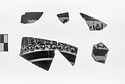
| Pottery from deposit M 17, lots Φ 26, 29 ... AMS Horizontal (normal) ... Pottery from deposit M 17, lots Φ 26, 29. |
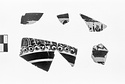
| Pottery from deposit M 17, lots Φ 26, 29 ... AMS Horizontal (normal) ... Pottery from deposit M 17, lots Φ 26, 29. |
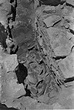
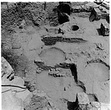
| Smashed pottery within channel I/18,19-3/1,2 (= Lots 177, 178) ca. 51.75. From east ... AMS west 938 Horizontal (normal) ... 2-3 July 1990 ... Smashed pottery within channel I/18,19-3/1,2 (= Lots 177, 178) ca. 51.75. |
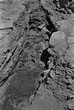
| Smashed pottery within channel I/18,19-3/1,2 (= Lots 177, 178) ca. 51.75. From west ... AMS east 938 Horizontal (normal) ... 2-3 July 1990 ... Smashed pottery within channel I/18,19-3/1,2 (= Lots 177, 178) ca. 51.75. |
Pit I at 45/ΙΘ (= Well) (noted also 4th c. pocket in side of this pit).
This is part of the Terracotta Deposit (H 17:4) and the objects listed here are also listed in H 17:4. Containers/lots for this ... Geometric-Protoattic ... Containers/lots for this deposit were determined from the TCD # indicated with the pottery lots (nbpp. 839-847). |
| Marcie Handler ... The contents of this Hellenistic cistern shaft were excavated in a series of layers: the preserved top of the shaft, six layers in the shaft and the fill within the tunnel. At the bottom of the shaft on ... POU: Mid-3rd c. BC
Dumped fill: after 225 BC ... The shaft was filled with a mixture of pottery, roof tiles (mostly painted), bone, charcoal, and chunks of the shaft lining that must have fallen from the upper portion of the shaft, which is no longer preserved. Joining fragments of pottery and lamps were found in different pottery lots, suggesting that layers that were excavated separately may have been deposited at the same time. |
Fusiform shape. Gray clay, fired red in part. Three white bands. Trench Ε, Middle Stoa building fill. Lots Θ 82-83 w/Byz. Leica ... 28 March 1933 |
| Small very crumbly fragments come in part from a flat plaque, in part from a flat dish with a ring foot.
The fabric is a soft powdery white, colored inside and out with a fugitive bright yellow. Finished ... 13 March 1933 |
| Well below Stoa Gutter opposite Pier 1.
Heavy dumped filling remarkable among Agora well-deposits both for the high quality and the good conditions of pottery of all sorts.
It represents the stock of a ... Ca. 520-490 B.C ... Heavy dumped filling remarkable among Agora well-deposits both for the high quality and the good conditions of pottery of all sorts.
... Short period of use, the shaft was abandoned as a well and used as a dumping place for a vast mass of broken pottery ... Fine wares: Lots 419-423.
Coarse wares Lots 508-519 and 533-537. |
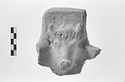
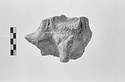
| The head of a bull, in relief, with the animal's nose projecting as a support, is well modeled of coarse red micaceous clay, unglazed.
Probably Rhodian. Lots Θ 169-170 w/Byz. Leica, 93-61-27 ... 7 March 1933 |
A well on the NW slope of the Areopagus; unfinished well-shaft dug to a depth of only 3.05m., and refilled with broken pottery and other debris. The shaft clearly was begun with the intention of digging ... Ca. 520-480 B.C ... A well on the NW slope of the Areopagus; unfinished well-shaft dug to a depth of only 3.05m., and refilled with broken pottery and other debris. ... Lots ΓΓ 502: Top to -1.75m (Fill I), coarse.
... Lots ΓΓ 506-511: Top to -1.75m (Fill I), coarse.
|
Lip probably nowhere preserved; otherwise complete, save minor fractures. A small roughly made, heavy-walled jar. Bottom flat, left rough; lower walls concave, making a sharp angle with the shoulder; wide ... 6 March 1937 |
| Bull's head. The nose of the projecting head is chipped. The forelock of the hair, his ears and the upper part of his face are well-modelled. Trench Θ, Middle Stoa building fill. Lots Θ 101, 104 w/Byz ... 1 April 1933 |
| Mended from five pieces. Some large body fragments missing. Flaring ring foot, squat body, broad neck, trefoil mouth.
Brittle, coarse cooking ware fabric, lots of mica and white inclusions. Dark brick-red ... 6 July 1995 |
| Three joining fragments. Series of contiguous long petals with flat surfaces. Scraped groove below rim. Hellenistic fill over intermediate strosis either at 20/ΛΒ or 22/ΛΒ (lots mixed in storage). 87-18-35 ... 8 April 1954 |
Well made, with flaring foot. White band at junction of side and foot.
Gray clay, red at core. Trench Μ, S.E. side, over strosis. Middle Stoa building fill. Lots Θ 148, 156 w/Roman & Turkish. Leica ... 20 April 1933 |
| Deposit of terracottas, molds and pottery in a shallow pit sloping downward from north to south. This deposit was located beneath a layer of fill under a Late Roman plaster floor (Lots ΒΕ 2093-2095). The ... 1st c. A.D ... Deposit of terracottas, molds and pottery in a shallow pit sloping downward from north to south. This deposit was located beneath a layer of fill under a Late Roman plaster floor (Lots ΒΕ 2093-2095). The deposit was cut at its south end by the Byzantine/Late Roman disturbance excavated in Lots ΒΕ 2087-2088, which explains the presence of terracottas in those contexts. |
| Part of the flat out-turned rim, the straight neck, and a bit of the shoulder preserved. Pink rather micaceous clay, with a buff slip. On the neck an ivy wreath; on the shoulder two large rounded leaves ... 21-22 April 1933 |
Fusiform. The lip slightly chipped, the body elongated; a bit of clay attached to the side at the point of greatest circumference.
Typical gray clay with three faded white bands. East trench. Lots Θ ... 3 March 1933 |
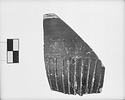
Mended into two large fragments; rim and neck do not join. Much of the upper part; nothing of the bottom. Plain-edged rim; ridge at base of neck. Below the ridge a band of stamped spirals, crosses in the ... (1961) |
Matte-painted decoration. Broken all around. Preserves small fragment of wall of vessel, with hatched triangles above dark band in brown paint on dull greenish surface.
Clay pale greenish-yellow, with ... 28 March 1952 |
| Rubbish Dump in mouth of abandoned well in Tholos Trench F, Kitchen. Filled with ash, charcoal, broken pottery, roof tiles.
Also from Trench L.
13 March 2014 by Ann Steiner
The deposit has four components ... Ca. 425-400 B.C ... Filled with ash, charcoal, broken pottery, roof tiles.
... Component 4: The bottom of the well and what is apparently pottery from a very short period of use. ... well shifts into area of well shaft, both at just above the top-most curbing stones (Lots Ζ 687-690) but below the burning that signifies bottom of Kitchen Dump and below those curbing stones (Lots Ζ 686; 691-693).
|
Michael Laughy ... West and adjacent to Modern Wall 5, we excavated 12th-13th c. A.D. fill, in some places a half meter deep or more. The fill was remarkably uniform in content throughout. Typical pottery included: fine ... 12th-13th c. A.D ... Typical pottery included: fine sgraffito; slip painted ware; inscribed ware; plain glaze; brown and green glaze; polychrome glaze; Byzantine lamp fragments; coarse wares; and cooking wares. ... Coins: ΒΘ-96; ΒΘ-98 -128; ΒΘ-135 -145
Pottery lots: T 141, T 143
Notebook: ΒΘ VIII
Baskets: 43, 57; pp. 1557, 1587
X-Section: pp. 1460, 1500
Grid: K/6,9-3/5,9
Elevation: 54.544-54.111m. |
A bit from the outer edge of the plate, with most of the down-turned rim. On the top, a scraped groove.
On the underside, crudely scratched, the letters Α Β Γ.
Black glaze firm beneath, much chipped ... 11 March 1933 |
| Laura Gawlinski ... Ovoid pit cut into bedrock or sterile fill just north of preserved floor surfaces in the so-called Strategeion. Length (west-east) 2.6m; widens at 1.25m from the east scarp so that at west pit is 0.75m ... 4th B.C ... The line of the pit began to appear at higher elevation while digging disturbed upper fills [Lots Lot Γ 384, 385]. ... Layer II: 56.99-56.78m.
Pottery Lots: Γ VII T386 A-D, T387 |
Fillings in and to the north of Building A/Poros Building/Greek Building ("Strategeion"), the accumulation mostly a late archaic dump, but not deposited till near the middle of the century. Most of the ... First half of 5th c. to ca. 460-450 B.C ... These, too, are now incorporated into this building fill deposit, per the pottery lots on p. Β' 1228 ff.
|
| 66 fragments, making up seven pieces, with a bag of numerous fragments.
a) About one-quarter of rim with one loop handle, with square handle-panel and portion of shoulder; lion's hindquarters.
b) Shoulder ... 26 June-22 July 1997 ... See Pottery Lots T504 and T505. |
| More than one-quarter of the incurving rim preserved and nearly half of the high ring base. Inside, a quadruple rouletted circle, enclosing stamped palmettes, of which two remain. Outside, around the body ... 2 March 1933 |
Michael Laughy ... Debris pit, located in Room 2 of ΒΘ East. Pit measures ca. 2.30 by 1.70m., and nearly a meter deep. The pottery from the pit dates ca. 10th-12th c. A.D. The fill of the pit consisted of soft, black charcoal ... 10th-12th c. A.D ... Pit measures ca. 2.30 by 1.70m., and nearly a meter deep. The pottery from the pit dates ca. 10th-12th c. ... Coins: ΒΘ-130
Finds: ΒΘ 77-81
Pottery lots: T 199, T 200
Notebook: ΒΘ IX
Baskets: 40, 50; pp. 1729, 1751
X-Section: p. 1650
Grid: L/2,4-3/14,16
Elevation: 54.086-53.100m. |
Wall fragment from a coarse water jar.
Inscribed on inside: Addenda: Apr 2014, Ann Steiner: Z 1551 is listed on notebook page Ζ 2333 where it says it was found in deposit H 12:6 and that it is part ... 23 March 1938 |
| Five fragments preserving over half of rim, root of one handle and part of base. Burned.
Nicely worked raised base, flat underneath. Shallow plate with beveled rim. band of dull black gloss around edge ... 14 June 1938 |
| More than half of a broad horizontal handle is preserved, with a projecting ear beside its attachment to the vase, which has a flange for a lid. Ovolo pattern on the top of the handle; coarse palmette ... 10 March 1933 |
| Well in Room 6 of Street Stoa U/2,U/3-13/15.
Associated with the building lying under the Roman Street Stoa. Its fills divided into 5 separate layers, with the bulk of finds belonging to Layer 1, the ... 14 June-21 August 1973 ... It produced one box of pottery and three catalogued items.
... It produced 12 boxes of pottery and 4 catalogued objects.
... Material in these lots was pulled from other lots of U 13:1 pottery for study purposes JAA 5.12.82. p. 1104 |
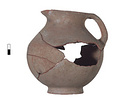
| Complete except for chips in rim and on body surface. Mended from many fragments. One handle (out of three) missing. Painted decoration well preserved but glaze worn and cracked where thicker. Piriform; ... 24 July 1998 |
| Wall fragment of an unglazed pot. The ostrakon complete. Ευκράτης Ευδράμονος. Characteristic letters Η Σ.
N.B. This ostrakon was mislaid in the course of handling the large amount of pottery from the ... 3 April 1972 ... This ostrakon was mislaid in the course of handling the large amount of pottery from the Crossroads Enclosure. ... ADDENDA: Found in one of the lots ΒΓ 515, July 2018 ... This ostracon was mislaid in the course of handling the large amount of pottery from the Crossroads Enclosure. |
Courtyard Well (R/15-13/20).
The well went out of use as a result of the Herulian sack of 267 A.D. in the upper part of the well the well-head itself was found, one of the finest in the Agora collection ... 27 June-15 July 1975 ... The contents of the bags seem to correspond to the the second indication. The pottery was washed and re-bagged. ... On the exterior of the bag was written Lot ΡΡ 542-551 and it was stored with the other lots of this deposit. |
Hellenistic fill South of Middle Stoa near NW corner of Heliaea. This fill contained material later in date than that which made up the middle Stoa Building Fill.
Only the coins (and a few amphora handles ... To ca. 140 B.C ... See Hesperia 57 (1988), pp. 88-89 for a description of the dating and "The lots collected in Kleiner's Deposit III, however, do not seem to form a logical stratigraphic unit ... " ... Descriptions on coin envelopes:
Hell fills of middle stoa and s of drain c (lowest);
Hell fill over intermediate strosis + cutting intermed. strosis 22/ΛΒ;
20/ΛΔ Hell fill.
Pottery, etc. (e.g. indicated on p. 3270 (4 June 1954)) listed with deposit H-K 12-14. |
| Fragmentary; more than half of the walls preserved, but none of the lip. A large bowl with typical Megarian decoration, to which a base (small ring, perhaps not complete, preserved) and a flaring wheelmade ... 8 March 1933 |
| Marcie Handler ... This deposit is a Mycenaean cist grave with two cover slabs, a type of burial described by Immerwahr in Agora XIII (pp. 103-104). Cist graves appear side by side with chamber tombs in the Mycenaean cemeteries ... LHIIB-LHIIIA:1 ... The fill on top of poros slab (Lot ΒΖ 2135) included pottery dating mostly to the late 8th c. ... The upper fill covering the boulder on the west end of the cutting (Lots ΒΖ 2128 and 2130) dated to ca. 500 B.C., and the fill lying directly on top of the boulder (Lot ΒΖ 2131) dated to the late 8th c. |
Well ΑΒ located on the lower terrace to the north of the sanctuary(diameter 1.10m). Foot-holes were cut into the shaft at intervals of ca. 0.40m. The fill consisted mostly of small stones, dug bedrock, ... Second quarter of the 6th century B.C ... Among the pottery, there was about 40% of earlier sherds from the 8th and 7th centuries B.C. and of Corinthian-ware (9.7%).
... Lots not differentiated by level. |
| James Artz Pirisino Daniele Kylindreas Miltiades ... Excavation in Room 3 of ΒΘ West revealed 5 ceramic vessels in a row against the eastern face of Wall 12. 3 complete vessels (ΒΘ 122, 124, and 125) were catalogued, along with the base of a plain glazed ... 9th-11th c. A.D ... Numerous joining sherds were found in ΒΘ Lots 402-404, which could potentially lead to more complete vessels. ... The primary types of glazed Byzantine pottery found in the fill included green and brown painted ware, plain glaze ware, Constantinople white ware, and monochrome glaze.
... We began by excavating the eastern portion of the high baulk (Lots ΒΘ 951, 952, 953, 955). |
|
|




.jpg.icon.jpg)