|
|
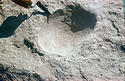
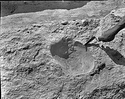
| Traces of industrial activity in the southeast quarter of the "Heliaia" (now identified as the Aiakeion). Typical marble-finishing pit with emery powder ... =82-424/printed backwards ... 1960 ... Traces of industrial activity in the southeast quarter of the "Heliaia" (now identified as the Aiakeion). |
| Traces of industrial activity in the southeast quarter of the "Heliaia" (now identified as the Aiakeion). Typical marble-finishing pit with emery powder ... AMS 3456 Horizontal (normal) ... 28 Jul 1960 ... Traces of industrial activity in the southeast quarter of the "Heliaia" (now identified as the Aiakeion). |
Well to N of Nymphaeum at 115/ΙΣΤ. A good water supply but no evidence for a period of use.
Exceptionally heavy dumped filling, including much fine tableware, many wine- jar fragments and other objects ... Ca. 420-400 B.C ... Some of this material was stained with black or reddish soot as if from industrial activity |
| Pre-Heliaia Houses. Steps on North Side. Outer Foundation of Heliaia. Outer Foundation of Heliaia; South Side. Outer Foundation of Heliaia; Southeast Corner. Outer Foundation of Heliaia; West Side. Outer ... Κ-18 3402, 3403 ... Industrial Activity ... Industrial Activity; Pre-Herulian ... Industrial Activity; Post-Herulian |
| Aristotle, Hist. Anim. VIII, 12, 597b. The Athenian Agora; Volume 014; The Agora of Athens; The History; Shape and Uses of an Ancient City Centre; Commercial Domestic and Industrial Quarters; Industrial ... Agora 14 185 ... The Athenian Agora; Volume 014; The Agora of Athens; The History; Shape and Uses of an Ancient City Centre; Commercial Domestic and Industrial Quarters; Industrial Activity |
| Papadopoulos, J. K ... American School of Classical Studies at Athens ... This volume presents selected material associated with potters' workshops and pottery production from some 14 Early Iron Age contexts northwest of the Athenian Acropolis that range in date from the Protogeometric ... 2003 ... Located in the area that was to become the Agora of Classical Athens, these deposits establish that the place was used for industrial activity until it was formally transformed into the civic and commercial center of the city in the early 5th century B.C. |
| Table of Contents; Cultural Buildings of the Roman Period. Table of Contents; Cultural Buildings of the Roman Period; Odeion of Agrippa. Table of Contents; Cultural Buildings of the Roman Period; Library ... Agora 14 xii ... Table of Contents; Commercial; Domestic and Industrial Quarters ... Table of Contents; Commercial; Domestic and Industrial Quarters; Market ... Table of Contents; Commercial; Domestic and Industrial Quarters; Industrial Activity |
| Preliminary Report on the 2002 Excavation Season ... John McK. Camp II ... Excavations continued in the northwest corner of the Agora (sections ΒΕ and ΒΖ) and in the Eleusinion area (ΕΛ), and a trial trench was opened up in the Panathenaic Way (Σ).
In section ΒΖ, the exploration ... 10 Jun-2 Aug 2002 ... As in the adjacent areas, small terracotta reliefs and figurines were collected, but no sign of industrial activity was found to suggest a production in the vicinity. |
| Pyre in House C, Room 12 (RSY=Pyre 9) in the industrial area west of the Areopagus.
Notebook refers to House N.
Beside west wall of room 12. Pottery, burnt bone, and cinders in a roughly round pit; disturbed ... Ca. 250 B.C ... Pyre in House C, Room 12 (RSY=Pyre 9) in the industrial area west of the Areopagus.
... The pyre predates the fill of the cistern in the room (B 18:13), and it is therefore contemporary with continued activity there. The fire-hardened floor of the pit suggests burning in situ; the pottery also shows signs of burning. |
Wall and rim fragments.
Open pot, deep but narrow in proportion. Slightly pro- jecting rim flat on top; horizontal rolled handles well down on wall, projecting boss beside handle-attachment. Coarse heavy ... Context ca. 375-350 B.C ... Wherever it was made, the special shape and very heavy walls suggest it might have been intended to serve some workshop or industrial use. There is some evidence of manufacturing activity not far from the cistern R 18:2; see S 19:3. |
http://agathe.gr/democracy/athenian_currency.html Athenian Currency Many of the specialized administrative boards have left material traces of their activities. Most prolific of these were the moneyers, or Overseers of the Mint. Throughout her history ... The building identified as the Mint is a large rectangular structure, over 25 meters long on one side and, in addition to the coin blanks, it produced evidence of industrial activity such as furnaces and large water basins. It cannot have been the only mint used by the Athenians as it dates to 400 B.C., far too late for much Athenian coinage, and analysis of the industrial debris indicates that only bronze and no silver was worked in the building. |
| Road to West of Southwest Fountain House; General Account. Road to West of Southwest Fountain House; Drain Q on East Side of Road. Road to West of Southwest Fountain House; Drain R on West Side of Road ... Κ-14 ... Industrial Activity in Heliaia; Masses of Marble Chips |
http://agathe.gr/publications/monographs.html Monographs Excavations in the civic and cultural center of classical Athens began in 1931 and have continued almost without interruption to the present day. The first Athenian Agora volumes presenting ... Substantial introductory discussions place all the coins in clear historical and numismatic contexts and give a sense of the range of international commercial activity in the ancient city. ... By the Late Geometric period, the presence of a few wells indicates a shift to domestic occupation; others containing 6th-century material suggest the presence of workshops and commercial activity as well as houses. ... Finally, the author discusses the possible functions of the ceramic shapes found, and uses them to reconstruct some of the domestic and industrial activities of Hellenistic Athenians. |
|
|
.jpg.icon.jpg)
.png.icon.jpg)
.png.icon.jpg)