|
|
| Dating. Construction ... ΚΚ-5 903, 904 ... Dating |
| Hellenistic House 4. Dating & History ... ΛΛ-8 1450, 1451 ... Dating & History |
| Methods of Dating and Arrangement of Material ... Agora 4 2 ... Methods of Dating and Arrangement of Material |
| Room 29. Room 29; Chronology and Dating. Period I. Period II ... ΛΛ-7 1254, 1255 Section ΛΛ 262 Section ΛΛ 265 Section ΛΛ 266 Section ΛΛ 269 ... 28 May 1937 ... Room 29; Chronology and Dating |
Rotroff, S. I ... American School of Classical Studies at Athens ... Hesperia 51.3 3 329-337 10.2307_147954 ... 1982 ... Silver, Glass, and Clay Evidence for Dating of Hellenistic Luxury Tableware |
| Letter from Piet de Jong to Lucy Talcott, probably dating to 1962. Athenian Agora Archives ... Craig Mauzy ... Horizontal (normal) ... 2006 ... Letter from Piet de Jong to Lucy Talcott, probably dating to 1962. Athenian Agora Archives. |
| Red figure sherd dating the Sacred Pit. Head of youth looking left. Deposit L-M 7:1 ... 1957 ... Red figure sherd dating the Sacred Pit. |
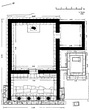
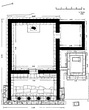
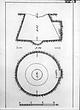
| Reconstructed plan of the Temple of Apollo Patroos, dating from the second half of the 4th century B.C ... PD 5-2003 Greek version. Horizontal (normal) ... Reconstructed plan of the Temple of Apollo Patroos, dating from the second half of the 4th century B.C. |
| Reconstructed plan of the Temple of Apollo Patroos, dating from the second half of the 4th century B.C ... PD 5-2003 English version. Horizontal (normal) ... Reconstructed plan of the Temple of Apollo Patroos, dating from the second half of the 4th century B.C. |
| Reconstructed plan of the Temple of Apollo Patroos, dating from the second half of the 4th century B.C ... J. Travlos ... Version of PD 5 for Agora Picture Book 16.
Greek and English. 2008.20.0015 2008.20.0015 ... 2003
1936 ... Reconstructed plan of the Temple of Apollo Patroos, dating from the second half of the 4th century B.C. |
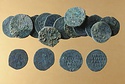
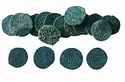
| Coin hoard. Room 2: soft soil north of floor surface. Coins:
23 July 1999 #924-#944. Anonymous folles with the head of Christ on the obverse dating between 770-1059 ... 23 July 1999 ... Anonymous folles with the head of Christ on the obverse dating between 770-1059. |
Lower part.
From a deep basin; flat bottom; rolled horizontal handle. Cooking ware, heavy fabric.
Cf. 1741, and for the incidence and dating of the shape, p. 212, note 3a ... Context ca. 450-425 B.C ... Cf. 1741, and for the incidence and dating of the shape, p. 212, note 3a. |
| Caricature of Virginia Randolph Grace (1901-1994) by Piet de Jong, undated, but probably dating to the mid 1930s.
Ashmolean Museum, Oxford ... Craig Mauzy ... Horizontal (normal) ... 2006 ... Caricature of Virginia Randolph Grace (1901-1994) by Piet de Jong, undated, but probably dating to the mid 1930s.
|
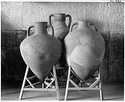
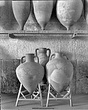
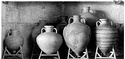
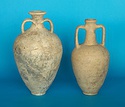
| Variety of jars dating before 450 B.C. Photo taken for the booklet on "Amphoras and the ancient wine trade" prepared by Virginia R. Grace ... September 1959 ... Variety of jars dating before 450 B.C. |
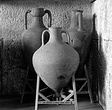
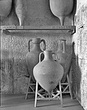
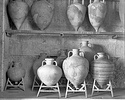
| Variety of jars dating about 425 B.C. Photo taken for the booklet on "Amphoras and the ancient wine trade" prepared by Virginia R. Grace ... Horizontal (normal) ... September 1959 ... Variety of jars dating about 425 B.C. |
| Variety of jars dating before 450 B.C. Photo taken for the booklet on "Amphoras and the ancient wine trade" prepared by Virginia R. Grace ... AMS Horizontal (normal) ... September 1959 ... Variety of jars dating before 450 B.C. |
| Variety of jars dating about 425 B.C. Photo taken for the booklet on "Amphoras and the ancient wine trade" prepared by Virginia R. Grace ... AMS Horizontal (normal) ... September 1959 ... Variety of jars dating about 425 B.C. |
| Reproduction of a fresco from the Chapel of Ayios Spyridon, representing Ayios Tryphonas and dating to the last period of the chapel. Watercolor by Piet de Jong ... Craig Mauzy ... Ptg. 308 Horizontal (normal) ... 2006 ... Reproduction of a fresco from the Chapel of Ayios Spyridon, representing Ayios Tryphonas and dating to the last period of the chapel. |
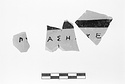
| Inscribed fragment.
Broken away on right side, cut away below.
In the bottom a rounded cutting dating from a reuse.
Five lines of the inscription preserved.
Hymettian marble. Found in Byzantine context ... Ca. 180 B.C ... In the bottom a rounded cutting dating from a reuse.
|
Late Roman, perhaps as late as 7th c., but excavator noted small amount of material made close dating impossible throughout. Nbpp. 2448-2449: The fill of this well throughout is mixed and there are numerous ... Early to Late Roman ... Late Roman, perhaps as late as 7th c., but excavator noted small amount of material made close dating impossible throughout. Nbpp. 2448-2449: The fill of this well throughout is mixed and there are numerous Late Hellenistic sherds even at the top ... Because of the very small quantity of sherds ... and the mixed character of the entire fill more accurate dating is impossible. |
| Stone-curbed Pit (Sacred Pit) to North of Altar of Ares.
An accumulation of votives dating at least from the middle of the 7th. c. B.C. into the early 5th. c. Finds include those from the immediate area ... 7th-5th c. B.C ... An accumulation of votives dating at least from the middle of the 7th. c. |
| Cistern at 75/ΜΓ connected with cistern N 18:3 by tunnel.
Only coin is Bioiotian dating between 220 and 197. Only indications of date are 1st c. lamps, two long-petal bowls, and fragments of early Roman ... 1st. c. B.C ... Only coin is Bioiotian dating between 220 and 197. |
Cistern C (pit) in West Room of late Roman House.
Mixed dump of material, with a little Classical, much Roman dating at least as late as 3rd century A.D., and large amount of late Hellenistic. Coins:
1 ... Late Hellenistic and Roman ... Mixed dump of material, with a little Classical, much Roman dating at least as late as 3rd century A.D., and large amount of late Hellenistic. |
| Few missing fragments restored in plaster. Heavy base ring; floor nearly flat; vertical rim curving in slightly at top. Two small circles of rouletting on floor at center.
Glaze slightly worn. Pergamene ... February-April 1937 ... ADDENDA Suggested revised dating: ca. 100 B.C. or even earlier (cf. |
Broken all around except top and bottom.
From Square Peristyle.
Poros of Akti; fair work. Traces of fire (?). Imbedded in the foundation of the eastern of the two N.-S. walls in the west part of the Heliaia, ... 18 August 1961 ... -S. walls in the west part of the Heliaia, ca. 5.00m from its north end; a wall probably dating from the late fourth century B.C. |
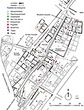
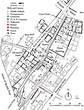
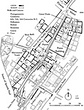
| The “Industrial District,” southwest of the Agora. The Poros Building at the top (north) has been tentatively identified as the State Prison. The other walls and wells represent private houses dating from ... DA 12879 Greek version. Horizontal (normal) ... The other walls and wells represent private houses dating from the 5th century B.C. to the Byzantine period. |
| E.R. Caley and W.H. Deebrel, The Chemical Dating of Bronze Coin Blanks from the Athenian Agora, The Ohio Journal of Science 44, 1955, pp. 44-46. Thompson 1954, p. 47, note 21. New Style, p. 640. Thompson, ... Agora 26 293 Β-1242 Β-1243 Β-1237 Β-1238 Β-1239 Β-1244 Β-1068 Β-1245 ... 1953 ... Deebrel, The Chemical Dating of Bronze Coin Blanks from the Athenian Agora, The Ohio Journal of Science 44, 1955, pp. 44-46 |
| A closely compacted group of 431 bronze coins found at ca. 52.50m., against the east brick wall. No sign of a container. Others dribbled down against the channel wall in a restricted area to as deep as ... Late Roman ... Their date suggests a later deposition: the latest coins dating to the reign of Leo I, come into the 470's. |
Nb page 5044: Great shapeless pit with a well (62/Ξ) at its bottom which we were unable to dig because it was too dangerous. Fill in the pit was of sand and white ash. The finds and pottery 4th. and perhaps ... Late 4th.-early 3rd. c ... The importance of the pit is for the dating of the poros wall above, already there when the pit was filled. |
| The residential-industrial district southwest of the Agora. The "Poros Building", center right, in another name given to the building tentatively identified as the State Prison. The other walls and wells ... DA 12878 English version. Horizontal (normal) ... The other walls and wells represent private houses dating from the 5th century B.C. to the Byzantine period. |
| The residential-industrial district southwest of the Agora. The "Poros Building", center right, in another name given to the building tentatively identified as the State Prison. The other walls and wells ... DA 12877 PD 699-2003. Revised version of PD 699, used for 2008.20.0034, 2008.20.0035 without color dots. Horizontal (normal) ... The other walls and wells represent private houses dating from the 5th century B.C. to the Byzantine period. |
Complete except for a few chips.
Low foot; rounded resting surface; convex underside. Very slight groove above foot. Convex wall. Rim concave on top, with ridge at inner edge. Thick, shiny red glaze, ... 325-300 ... Other concave-rim plates from Hellenistic contexts: 818, 819, and P 21010 (H--K 12--14), very crudely made, but possibly dating in 4th century; P 1092 and P 1093 (H 17:5), also possibly 4th century. |
| Cistern on lower north slope of Areopagus.
Latest of thirteen amphora handles dated ca.199; twelve legible coins, the latest dating ca. 196-190. Three intrusive pieces:two semiglazed fragments and piece ... 260-190 B.C ... Latest of thirteen amphora handles dated ca.199; twelve legible coins, the latest dating ca. 196-190. |
| Laura Gawlinski ... Burial of a woman (young adult female ca. 18-20); precise dating difficult due to disturbance by later features, but the amount of Neolithic and Geometric pottery extracted from the trench is significant ... Prehistoric ... Burial of a woman (young adult female ca. 18-20); precise dating difficult due to disturbance by later features, but the amount of Neolithic and Geometric pottery extracted from the trench is significant. |
Cistern and drawshaft connected by tunnel; used in modern times as cesspool. No stratigraphy noted, but pottery from first five boxes excavated is later than that from boxes 6-18.
11 stamped amphora handles ... Hellenistic and Late Hellenistic ... Bowls are from worn molds, of poor workmanship, probably dating in second quarter of 2nd c. |
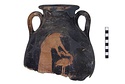
| Lower wall and base, and small chips in rim and wall missing. Mended from numerous fragments and partly restored in plaster.
A) Chiton-clad girl with short hair caresses a phallos-headed bird.
B) Similar ... 5 July 1935 ... Stoa cross cut, piers 1 and 2, Middle Stoa-Theseion; in bottom of pit to east of S.E. corner of 5th. c. monument base, possibly pre-dating that base. |
| Rectangular lug and beginning of wall. Long beard, conical cap; in field right and left of cap Α and Θ.
Coarse micaceous reddish clay.
In storage, ca. 16 others of similar type (pilos). P 22199a and ... 27 July 1964 ... P 22199a and P 10635 appear from the same mould, though first has no letters, and second has retouched beard; also a specimen with ΑΘ is P 7039; on dating see ΔΕ nb. p. 249. |
| Athens ... See notes on the envelope (about the dating of the coin).
Plated bronze Counterfeit Tetradrachm. About half of the silver plating remaining on the bronze core; test cut on obverse; weight before cleaning:12.55 ... Ca. 450's - 404 B.C ... See notes on the envelope (about the dating of the coin).
|
| Excavation and Cleaning along the East Side of the Great Drain, 1951 ... R. C. Wood ... There had been four major Byzantine dwelling units in the northern part of section Ε. Two of them had been removed during earlier campaigns. Excavations manage to establish the outline of the four houses, ... 9 Apr-7 Jul 1951 ... Excavations manage to establish the outline of the four houses, dating from the 10th to the 13th centuries A.D., before cleared away to expose Roman levels.
|
| Variety of jars dating before 480 B.C. Photo taken for the booklet on "Amphoras and the ancient wine trade" prepared by Virginia R. Grace. Far left, Corinthian A (P 12795); front row, from left, Corinthian ... September 1959 ... Variety of jars dating before 480 B.C. |
| Variety of jars dating before 480 B.C. Photo taken for the booklet on "Amphoras and the ancient wine trade" prepared by Virginia R. Grace. Far left, Corinthian A (P 12795); front row, from left, Corinthian ... AMS Horizontal (normal) ... September 1959 ... Variety of jars dating before 480 B.C. |
| A well at the northeast corner of Classical Building, behind back wall. Dumped fill appears to have occurred as a single event as there are joining sherds throughout.
POU date ca. first half 5th c. B.C.; ... 5th c. B.C ... Pottery primarily of the mid 5th c. with the latest sherds dating to just before the last quarter of the century. |
| Well in West Colonnade of Roman House H. Covered by a large handsome marble well-head, apparently reused. Cut through bedrock. Diameter ca. 1.20m, water at -3.60m.
Two distinct POU fills. One at ca. -4.50m ... June-August 1970 ... -4.50m to -4.75m dating to the 7th c. |
Inscribed boundary stone.
Intact, except for chips and wearings at back.
Rectangular cutting at top 0.145X0.065m. probably dating from block's reuse as doorsill.
All surfaces rough picked except for about ... 4th. century B.C ... Rectangular cutting at top 0.145X0.065m. probably dating from block's reuse as doorsill.
|
| Fragment from neck of amphora(?).
Decorated with water bird right; the wings of an animal (another water bird?), painted with purple and incisions to right, with a solid circle surrounded by dots as a ... 27 April, 5 May 1932 ... It is one of the latest Protoattic sherds from this area, dating probably in the last quarter of the 7th c. |
| The block is re-used and served originally perhaps as the plinth for a monument.
Its uninscribed face was scooped out in antiquity, apparently to lighten the stone. At either end of the left long edge ... 18 June 1939 ... At either end of the left long edge is a cutting for a hook clamp, dating possibly from an intermediate use.
|
| Thick ring at the joint of the neck. Very little part of the tongues on the shoulder and of the Athena's crest. Athena is turned to left. The crest is outline with a red band; round it's base, at the point ... The use of red mineral makes a dating still in the fifth century certain (Beazley, Panathenian p. 454). |
| The Athenian Agora; Volume 26; The Greek Coins; Athenian Silver Coins; Sixth and Fifth Centuries B.C. T.V. Buttrey, The Athenian Currency Law of 375/4 B.C., in Essays Thompson, pp. 33-45. T.V. Buttrey, ... Agora 26 5 ... Waggoner, Dating the Earliest Coinage of Athens, Corinth and Aegina, AJA 88, 1984 (pp. 325-340), pp. 326-333 ... Cann, Dating the Early Coinages of Athens, in Kleine Schriften zur Münzkunde und Archäologie, Basel 1975, pp. 81-97 ... Waggoner, Dating the Earliest Coinage of Athens, Corinth and Aegina, AJA 88, 1984, p. 330 |
| Painting. Dating. Dipylon Period. Amphora Athens 804. Dipylon Master. CVA Athens 1, pl. 8. Late Geometric. Amphora Athens 894. Painter of Athens 894. B.S.A., XLII, 1947, pl. 22, b. Workshop of Athens 894 ... Agora 8 4 ... Middle and 3rd quarter of 8th B.C ... Dating |
Brian Martens ... This deep stratum (ca. 030m) is delayed Persian destruction cleanup deposited in the 470s B.C. it contains about one generation's worth of pottery, almost exclusively dating between about 500-470 B.C ... 29 June-19 July 2017
12–15 July 2022 ... This deep stratum (ca. 030m) is delayed Persian destruction cleanup deposited in the 470s B.C. it contains about one generation's worth of pottery, almost exclusively dating between about 500-470 B.C.
|
Stroke polishing on neck.
Unglazed and handmade.
Small, unpainted votives are found in great quantities at many sanctuary sites. Only about 100 were saved from the dump on Hymettos, although the total ... 8th-7th c. B.C ... For fabric and dating, cf. P. Courbin, La ceramique Geometrique de l' Argolide, pp. 29ff., 70 ff. |
Bowl: Pergamene Sigillata?
About half of foot and most of floor preserved.
Spreading foot with four grooves in upper surface; broad, slightly beveled resting surface with four grooves; flat underside ... Context of 115-50 ... A somewhat similar form of foot is found on skyphoi of Pergamene sigillata dating to the second quarter of the 1st century (PF VI, nos. 12, 28--31, 34, pp. 213, 215, pl. 29, from skyphoi of Types S 3 and S 8, pp. 65, 69--70). |
Ash and Carbon Dump in Corridor directly behind Room C of Brick Building.
This material comprises what appears to have been a household dump associated with the period of use of the Brick Building, but ... To mid-2nd century ... This material comprises what appears to have been a household dump associated with the period of use of the Brick Building, but probably dating just prior to its abandonment, since it included a a few roof tiles, presumably from the demolition of the Brick Building. |
Jug With Thin Neck.
Intact.
Raised base with flaring profile; concave underside. Pear-shaped body. Long, thin neck. Flaring rim with angular profile, concave to inside. Strap handle from shoulder to ... Context of 325-300 ... Two more, semiglazed like ours, come from 4th-century graves in the Kerameikos (Knigge 1966, nos. 151:2, 155:2, pp. 88--89, pl. 58, the latter found with a kantharos dating around 300 [ibid., no. 155:1]). The shape is therefore probably limited to the second half of the 4th century, with semiglazed examples dating in the last quarter. |
Cup Or Jug.
Fragment of shoulder and lower rim.
Low, rounded shoulder. Rim convex to outside, with groove at base.
Moldmade body: tops of small imbricate petals or leaves visible.
Rim pattern: jeweling ... Context of first half of 1st century ... Italian moldmade cups of the workshop of Sarius, from North Italy, dating in the first quarter of the 1st century after Christ (Dallemulle 1975, nos. 2--5, 7, pp. 279--282, figs. 6--8, pls. |
| Circles, separated by row of dots, on rim. Two running dogs on shoulder. Two groups of four narrow bands around upper part of body, with irregular dots between. Three bands around lower part. Bottom unpainted, ... 21 April 1932 ... The shape and type belong to Johansen's archaic style, type B, dating in the middle of the 7th c. |
Tile well at 52/ΛΣΤ, in the northern late Roman building in the room with the apse. The top was covered by a large stone, and the well had never been filled after the last period of use. water stood to ... Late 1st (?) cent.-early 3rd to 6th cent ... From 23 to 25m, the well was filled with pottery, mainly water jars of varying sizes, dating from the 5th or perhaps sixth centuries. |
Rim fragment from incurving bowl. Rim slightly grooved.
Waterbird to right in a panel with lattice-triangle above.
Light red clay with hard buff surface. Glazed black inside, dilute paint outside.
An ... 27 April 1932 ... An example was found at Sparta, with Subgeometric and Laconian I pottery, dating ca. 740-660 B.C. |
| Robinson, H. S ... American School of Classical Studies at Athens ... A group of closed deposits, ranging in date from the 1st century B.C. to the early 7th century A.D., provide evidence for the relative and absolute chronology of pottery used during many centuries of Roman ... 1959 ... Prefacing the catalogue of each group, a brief general description gives the location, chronological limitations, basis for dating, etc., and then the individual items are described in considerable detail. |
| Preliminary Report on the 1999 Excavation Season ... John McK. Camp II ... Most of the work this season was concentrated in the northern half of Section ΒΖ where the Byzantine levels were further explored. Street walls along both sides of the north-south road were revealed and ... 7 Jun-30 Jul 1999 ... It was filled with debris dating to the 2nd and 3rd quarter of the 5th c. |
With cistern at 18/Π (P 10:1), two chambers connected by a passage.
18/Π went out of use first and was closed off from 17/ΟΕ-ΟΣΤ; filled up at one time with material dating between 350 and 300 B.C.
17/ΟΕ-ΟΣΤ ... 17 April 1937
27-28 May 1937 ... With cistern at 18/Π (P 10:1), two chambers connected by a passage.
18/Π went out of use first and was closed off from 17/ΟΕ-ΟΣΤ; filled up at one time with material dating between 350 and 300 B.C.
17/ΟΕ-ΟΣΤ continued in use until ca. 250 B.C. when it was filled up at one time with an apparently contemporary group of discarded household pottery. |
| Numerous fragments from body of vase, both joining and non-joining but none from base, mouth or handles. Of the athletes there remain the legs of three distance runners on joining fragments, one head much ... 380/79 B.C ... Of the one inscription remains the initial T; of the dating inscription remains
The reserved surfaces are carefully polished; the glaze for the most part is firm and glossy. |
| Woodhead, A. G ... American School of Classical Studies at Athens ... Edited texts, with extensive commentary, of some 344 fragments of Attic decrees dating from the mid-5th century B.C. to A.D. 203, found in excavations of the Athenian Agora before 1967, with brief notes ... 1997 ... Edited texts, with extensive commentary, of some 344 fragments of Attic decrees dating from the mid-5th century B.C. to A.D. 203, found in excavations of the Athenian Agora before 1967, with brief notes on additional material found up to 1975. |
| Pyre in House C, Room 12 (RSY=Pyre 9) in the industrial area west of the Areopagus.
Notebook refers to House N.
Beside west wall of room 12. Pottery, burnt bone, and cinders in a roughly round pit; disturbed ... Ca. 250 B.C ... The pyre was dug into an irregular strosis dating to the 3rd century, and covered by a "Hellenistic" fill. |
A tile-lined well at H/16-4/14,15 under the Roman Propylon. The tiles had been cut down; highest completely preserved tile at 50.696 m. Only three rings of tiling were preserved , the uppermost almost ... Ca. 350 B.C ... Pottery was unstratified with latest pieces dating about mid 4th century B.C. with a considerable amount of earlier material. many rooftiles. |
| Harrison, E. B ... American School of Classical Studies at Athens ... Presented in catalogue form are 64 portrait heads, headless torsos, and fragments (of both categories) ranging in date from the first half of the 1st century B.C. to the 5th century A.D. The catalogue ... 1953 ... Special emphasis is placed on stylistic criteria for dating each work, and the more interesting examples are discussed in some detail. |
Dumped filling in a well on the west slope of the Areopagus (apparently separate, no mends between them, but differing little in date) the bottom filling apparently thrown in towards the beginning of the ... Ca. 425-400 B.C. and earlier ... The deposit cannot be used for close dating except for the lower limit, ca. 415-410 B.C.. |
| Agora Excavations 1995 Preliminary Report ... John McK. Camp II ... Excavations continued in the areas of the Panathenaic Way, west of the Stoa Poikile, and in and around the Classical commercial building north of the Stoa Poikile.
In the Panathenaic way the exploration ... 12 Jun-4 Aug 1995 ... It produced pottery for domestic use, dating to 510-480 B.C. |
| IG II², 1104. Cassius Dio 69.16.2. IG II², 1100. C.D. Buck, Comparative Grammar of Greek and Latin, Chicago 1953, p. 336, no. 484. J. Kroll and N. Waggoner, Dating the Earliest Coins of Athens, Corinth ... Agora 19 69 ... Waggoner, Dating the Earliest Coins of Athens, Corinth and Aegina, AJA 88, 1984 [pp. 325-333] |
| Matt McCallum ... Plaster lined cistern. The cistern seems to have been bottle shaped; the walls are narrower at the preserved top, which is broken along its entire circuit, and gradually widen until about a third of the ... 12th c. AD ... Among the wide array of Byzantine coarse wares and glazed wares, dating c. 12th,, were many roofing (?) |
| Marcie Handler ... The pyre was revealed under a layer of mixed fill with pottery dating from the 3rd century B.C. to the 1st century A.D. Five pots were immediately visible (BZ 1318-1321, 1333) in a shallow pit surrounded ... 23 June-4 July 2006 ... The pyre was revealed under a layer of mixed fill with pottery dating from the 3rd century B.C. to the 1st century A.D. |
| Preliminary Report on the 2005 Excavation Season ... John McK. Camp II ... Excavations were carried out in three sections in the summer of 2005: BZ, BH and Γ.
In section BZ, mostly Roman levels were excavated, dating from the 1st to the 5th centuries A.D. Much more of the north-south ... 13 Jun-5 Aug 2005 ... In section BZ, mostly Roman levels were excavated, dating from the 1st to the 5th centuries A.D. |
| Preliminary Report on the 2006 Excavation Season ... John McK. Camp II ... This summer the 75th anniversary of the beginning of the excavations and the 50th anniversary of the reconstruction of the Stoa of Attalos were celebrated.
Excavation were concentrated on two areas: northwest ... 13 Jun-4 Aug 2006 ... A large round tile-floored cistern was removed and revealed a smaller one immediately below, both dating to the 10th century A.D. ... Walls, pithoi, pits, a burial, and two wells were revealed, dating to the years around 1000 A.D. |
| Extracurricular Investigation. Building H. Building K. House D. Room 4. Room 5. Room 6. Room 7. Room 1. Room 2. North-South Trench XI. North-South Trench XII. North-South Trench XIII. North-South Trench ... ΠΠ-7 1400 ... Dating |
| Preface. List of Illustrations. Abbreviations and Bibliography. Introduction. Shapes. Painting. Dating. List of Attributions. Late Geometric Pottery. Early Protoattic Painting. Middle and Late Protoattic ... Agora 8 vii ... Dating |
Hellenistic fill South of Middle Stoa near NW corner of Heliaea. This fill contained material later in date than that which made up the middle Stoa Building Fill.
Only the coins (and a few amphora handles ... To ca. 140 B.C ... See Hesperia 57 (1988), pp. 88-89 for a description of the dating and "The lots collected in Kleiner's Deposit III, however, do not seem to form a logical stratigraphic unit ... " |
| Pyre 2 in Central House, Room X, under strosis 9. Signs of burning, carbonized food, animal bone.
In room south of courtyard. concentration of artifacts, bone, and charred material in floor makeup, no ... 290-275 B.C ... The objects were found in digging a hard floor with a white clay surface (strosis 9, lot Φ 217), the earliest floor associated with phase 3 of the house and probably dating in the second quarter of the 4th c. |
With cistern at 17/ΟΕ-ΟΣΤ (P 10:2), two chambers connected by a passage.
18/Π went out of use first and was closed off from 17/ΟΕ-ΟΣΤ; filled up at one time with material dating between 350 and 300 B.C ... 325-285 B.C ... With cistern at 17/ΟΕ-ΟΣΤ (P 10:2), two chambers connected by a passage.
18/Π went out of use first and was closed off from 17/ΟΕ-ΟΣΤ; filled up at one time with material dating between 350 and 300 B.C. with a miscellaneous collection of tiles, coarse pottery and other household objects, with a few good black-glazed pieces and two dateable coins.
17/ΟΕ-ΟΣΤ continued in use until ca. 250 B.C. when it was filled up at one time with an apparently contemporary group of discarded household pottery. |
| Komos Cistern at 66/Κ, on the north slope of the Areopagus. Homogeneous fill.
Thirty-four stamped amphora handles. Eight Histiaian tetrobols, dating 170-160 at the earliest, found near top, possibly an ... Last quarter of 3rd c. B.C.-Early 2nd century B.C ... Eight Histiaian tetrobols, dating 170-160 at the earliest, found near top, possibly an intrusive hoard. |
| Mended from many pieces; a few fragments of rim, nozzle and wall restored in plaster; chips missing.
Large lamp with double-pierced handle, double grooved above and below. Rim panelled, with stamped ovules ... 24 April 1948 ... From the floor of a house on the N.E. slope of the Hill of Nymphes, dating in 267 A.D. |
| Rotroff, S ... American School of Classical Studies at Athens ... This volume is the first of two to present the Hellenistic fine ware from the excavations in the Athenian Agora. Its scope is restricted to the moldmade hemispherical bowls manufactured from the late 3rd ... 1982 ... The author first discusses the origins and dating of the bowls and then takes up the various types, in order of appearance on the historical scene: pine-cone, imbricate, floral, and figured bowls and their workshops and chronology, long-petal bowls, and other special types such as concentric-semicircle and daisy bowls. |
Small Plate With Projecting Rim: Rome Or Etruria.
Fragments of rim missing.
Angular ring foot; beveled resting surface; flat underside. Broad, projecting rim, curving down at edge and undercut on inside ... Context of ca. 275-210 ... For plates of similar size and shape see Morel 1965, no. 127, pp. 72--73, pls. 10, 47; Morel 1969, p. 84, fig. 14 = Morel 1981, Type 1323b, p. 106, pl. 14 (dated by Morel between 305 and 265), from the workshop of the Petites Estampilles, an atelier perhaps located in Rome and dating from the late 4th to the mid-3rd century. |
Well on Slopes of Kolonos, apparently with two periods of active service. The earlier dating from ca. the turn of the era well down into the 1st c. A.D. Probable that the well was never cleaned out in ... POU Early to second half 1st c. A.D ... The earlier dating from ca. the turn of the era well down into the 1st c. |
| Preliminary Report on the 2008 Excavation Season ... John McK. Camp II ... Excavations took place in three sections, two north of Hadrian Street (ΒΗ and ΒΘ) and one in the old area south of the Tholos (Γ).
In Section ΒΗ, layers in, over and behind the building identified as the ... 10 Jun-1 Aug 2008 ... Elsewhere various floor levels and pits were dug, most of them dating to the 4th century B.C. |
| Marcie Handler ... This deposit is a Mycenaean cist grave with two cover slabs, a type of burial described by Immerwahr in Agora XIII (pp. 103-104). Cist graves appear side by side with chamber tombs in the Mycenaean cemeteries ... LHIIB-LHIIIA:1 ... The fill on top of poros slab (Lot ΒΖ 2135) included pottery dating mostly to the late 8th c. |
Vertical section of handle and over half of body, foot, and underside restored.
Low, flaring foot; flat resting surface; well-formed, slightly convex underside. Lower body very high and nearly straight ... Context of 150-110 ... For wreath with square bow see Leroux 1913, no. 17, pp. 21--22 (Eretria), no. 27, pp. 24--25 (Myrina), no. 33, pp. 26--27 (Olbia), nos. 66, 70, pp. 37--38, 40--41 (Cyrenaica); BCH 78, 1954, p. 221, fig. 5 (Delos, in context of mid-2nd century and slightly later); Tsakos 1994, p. 161, fig. 7 (Samos); PF II, F 11, p. 114, pl. 45 (Pergamon); AvP I, ii, p. 277, fig. a (Pergamon); AvP XI, ii, no. 101, p. 72, pl. 43:3 (Pergamon, in context dating after middle of 2nd century); Belin de Ballu 1972, p. 115, pl. |
| Section Φ Season of 1937 ... Eugene Vanderpool ... In antiquity the area included in Section Φ lay outside the Agora proper and were apparently occupied only by houses and small buildings. The earliest period of which any considerable remains were found ... 25 Jan-17 Jun 1937 ... In the northeast corner fragments of terracotta water pipes were found, some in situ, dating from the late 6th or the 5th century B.C.. |
| Marcie Handler ... A deposit of six amphorae and one micaceous water jar was excavated between 20 June and 6 July 2005 in the area north of Wall K. The neck and one handle of one of the amphorae (BZ 1213) had been poking ... Ca. 1st c. A.D ... We removed two layers of fill in the area around this amphora, the first of which (lot 1540) was highly contaminated and contained material dating from the Late Geometric through the Byzantine periods. |
| Aegina. Chronology. Aktorione-Molione. Cocks. Amphora. Color paint. Column krater. Cooking jugs. Amphoriskos. Cooking Ware fabric. Analatos Painter. Corinthian fabric. Argive Monochrome Ware. Corinthian ... Agora 8 132 ... Dating, method of |
| Preliminary Report on the 2007 Excavation Season ... John McK. Camp II ... Excavation continued this year in the sections ΒΖ, ΒΗ and Γ.
In Section ΒΖ South, two areas were investigated: the north-south road and the areas west of the road. In the road, hard-packed gravel surfaces ... 13 Jun-3 Aug 2007 ... To the west, Hellenistic and Classical levels were excavated, and a pyre buried under a floor was exposed, dating to the late 4th or early 3rd century B.C.
|
| The Neolithic and Bronze Ages; Index; Kraters Mycenaean. The Neolithic and Bronze Ages; Index; Kraters Mycenaean; In Funerary Ritual. The Neolithic and Bronze Ages; Index; Mellink Machteld. The Neolithic ... Agora 13 280 ... The Neolithic and Bronze Ages; Index; Mycenae; Pottery; Dating of Groups ... The Neolithic and Bronze Ages; Index; Mycenae; Pottery; Dating of Groups; Granary ... The Neolithic and Bronze Ages; Index; Mycenae; Pottery; Dating of Groups; Great Poros Wall |
| Several pieces, including chunks from sides and rim, missing. Flat bottom; straight sides; flat-topped projecting rim.
Orange-buff clay. Light slip. Surface much worn.
On side wall, just below rim, a ... 9-12 February 1937 ... The pottery with which this pot was found is a consistent group dating from the end of the 2nd and the beginning of the 1st c. |
| James Artz Pirisino Daniele Kylindreas Miltiades ... Excavation in Room 3 of ΒΘ West revealed 5 ceramic vessels in a row against the eastern face of Wall 12. 3 complete vessels (ΒΘ 122, 124, and 125) were catalogued, along with the base of a plain glazed ... 9th-11th c. A.D ... Fotini Kondyli to the 9th-11th centuries A.D, although the fill around vessels contained ceramic evidence dating to the 12th-13th centuries A.D. |
| Larson, J. 1995. Greek Heroine Cults, Madison. Laubscher, H. 1966. Skulpturen aus Tralles, IstMitt 16, pp. 115-129. Lauenstein, D. 1987. Die Mysterien von Eleusis, Stuttgart. Lauter, H. 1985. Der Kultplatz ... Agora 31 xv ... Wade-Gery. 1963. The Dating of Documents to the Mid-Fifth Century, II, JHS 83, pp. 100-117 |
| Morrow, K.D. 1985. Greek Footwear and the Dating of Sculpture, Madison. Mountjoy, P.A. 1986. Mycenaean Decorated Pottery: A Guide to identification (SIMA 73), Göteborg. Tragicorum Graecorum Fragmenta, ... Agora 29 xxix ... Greek Footwear and the Dating of Sculpture, Madison |
| Psaropoulou, B. 1986. Last Potters of the East Aegean, Nauplion. Pulak, C. and R.F. Townsend. 1987. The Hellenistic Shipwreck at Serçe Limani, Turkey: Preliminary Report, AJA 91, pp. 31-57. Py, M. 1976 ... Agora 29 xxxi ... Silver, Glass, and Clay: Evidence for the Dating of Hellenistic Luxury Tableware, Hesperia 51, pp. 329-337 |
| The Neolithic and Bronze Ages; Index; Prosymna; Argive Heraion; Mycenaean ; Bronzes. The Neolithic and Bronze Ages; Index; Sandars N.K. The Neolithic and Bronze Ages; Index; Schachermeyer Fritz. The Neolithic ... Agora 13 283 M 12:2 O-Q 16-17 G-H 11-12 ... The Neolithic and Bronze Ages; Index; Radiocarbon Dating |
| The Neolithic and Bronze Ages; Index; Geometric Graves. The Neolithic and Bronze Ages; Index; Geometric Graves; Earlier Material Associated with Geometric Graves. The Neolithic and Bronze Ages; Index; ... Agora 13 279 ... The Neolithic and Bronze Ages; Index; Kephala Keos; Radiocarbon Dating |
|
|
.jpg.icon.jpg)
.jpg.icon.jpg)
.png.icon.jpg)
.jpg.icon.jpg)




.png.icon.jpg)

.png.icon.jpg)
.png.icon.jpg)



.png.icon.jpg)
.jpg.icon.jpg)
.png.icon.jpg)


.png.icon.jpg)
.png.icon.jpg)
.png.icon.jpg)
.png.icon.jpg)
.png.icon.jpg)
.png.icon.jpg)
.png.icon.jpg)