|
|
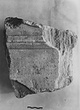
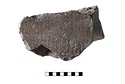
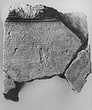
| Inscribed fragment.
Inscribed surface only preserved.
The inscription on a cavetto moulding below the straight face of the stone.
Four letters remain.
The marble has marked pink veins.
Hymettian (?) marble ... 25 April 1936 |
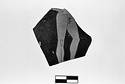
Wall fragment, broken all around. From the lower mid-part of a panel preserving a left leg and foot of a wrestler to left, on a thin brown ground line. Around the wall below the panel are two broad purple ... 14 May 1938 |
| Inscribed fragment from upper right hand corner of pediment-topped stele.
Rough picked back, and sloping top surface; chiseled right side, preserved; face broken away at corner, and along right side of ... 327/6 B.C. |
Back and left side broken away. Neither handle nor knob preserved. Fragmentary.
Curving body, with greatest diameter below center.
Rim narrow, set off by groove.
Long nozzle; flat top with incurving edges; ... 1 March 1932 |
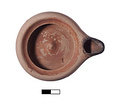
| Intact.
Slightly raised foot, concave underneath. Concave disk around large filling hole. Nozzle raised slightly, with traces of burning.
Thin reddish glaze on nozzle, disc, and within; unglazed elsewhere ... 6 July 1995 |
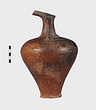
| Mended from many pieces. A few small fragments of body missing; also numerous minor chips. Mouth has cut-away projecting spout. Two handles, round in section from shoulder to near top of spout. Narrow ... 26 May 1939 |
| Draped figure with raised arm holding stick in other hand.
ADDENDA: A joining fragment found and added (Fall 2020). Finished Oscar Broneer, Nb. No. 5.
Acropolis dump ... June-July 1937 |
Restored in plaster. Similar in shape to P 6307. Between the incised grooves in the handle zone, thin clay paint leaf pattern with rows of white dots above and below.
Metallic black glaze.
ADDENDA ... 22 May-6 June 1935 |
| ARV² 8, 9. Addenda 151. ARV² 9, 2 and 41, 38. ARV² 16, 17. Paralip. 322, 17. Addenda 153. Euphronios, cat. no. 41. Mertens, AK 22, 1979, pl. 14:1-3, 6. ARV² 9, 1. Seki, Gefässform-Schalen, pp. 60-61 and ... Agora 30 69 ... Addenda 151 ... Addenda 153 ... Addenda 243-247 |
| Cups; Type C. Euphronios, cat. no. 55. Denoyelle, Chefs d'oeuvre-Louvre, pp. 110-111, cat. no. 50. ARV² 108, 26 and 115. ARV² 879, 2. Paralip. 428, 2. Addenda 301. ARV² 125, 13. Ars Antiqua III, 29, IV ... Agora 30 71 ... Addenda 301 ... Addenda 154 ... Addenda 243 |
| ARV² 536, 1. Paralip. 384, 1. Addenda 255. ARV² 206, 129-130. Addenda 194. Pit. Fill. Prange, Niobidenmaler, p. 216, cat. no. G 57, pl. 21. Schleiffenbaum, Volutenkrater, p. 324, cat. no. V 203. ARV² 599, ... Agora 30 173 P 19174 P 23202 P 24784 P 6857 P 7586 P 26550 P 19152 C 18:7 M-N 15:1 C 14:7 C 18:4 ... 460-450 B.C. |
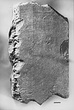
Inscribed fragment.
Inscribed face and probably bottom preserved.
A base moulding has been chipped away.
Two lines of the inscription preserved.
Pentelic marble.
ADDENDA Now joined to I 5450. Found in ... 9 March 1937 |
Inscribed fragment.
Broken all round.
Parts of four lines of the inscription preserved.
Pentelic marble.
ADDENDA Probably part of I 1230; with I 1175. Found in modern context, west of the Odeion. Leica ... 5th. century B.C. |
| Skyphoi. Skyphoi; Type A. Richter and Milne, Shapes and Names, pp. 26-28. ARV² 380, 171. Paralip. 366, 171. Agora 012, pp. 81-87. Addenda 227. Agora 023, pp. 58-61. Kunst der Schale, p. 314, fig. 53:2b ... Agora 30 62 ... Addenda 227 ... Addenda 223 ... Addenda 243 |
| Broken all around.
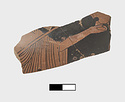
Part of maeander medallion border preserved inside. Outside, lower body of a naked youth, standing, turning to right.
Relief contour. Good glaze.
ADDENDA Cf. Letter from JDB, 13 Oct ... 2 May 1957 |
| ARV¹ 259, V, 1. ARV² 388, 3. Gefässeform-Schalen, p. 53, cat. no. 263. L. Talcott, Hesperia 2, 1933, pp. 216-224, figs. 1-4. ARV¹ 273, 1. Bloesch, FAS, p. 103, no. 1 and ol. 1 (B). ARV² 415, 1. Themelis, ... Agora 30 321 P 42 P 14040 P 15003 ... 480 B.C ... Addenda 243 ... Addenda 224 |
Inscribed fragments of base.
Two joining fragments preserve inscribed face, top, bottom and right side.
Small base with simple mouldings above and below.
Inscribed face and other surfaces chisel dressed ... 20 May 1938 |
Herringbone on rim.
On discus, rosette, with grooves around central filling hole.
Handle solid, triple grooved.
On bottom, double concentric grooves with palm branch.
Reddish-brown glaze.
Red clay.
Type ... 17 June 1931 |
Inscribed fragment.
Left side preserved.
Seven lines of the inscription preserved; non-stoichedon.
Pentelic marble.
ADDENDA Part of I 1230; with I 1175. Brough in by an old workman from a house at Polignotou ... 5th. century B.C. |
Inscribed fragment.
Some of left edge and rough picked back preserved.
Broken below and at right.
Hymettian marble.
ADDENDA Belongs with I 764 and I 6060. Found in marble dump, in long late Roman wall, ... 26 July 1949 |
| Paralip. 344, 131bis. Addenda 194. Dugas, Mélanges Rome 62, 1950, pp. 9-31. Recueil Charles Dugas, Paris 1960, pp. 123-139. Schwarz, Triptolemos, pp. 114-116. Prange, Niobidenmaler, p. 79. Schwarz, Triptolemos, ... Agora 30 171 P 8533 P 14729 P 27374 P 26613 ... 480 B.C ... Addenda 194 ... Addenda 243 ... Addenda 41 |
Inscribed fragment.
Inscribed face only preserved.
Eleven letters remain; stoichedon.
Some veins of the marble completely crystalline.
Pentelic marble.
ADDENDA Probably part of I 1230; with I 1175.
Cf ... 5th. century B.C. |
| ARV² 1217, 6. Addenda 348. Lezzi-Hafter, Eretria-Maler, pp. 342-343, cat. no. 243, pls. 143:d, 144, 145. ARV² 1248, 9. Paralip. 469, 9. ARV² 1216-1217. Paralip. 464. Addenda 344. Addenda 353. Lezzi-Hafter, ... Agora 30 124 P 30047 G 12:1 ... Addenda 348 ... Addenda 344 ... Addenda 353 |
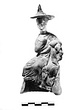
| Body mended from two fragments; head reattached.
Missing are right side of petasos and lower front part of garment with feet.
Moulded, hollow woman seated on rock. Right arm bent upward and left arm resting ... 5-9 August 1968 |
| Fill. Well. Choes and Anthesteria, p. 80, cat. no. 170, fig. 287. Choes and Anthesteria, p. 89, cat. no. 222, fig. 368. Burn, Meidias Painter, p. 98, cat. no. M 14, pl. 14:b. ARV² 445, 251. Addenda 241 ... Agora 30 243 P 3572 P 15113 P 12522 P 5489 P 2856 P 5244 P 9527 P 13341 P 27389 E 14:11 H 9:1 G 12:21 H 12:11 M 20:3 H 7:4 I 13:2 ... 425-400 B.C. |
| Late Archaic Cup Painters; Other Late Archaic Cup Painters. ARV² 458, 1. Paralip. 377, 1. ARV² 462, 48. Paralip. 377, 48. Addenda 244. Reeder, Pandora, pp. 383-385, cat. no. 123. Addenda 243. ARV² 458-481 ... Agora 30 102 ... Addenda 244 ... Addenda 243 ... Addenda 243-247 |
Bowl fragment. Max. dim. 0.035. LIMC IV, 1988, p. 232, no. 337, s.v. Gigantes.
A, Hephaistos(?): in the Gigantomachy(?). The fragment preserves the face of a man with a very long beard, to right, with ... Ca. 490-480 B.C ... E 140 (ARV2 459, 3; Paralip. 377, 3; Addenda 243). From the late 6th century on, Hephaistos fights with lumps of molten metal held in his tongs, and these lumps usually have flames. A good example, contemporary with 1424, is Hephaistos in the big Gigantomachy on Berlin 2293 by the Brygos Painter (ARV2 370, 10; Paralip. 365, 10 and 367, 10; Addenda 224). For Zeus holding a flaming thunderbolt, see the representation of him on Cab. Méd. 385 by the Kleophrades Painter (ARV2 186, 50; Addenda 188). Here, the subject is not the Gigantomachy but Psychostasia.
|
| ARV² 309, 1. Paralip. 357, 1. Addenda 213. I. Jucker, AK Beiheft 9 [pp. 63-69], pp. 67-68. LIMC III, 1986, pp. 759-779. ARV¹ 172, 4 bis. ARV² 240, 38. Pit. Fill. Paralip. 349, 23 bis. Addenda 201. ARV² ... Agora 30 166 P 14711 P 4245 P 5557 P 11025 P 473 P 7244 G 3:1 E 14:11 D 15:1 F 14:4 D 7:2 ... 490-480 B.C ... Addenda 213 ... Addenda 201 ... ARV² 243, 2 |
| Inscribed fragment of stele.
Broken on all sides.
Back worn smooth.
"POLETAI" record; leases of sacred property.
Stoichedon.
Blue Hymettian marble.
ADDENDA Part of same stele as I 7062, I 7117, I 4133 ... 243/1 B.C. |
Inscribed fragments.
Fragment Λ 102, top preserved; elsewhere broken.
Six lines of the inscription preserved, with two letters each, stoichedon, and traces of another line above.
Fragment Τ 1168, joining ... (Λ 102) 10 February 1934
(Τ 1168) 28 February 1952 |
Fragments from an inscribed block.
Fragment Λ 36 a), the top smooth; other edges broken.
Part of five lines of the inscription preserved.
Fragment ΓΓ 49 b), part of two inscribed faces and the top preserved ... 5th. century B.C. |
Fragment of flanged handle, the underside indicating the curved surface of the loop. Glaze blistered in a few places. Max. dim. 0.117. Schleiffenbaum, Volutenkrater, p. 324,cat. no. V 204.
On flange, ... Probably mid-5th century B.C ... For spirals on the flange, see Louvre G 166 (joining Louvre Cp 10799) by the Berlin Painter (ARV2 206, 129--130; Addenda 194) and three by the Niobid Painter: Bologna 268 (ARV2 598, 1; Paralip. 394, 1; Addenda 265; Prange, Niobidenmaler, p. 180, cat. no. N 1); Palermo G 1283 (ARV2 599, 2; Paralip. 394, 2; Addenda 266; Prange, p. 180, cat. no. ... N 14); also 243. For olive leaves on the back of the handle, see Naples 3240, the namepiece of the Pronomos Painter (ARV2 1336, 1; Paralip. 480, 1; Addenda 365). |
| Inscribed fragment.
Broken above and below.
Mid part of a large stele. Large circular stain from use in pithos.
Small fragment mended, at lower right.
Hymettian marble.
ADDENDA Part of I 2145.
Cf. Hesperia ... 135/4 B.C. |
| ARV² 189, 76. Ashmead, Hesperia 35, 1966, p. 29. Paralip. 341, 76. Addenda 189. A. Kossatz-Deissmann, LIMC I, 1981, pp. 111-112, no. 462. P. Hellström, Achilles in Retirement, Medelhavsmuseet, The Museum ... Agora 30 177 P 10509 ... 480 B.C ... Addenda 189 ... Addenda 243 ... Addenda 232 |
Inscribed fragments.
a) (ΠΘ 1056), traces of back preserved; elsewhere broken away.
Fourteen lines of the inscription preserved.
b) (Σ 682), right side preserved.
This fragment joins below to I 4026 ... a) (ΠΘ 1056) 27 March 1936
b) (Σ 682) 27 April 1936 |
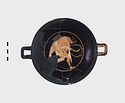
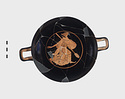
| Mended from many pieces; much of rim and wall, with part of medallion, missing. Short thin stem; disk foot, lightly profiled.
Inside, within a reserved band, a youthful komast wreathed, plays the lyre ... 4 June 1954 ... Guide (1976), p. 243 ... Addenda, p. 185. |
| High vertical strap handle. The front of the lamp is missing.
Pierced by a row of holes.
Micaceous pink clay with gray core.
Type 2B of Agora collection.
Cf. Agora IV, nos. 8-20, pp. 9-11, pls. 1, 29 ... Late 7th.-late 6th. centuries B.C ... Agora IV, nos. 8-20, pp. 9-11, pls. 1, 29.
ADDENDA Fragments of two similar lamps in tin 311 ... Leica, VII-92, XLIX-49, 7-421, 8-243 |
Inscribed fragments.
Fragment Ο 59 a), broken on all sides.
This inscription was probably stoichedon.
Fragment Ο 359 b), mended from two pieces; the fresh looking breaks along the left side appear to ... 5th. century B.C. |
| Early Classical Painters of Large Pots. Early Classical Painters of Large Pots; Hermanex. ARV² 360-367. Paralip. 364-365. E. Knauer, Ein Skyphos des Triptolemosmalers [125 Winckelmannprogramm der Archäologischen ... Agora 30 103 ... Addenda 222-223 ... Addenda 223 ... Addenda 242-243 |
| ARV² 355, 50. Ostraka. H.A. Thompson, Hesperia 28, 1959, pl. 22:a, c. Buitron-Oliver, p. 75, cat. no. 38, pl. 24. ARV² 214, 243. ARV² 438, 138. Buitron-Oliver, p. 87, cat. no. E 12. D.C. Kurtz, JHS 103, ... Agora 30 320 P 26245 P 19580 P 19953 P 6159 P 17531 P 20074 P 12688 P 8119 P 10865 A 18-19:1 E 15:6 J 18:6 D 11:4 ... 490-480 B.C ... ARV² 214, 243 ... Addenda 191 ... Addenda 192 |
| Inscribed fragment.
Top flat, dressed with toothed chisel. Left edge preserved near top only; dressed with toothed chisel. Back smooth, worn from later use.
Broken at right and below, also at left except ... Early 4th. century B.C. |
Inscribed fragments.
Inscribed on two adjacent faces.
Fragments Τ 19 and Ψ 99 a), inscribed face only preserved.
Two joining fragments; surface pitted and worn.
Eleven lines of the inscription preserved ... 5th. century B.C. |
| Inscribed fragments.
Prytany list; Archonship of Dionysios, after Timarchides.
Fragment Ξ 32a (a), the original left edge is preserved.
Fragment Ξ 32b (b), the inscribed face and right face preserved ... 135/4 B.C. |
| LIMC IV, 1988, pp. 637-645, 652-654, s.v. Hephaistos (A. Hermary). Halm-Tisserant, AK 29, 1986, pp. 20-22. LIMC IV, p. 638. Froning, Dithyrambos, pp. 67-71. ARV² 1171, 1. Paralip. 459, 1. Addenda 338 ... Agora 30 184 P 13367 P 2708 G 6:3 ... 430 B.C ... Addenda 338 ... Addenda 243 ... Addenda 222 |
Fragments of an inscribed stele.
Fragment Λ 59a (a), the left hand is preserved, and on the face the first letter in each of seven lines of the inscription, with traces of a second letter in the first ... Ca. 485 B.C. |
Wall fragment. Max. dim. 0.12. Schwarz, Triptolemos, p. 37, cat. no. V 49, pl. 8:14; Hayashi, Triptolemosbildes, p. 136, cat. no. 37, pl. 5:1 (wrongly called a calyx-krater); Langridge, "Eucharides Painter," ... Ca. 490-480 B.C ... The composition on 289 may have looked much like the one on Louvre G 187, the namepiece of the Triptolemos Painter (ARV2 361, 2; Paralip. 364, 2; Addenda 222; Denoyelle, Chefs-d'oeuvre . . . ... Pearson, The Fragments of Sophokles, vol. 2, Cambridge 1917, p. 239; there, the fragment is no. 596 and appears on p. 243). Several representations of the subject, including 289 and Louvre G 187, that depict the serpent alongside the wheel of the seat predate the play, thus indicating that the version with the snakes is not an invention of the playwright (see Pearson, p. 240, note 1): Athens Art Market by the Theseus Painter (Haspels, ABL p. 252, no. 64; snakes are present, according to Raubitschek, Hesperia Suppl. ... E 140 by Makron (ARV2 459, 3; Paralip. 377, 3; Addenda 243).
The Eucharides Painter (ARV1 154, 15; ARV2 227, 16: wrongly called a calyx-krater: the wall is convex, not flaring). |
Bowl fragment. Max. dim. 0.032; est. diam. of tondo 0.14. H. A. Thompson, Hesperia 28, 1959, pl. 22:a, c.
I, around tondo, stopped-maeander pattern with cross-squares. A, nude man or youth (from the waist ... Ca. 490-480 B.C ... The Berlin Painter (ARV2 214, 243). In ARV2, Beazley remarked: "The maeander is not the least like the Berlin Painter's patterns." ... E 268 (ARV2 198, 24; Addenda 191); the youth on Oxford 1924.3 (ARV2 200, 45; Paralip. 342, 45; Addenda 191); the armed youth on Vienna 654 (ARV2 201, 67; Addenda 192); the satyr on New York, M.M.A. 07.286.69 (ARV2 201, 70; Addenda 192); the satyr on Louvre G 185 (ARV2 207, 142; Addenda 194); and the youthful warrior on the stamnos now New York, M.M.A. 1988.40, ex New York, Bastis (ARV2 207, 141; Addenda 194; Antiquities from the Collection of Christos G. ... GR 1850.3--2.2 = E 78; Toledo 64.126 (Paralip. 370, 12 bis; Addenda 231); and Berlin 3198 (ARV2 402, 13; Paralip. 370, 13). |
| Mended from many pieces; the foot missing, fragments of wall and rim, and a little of the medallion. Low stem; ring at junction with foot. Inside, within a reserved band, a maenad running right and looking ... 4 June 1954 ... Guide (1976), p. 243 ... Addenda, p. 185. |
| About half the back part, preserved; mended from several pieces.
Shallow flat-bottomed lamp, with outward sloping rim and large looped strap handle, base to outer edge of rim. Incised on rim, double zigzag ... 11 February 1935 ... Agora IV, nos. 8-20, pp. 9-11, pls. 1, 29.
ADDENDA: Restored in plaster since photographing ... Leica, 7-422, 8-243, VII-92, XLIX-49 |
| Stele inscribed on two opposite faces.
Broken away above, and below, and cut vertically perhaps in half (?) at the left side of face A. The right side of face A is preserved.
"POLETAI" record; Laurion ... 2 April 1934 ... Hymettian marble.
ADDENDA With I 817.
... Leica, 4-168, 6-243 |
| Mended from many pieces; a good bit of the floor missing, and a few fragments from the rim and sides, also the handles. The dimensions, the inscription, and both stamps complete.
A cylindrical vessel, ... 16-17 April 1934 |
| JOAI 39, 1952, pp. 12-17, esp. pp. 12-13 and note 1. J.-M. Moret, L'Ilioupersis dans la céramique italiote: Les mythes et leur expression figurée au IVe siècle, Rome 1975, p. 19 and note 4. D. von Bothmer, ... Agora 30 229 P 22531 P 7090 P 6053 E 14:4 ... 440 B.C ... Addenda 205 ... Addenda 291 ... Addenda 292 |
Four non-joining fragments, a -- c of shoulder, d of neck. Glaze misfired slightly on tongue pattern on fragment a. From a very large krater. Max. dim. a) 0.127, b) 0.15, c) 0.089, d) 0.093. G. Schwarz, ... Ca. 460 B.C ... E 140: ARV2 459, 3; Paralip. 377, 3; Addenda 243), on which the god's name is inscribed just as it is on 238; Athena appears in one of the very earliest examples, Reggio 4001, which is probably by Exekias himself, not in his manner (ARV2 147, 6; Paralip. 61, 6; Addenda 41; Schwarz, p. 29, cat. no. |
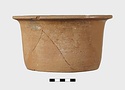
| Several pieces, including chunks from sides and rim, missing. Flat bottom; straight sides; flat-topped projecting rim.
Orange-buff clay. Light slip. Surface much worn.
On side wall, just below rim, a ... 9-12 February 1937 |
Mended from many fragments, with missing pieces restored in plaster and painted, notable among them the left horizontal handle and part of the wall below it. Glaze fired greenish around left handle; abraded ... Ca. 430 B.C ... Moret, L'Ilioupersis dans la céramique italiote: Les mythes et leur expression figurée au IVe siècle, Rome 1975, p. 19 and note 4: the "pyxis perdue" in this list is now New York, M.M.A. 1972.118.148 [D. von Bothmer, Ancient Art from New York Private Collections, New York 1961, pl. 91:243]); E. Böhr in CVA, Tübingen 4 [Deutschland 52], pp. 96--97 (text to Tübingen S./10 1575 = E 154); also, R. ... Stähler, Eine unbekannte Pelike des Eucharides-Malers im Archäologischen Museum der Universität Münster, Cologne 1967, pls. 2, 4:a); Berlin inv. 4496 by Syriskos (ARV2 262, 30; Addenda 205); London Market, attributed to the Methyse Painter (Cat. Sotheby's 7 July, 1994, no. 337); Mainz, Univ. 119 in the manner of the Painter of London E 342 (ARV2 670, 13); Sydney 51.13, connected with the Aischines Painter (ARV2 722, 2); Tübingen S./10 1575 = E 154 by an unascribed follower of Douris (ARV2 806, 91; Addenda 291); a cup by the Telephos Painter once in a private collection in Athens, here the figure is a youth (ARV2 818, 22; Addenda 292); an unattributed Early Classical alabastron, London, B.M. |
Fifteen non-joining fragments of wall, P 18278 b--c and P 19582 a--d of torus rim with zone of ornament below. Glaze mottled here and there; has a greenish cast in places; abraded in part on rim. Max ... Ca. 480 B.C ... What comes to mind immediately, of course, is the Achaeans' mission to Achilleus described by Homer in Book IX of the Iliad and illustrated by the Kleophrades Painter on his hydria in Munich, inv. 8770 (Paralip. 341, 73 bis; Addenda 189). The problem with this identification, as others have recognized (see Ashmead, Hesperia 35, 1966, p. 29; A. ... Occasionally, the Mission Scene is combined with a representation of the leading away of Briseis, as on the Louvre skyphos by Makron (G 146: ARV2 458, 2; Paralip. 377, 2; Addenda 243; Denoyelle, Chefs-d'oeuvre . . . ... (Iris wears a similar headdress on Munich 2426: ARV2 189, 76; Paralip. 341, 76; Addenda 189.) Thus, the composition might have looked like this: (1) a Nereid holding a helmet or sword and perhaps the greaves; (2) Thetis with shield and spear, facing (3) Achilleus.
|
|
|

.png.icon.jpg)
.png.icon.jpg)
.png.icon.jpg)
.png.icon.jpg)
.png.icon.jpg)
.png.icon.jpg)
.png.icon.jpg)
.png.icon.jpg)
.png.icon.jpg)
.png.icon.jpg)
.png.icon.jpg)
.png.icon.jpg)
.png.icon.jpg)
.png.icon.jpg)
.png.icon.jpg)